Western Sichuan represents one of the world's most dramatic geographic transition zones, rising sharply from the fertile Sichuan Basin to the high-altitude frontier of the Hengduan Mountains. Known in Chinese as Chuanxi, this region encompasses the Garzê Tibetan Autonomous Prefecture and the Ngawa Tibetan and Qiang Autonomous Prefecture. The area preserves authentic Kham and Amdo Tibetan cultural traditions alongside ancient Qiang stone architecture.
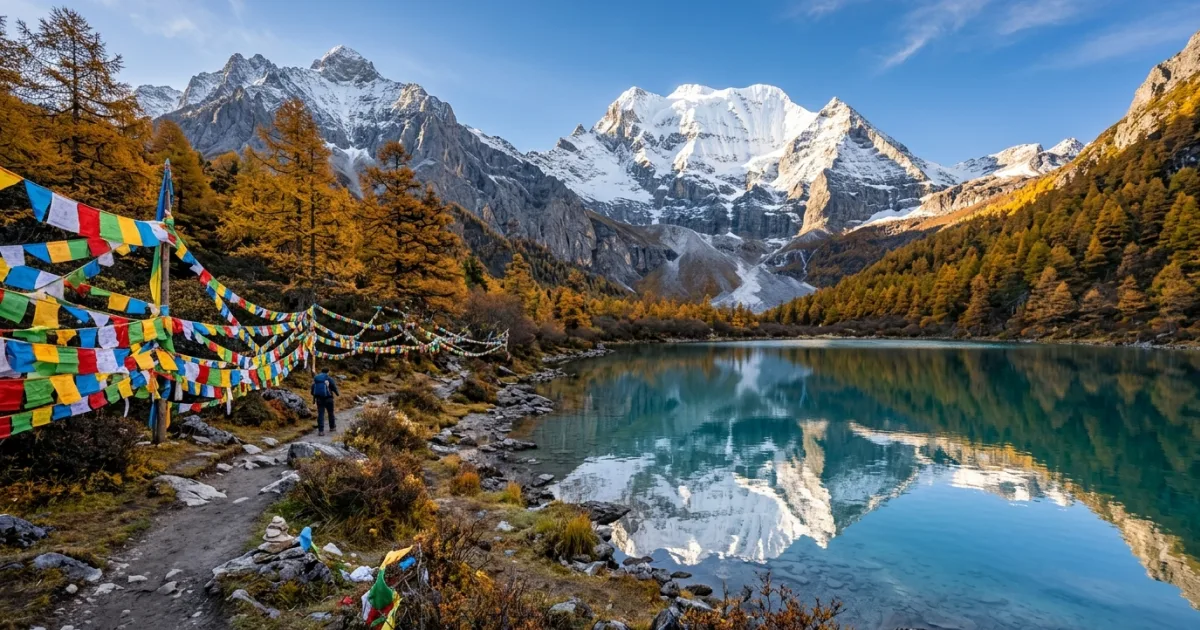
Geographically, Western Sichuan is dominated by colossal alpine massifs including Mount Gongga (Minya Konka), reaching 7,556 meters, and Mount Siguniang, revered by mountaineers worldwide. Glacial lakes, vibrant prayer flags, and deep river canyons like the Dadu River Gorge create a dynamic playground for adventure travel and overland expeditions. The road infrastructure has vastly modernized over recent decades, opening up previously inaccessible sacred landscapes to mindful exploration.
Reasons to Visit
- Marvel at the sacred alpine peaks of Daocheng Yading, often celebrated as the last Shangri-La.
- Experience driving the legendary National Highway 318, one of the world's most spectacular alpine road trips.
- Immerse yourself in authentic Tibetan Buddhism at grand monasteries like Tagong, Huiyuan, and Litang.
- Photograph ancient multistory stone watchtowers built by the Qiang and Gyarong Tibetan peoples in Danba Valley.
- Gaze at dark, pristine night skies free from light pollution across vast high-elevation plateaus.
Things to Avoid
- Do not rush directly to elevations above 3,500 meters without dedicating at least one full day to acclimatize.
- Avoid stepping over Tibetan prayer flags laid on the ground or walking counterclockwise around Buddhist stupas and mani stone mounds.
- Do not photograph monks, monastery interiors, or local residents without asking for explicit permission.
- Never drive over mountain passes at night during winter or monsoon seasons due to ice and landslide hazards.
- Do not touch or disturb religious ceremonial artifacts, yak skull shrines, or sacred wildlife.
Local Transportation Tips
Long-distance travel throughout Western Sichuan relies heavily on overland vehicles. Long-distance buses depart regularly from Chengdu's Xinnanmen and Chadianzi bus stations to major regional hubs such as Kangding, Danba, and Daocheng. However, hiring a private vehicle with an experienced mountain driver or joining a small chartered van remains the most practical method for reaching remote valleys, scenic passes, and trailheads. High-speed rail connects Chengdu to Zhenjiangguan (providing streamlined access to Jiuzhaigou and northern Ngawa), while high-altitude regional airports operate in Kangding, Daocheng Yading, and Hongyuan with frequent weather-related delays.
Travel Etiquette
- Always circumambulate Tibetan Buddhist chortens (stupas), temples, and mani stone walls in a clockwise direction.
- Remove your shoes and hat when stepping inside monastery prayer halls, and turn off your phone ringtones.
- Use two hands when offering or receiving items, gifts, or teacups from local Tibetan hosts.
- Refrain from touching people on the crown of their head, as it is considered sacred in Tibetan culture.
- Dress modestly with covered shoulders and long trousers when visiting religious complexes.
Recommended Age Group
Western Sichuan features severe high elevations, long vehicle transit times, and rugged terrain, requiring careful consideration before bringing travelers with sensitive physical profiles.
- Babies (0-2 years): Not Recommended. The high risk of acute altitude sickness, thin oxygen levels, and remote medical care make this environment unsafe for infants.
- Kids (3-12 years): Neutral. Children who handle long car rides well can enjoy the nature and horses, but families must carefully monitor for altitude distress and motion sickness.
- Teens (13-19 years): Recommended. Energetic teenagers will thrive on the alpine hikes, horseback riding, epic photography viewpoints, and outdoor adventures.
- Adults (20-64 years): Recommended. Ideal for road trippers, hikers, photographers, and cultural travelers capable of managing physical acclimatization.
- Seniors (65+ years): Neutral. While scenic viewpoints are accessible via paved roads, extreme altitude puts significant stress on cardiovascular and respiratory systems; prior medical evaluation is essential.
Accessibility Level: Medium
- Western Sichuan presents considerable physical barriers due to steep topography, unpaved trails, and high-altitude steps at historic monasteries.
- Major national parks like Daocheng Yading offer eco-shuttle buses and wooden boardwalks on lower trails, but upper vistas require strenuous uphill walking.
- Modern service stations along National Highway 318 have added level access restrooms, though rural toilet facilities remain basic and stepped.
- Wheelchair-accessible vehicles are uncommon; travelers with mobility challenges must coordinate private chartered transport with dedicated assistance.
Did You Know?
Daocheng Yading was brought to international acclaim in the 1920s by Austro-American botanist and explorer Joseph Rock, whose vivid National Geographic articles and color photographs famously inspired James Hilton's legendary utopian valley of Shangri-La in the classic novel 'Lost Horizon'.
Cool Statistics
- Mount Gongga stands at 7,556 meters (24,790 feet), reigning as the highest peak in Sichuan and the easternmost 7,000-meter peak on Earth.
- The Daocheng Yading Airport sits at an elevation of 4,411 meters, ranking among the world's highest civil airports.
- National Highway 318 stretches over 5,400 kilometers from Shanghai to the Nepal border, with its most iconic mountain stretch crossing Western Sichuan.






Buy a compatible power adapter for your trip