Disclosure: This site contains affiliate links. We may earn a commission if you make a purchase, at no extra cost to you.

>
>
>
Everest Region

Everest Region

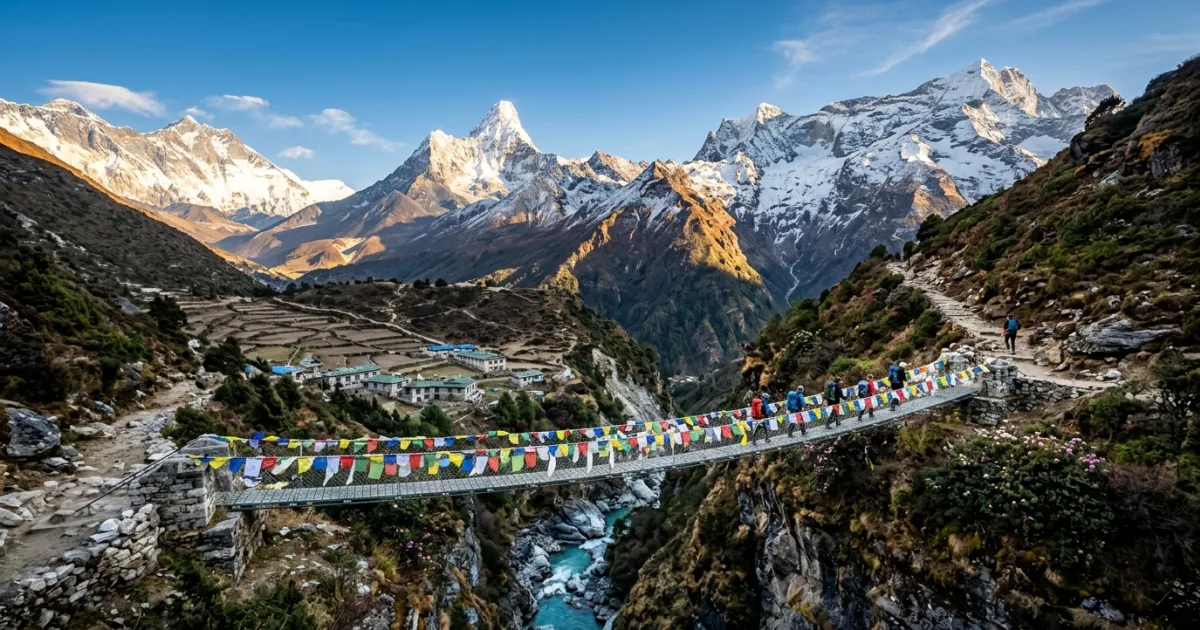
Panoramic view of snow-capped Himalayan peaks and prayer flags along a trekking trail in the Everest Region Nepal

Everest Region Overview & Key Highlights

The Everest Region, known locally as the Khumbu, encompasses northeastern Nepal's rugged high-altitude valleys dominated by Mount Everest and Sagarmatha National Park. Trekkers navigate suspension bridges, ancient glacial moraines, and rhododendron woodlands while engaging deeply with traditional Sherpa culture and sacred Tibetan Buddhist monasteries like Tengboche. Iconic routes link high mountain airstrips to remote hamlets, rewarding visitors with close-up perspectives of 8,000-meter giants including Lhotse, Cho Oyu, and Everest. Demanding topography requires disciplined acclimatization, robust physical fitness, and mindful packing for dramatic temperature shifts. While remote teahouses provide hot meals and essential shelter, infrastructure becomes progressively rustic the higher you climb toward Gorak Shep and Everest Base Camp. Beyond strenuous alpine trekking, visitors experience profound stillness among prayer-flag-draped passes, Mani stones carved with ancient mantras, and clear Himalayan night skies unpolluted by city lights.

Everest Region Travel Guide: Logistics & In-Depth Tips

The Everest Region, also recognized globally as the Khumbu, represents the pinnacle of high-altitude alpine adventure in the Himalayas. Spanning from temperate pine and bamboo river valleys up to the glaciated 8,848.86-meter summit of Mount Everest, the landscape delivers dramatic ecological transitions. Trekkers walk past historic chortens, prayer wheels driven by mountain meltwater, and terraced agricultural villages established centuries ago by migrating Sherpa communities.

A typical journey through this rugged landscape involves navigating classic suspension bridges draped across roaring glacial gorges, such as the famous Hillary Bridge, before ascending steeply into Namche Bazaar, the beating commercial heart of the Khumbu. Beyond Namche, the tree line rapidly yields to alpine scrub and desolate moraines near Dingboche, Lobuche, and Gorak Shep. Trekkers immerse themselves not only in alpine vistas but also in the living spiritual fabric of Tibetan Buddhism, epitomized by the chanting monks of Tengboche Monastery beneath the iconic spire of Ama Dablam.

Reasons to Visit

  • Stand in the physical shadow of Mount Everest, Lhotse, Nuptse, and the iconic pyramid of Ama Dablam.
  • Experience rich Sherpa hospitality and spiritual culture inside historic monasteries like Tengboche and Khumjung.
  • Traverse challenging high-altitude terrain including Cho La, Renjo La, and Kongma La passes on the Three Passes Trek.
  • Marvel at ancient glaciers, turquoise alpine waters at Gokyo Lakes, and panoramic sunrise views from Kala Patthar.
  • Challenge personal physical endurance and mental resilience in one of Earth's most breathtaking natural amphitheaters.

Things to Avoid

  • Avoid ascending too quickly; rushing past acclimatization days drastically spikes the probability of life-threatening altitude illness.
  • Do not drink untreated mountain stream or tap water without boiling, chemical treatment, or microfiltration.
  • Avoid standing on the downhill cliffside edge when stepping aside for yak, mule, or dzo pack trains.
  • Do not trek without comprehensive travel insurance specifically covering high-altitude helicopter search and medical rescue.
  • Avoid walking past religious Buddhist structures like Mani walls and chortens on the wrong side; always keep them on your right (clockwise direction).

Local Transportation Tips

Transportation across the Everest Region relies exclusively on foot travel, pack animals, and aircraft. Scheduled fixed-wing flights connect Lukla's Tenzing-Hillary Airport with Kathmandu or Manthali Airport in Ramechhap. Beyond Lukla, all gear, food, and supplies move up the mountain via human porters, yaks, and dzo (yak-cattle hybrids). Chartered helicopters operate frequent hops between major villages like Namche Bazaar and Lukla, serving as the sole vehicular link for rapid travel and critical medical evacuations.

Travel Etiquette

  • Walk clockwise around all Buddhist stupas, chortens, and Mani stone walls as a sign of spiritual respect.
  • Remove shoes before entering Buddhist monastery prayer halls, and always ask permission before taking photographs inside sacred spaces.
  • Use two hands when offering or receiving money, gifts, or food to demonstrate traditional Himalayan politeness.
  • Avoid hanging clothes or placing personal gear directly on top of sacred stone carvings or prayer flags.
  • Practice strict Leave No Trace principles; pack out all non-biodegradable waste including used batteries and blister wrappers.

Recommended Age Group

Trekking across the Everest Region demands high physical stamina, cold tolerance, and physiological resilience against extreme altitude.

  • Babies (0-2 years): Not Recommended. The high risk of Acute Mountain Sickness, extreme cold, and absence of road access make it unsafe for infants.
  • Kids (3-12 years): Not Recommended. Rugged multi-hour hiking days, thin air, and limited pediatric emergency facilities pose substantial hazards.
  • Teens (13-19 years): Recommended. Fit, active teenagers who enjoy wilderness endurance hiking adapt very well to high altitudes with proper acclimatization.
  • Adults (20-64 years): Recommended. The primary demographic for Khumbu trekking, with trails and services fully catering to physically prepared adult hikers.
  • Seniors (65+ years): Neutral. Highly fit seniors with prior alpine trekking experience succeed routinely, provided they maintain conservative ascent paces and undergo prior medical clearance.

Accessibility Level: Low

  • Trails are natural dirt, steep rock stairs, and boulder fields with zero wheelchair accessibility across the region.
  • Terrain features significant elevation changes, swinging suspension bridges, and steep ascents incompatible with mobility impairments.
  • Helicopter sightseeing flights out of Kathmandu to Syangboche or Everest Base Camp provide an accessible alternative for travelers unable to trek on foot.

Did You Know?

Khumjung Monastery in the Khumbu region houses what local legend claims to be a preserved scalp of the mythical Yeti, preserved in a secure glass box for trekkers to view.

Cool Statistics

  • 8,848.86 meters: The official height of Mount Everest (Sagarmatha), the highest mountain on Earth.
  • 1,148 square kilometers: The total protected surface area encompassed by Sagarmatha National Park.
  • 1979: The year UNESCO declared Sagarmatha National Park a World Heritage Site for its exceptional natural and cultural value.


Address:

Everest Region, Solukhumbu, Nepal

Find Nearby Accommodations

Basic Info

address icon

COUNTRY & Region

Nepal,
Asia

ACCESSIBILITY LEVEL​

Low
Currency icon

LOCAL CURRENCY​

Nepalese Rupee (NPR)
Price level icon
Medium
Safety Level icon

SAFETY LEVEL

Duration icon

Recommended Duration

• More than a week

Electricity

electricity icon

Electricity

220-240V, 
50Hz
Plug Socket icon

Plug Type

• Type C (Round pin)
• Type D (Three round pins in a triangular pattern)
• Type M (Three round pins, larger)
Plug types
Click To View Plug Types
Everest Region is part of our
Coolcation collection

Activities To Do In Everest Region

Best Time To Visit Everest Region

The Everest Region experiences two distinct trekking seasons, distinguished by clear skies, dry trails, and manageable temperatures.

  • Autumn (October to November): The absolute peak season offering crystalline mountain panoramas, minimal rainfall, and crisp daytime temperatures ideal for trekking.
  • Spring (March to May): The second peak window featuring warming temperatures, vibrant blooming rhododendron forests below Namche Bazaar, and vibrant expedition base camps preparing for summit bids.
  • Winter (December to February): Clear, stunning skies with intense nighttime freezes; high passes like Cho La often become impassable and many higher teahouses close.
  • Monsoon (June to September): Heavy precipitation brings treacherous leeches at lower elevations, mudslides, and frequent flight cancellations into Lukla.

Average Temperatures Per Month

Remember to check the weather forecast a few days before the trip and before heading to the airport.

Safety Level icon

Safety Level

Ascend slowly to prevent Acute Mountain Sickness (AMS); adhere strictly to the rule of ascending no more than 300 to 500 meters in sleeping elevation per day above 3,000 meters, taking mandatory acclimatization rest days at Namche Bazaar and Dingboche. Always yield trail right-of-way to yak and mule trains by moving strictly to the mountain-wall side, never toward the cliff edge. Secure comprehensive emergency evacuation insurance that explicitly covers helicopter rescue up to 6,000 meters above sea level.

The rating is based on multi-year peace, crime, and security indices. Before you go, always verify current conditions through official government travel advisories.

Emergency Numbers

Police: 100
Ambulance: 102

No internet needed • Includes local translations • Free for TravelingWiz readers

Spoken Languages

Nepali, Sherpa, and English in tourist teahouses and trekking agencies.

Learn The Language

  • Namaste – Hello / Greetings (I bow to the divine in you)
  • Tashi Delek – Blessings and good luck (Sherpa / Tibetan greeting)
  • Dhanyabaad – Thank you
  • Kasto chha? – How are you?
  • Sanchai chha – I am fine
  • Pani dinuhos – Water, please
  • Mitho chha – It is delicious
  • Bistarai hidnuhos – Walk slowly (crucial altitude advice)
Travel Booking Partner - TravelingWiz

Trip Cost & Budgeting for Everest Region, 2026

Everything you need to know about money while traveling
Is Everest Region expensive for tourists in 2026? While basic trekking in Nepal remains budget-friendly, logistics and high-altitude transport make the Everest Region moderately expensive. Based on our Human Verified prices, expect to pay around NPR 450 for a cappuccino in Namche Bazaar, NPR 850 for a domestic beer, and NPR 900 for a hearty main meal like dal bhat. Use the data table below to calculate your specific daily budget based on your travel style.
Currency icon

LOCAL CURRENCY​:

Nepalese Rupee (NPR)
Price level icon
Medium
Credit cards are virtually unsupported on the trail; carry sufficient Nepali rupees cash from Kathmandu.

Per person, per day – pocket cash for small purchases.

Local: 1250
Nepalese Rupee (NPR)
≈ 8 USD

Full daily spend estimation (accommodation, food, transportation, attractions).

Travel Style
Nepalese Rupee (NPR)
≈ USD ($)
Budget
6900
45
Mid-range
12500
81
Comfort
27500
178

The Prices, Daily costs, and calculator results are estimates for planning purposes only. Actual costs may vary based on season, booking timing, personal spending habits, and currency fluctuations. TravelingWiz cannot be held responsible for discrepancies between these estimates and your final trip expenses.

  • • Order dal bhat for meals as it offers free extra helpings, giving you the best calorie-to-cost ratio on the trail.
  • • Buy snacks, water purification tablets, and toiletries in Kathmandu before flying to Lukla, where prices double or triple.
  • • Rent heavy winter gear and trekking poles in Kathmandu rather than buying new items or renting at higher trail rates.
  • • Carry portable power banks and solar chargers to avoid paying hourly teahouse fees for charging electronic devices.

Pre-Order Tickets

Avoid disappointment when tickets sell out — and skip the long lines by booking online in advance. You’ll often save up to 20% too.
Save up to 20%

Travel Discounts & Coupons

Save on hotels, attractions, transport, and gear — find verified discounts for smarter travel spending.
Verified Coupons

What To Pack

  • Four-season down sleeping bag rated to at least -15°C (5°F) for freezing alpine nights in unheated teahouse bedrooms.
  • Moisture-wicking thermal base layers and technical fleece mid-layers to adapt to extreme diurnal temperature swings.
  • Waterproof, windproof Gore-Tex outer shell jacket and trousers to fend off unpredictable mountain squalls.
  • Sturdy, well-broken-in high-cut waterproof trekking boots paired with merino wool hiking socks to prevent blistering.
  • Water purification system consisting of chlorine dioxide tablets, UV purifiers, or micro-filtration bottles to treat tap water safely.
  • High-capacity power bank (20,000mAh+) kept in thermal sleeves, as cold temperatures rapidly deplete electronic batteries and teahouse charging carries per-hour fees.
  • High-altitude medical kit containing Diamox (Acetazolamide), blister treatment kits, rehydration salts, ibuprofen, and throat lozenges for Khumbu cough.
We couldn't find tips for Everest Region.
If you got any, please share

Recommended Itineraries for Traveling to Everest Region

We couldn't find itineraries for Everest Region.
you can contact us for custom trip plan

Food & Drink Highlights

Local Food Overview

Highland Sherpa cuisine prioritizes energy-dense, warming ingredients designed to fuel long days of mountain trekking. Traditional staples center around potatoes, barley, buckwheat, lentils, and Tibetan flatbreads, accompanied by rich yak dairy products like hard chhurpi cheese and salty yak butter tea. Modern teahouse menus along the classic routes offer an expansive blend of classic Sherpa fare alongside Western-adapted dishes, ranging from hearty vegetable noodle soups (Thukpa) to steamed filled dumplings (Momos) and freshly baked apple pies.
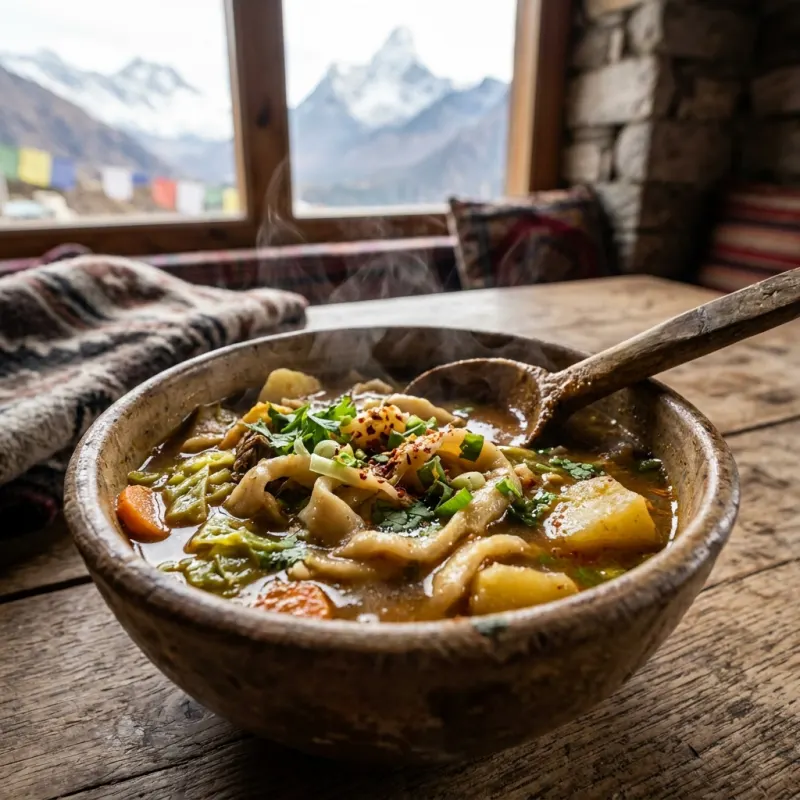
Steaming bowl of traditional Sherpa stew Shakpa on a rustic wooden table in the Everest Region

Must Try Dish

Sherpa Stew (Shakpa) - A rich, thick mountain stew made with hand-rolled dough pieces, local potatoes, mountain herbs, and vegetables. It warms the core instantly after hours of high-altitude trekking in freezing alpine conditions.
Food Experiences Title Icon

Food
Experiences

Discover cooking classes, tastings and local food tours

No food experience found
Maya, the human travel expert at TravelingWiz, offering curated, non-AI expertise

Maya’s Final Checklist for Everest Region

Logistics shouldn’t be the focus of your trip—the experience should. I’ve hand-vetted these essential partners to ensure your arrival, stay, and exploration are as smooth as an Athenian breeze.

Where to Stay

From boutique hotels to local apartments—compare thousands of options and find the perfect stay in the best neighborhood.

Air Travel

Getting there should be seamless. Compare the best routes and prices across top airlines to start your journey on the right note.

Local Guides

Connect with experts who know the destination best. Get personalized advice and insider tips to help you plan your perfect trip.

Travel Protection

The “Engineer’s” rule: always have a backup. Secure your trip with a plan that covers every “what if” and unexpected change.

Car Rentals

Explore at your own pace with total freedom. Compare reliable rental options and find the right vehicle for your adventure.

Visa Services

Don’t let paperwork slow you down. Get expert assistance with your application to ensure all your entry documents are in order.

FAQs

Trekkers require two primary permits: the Sagarmatha National Park Entry Permit (purchased in Kathmandu or Monjo) and the Khumbu Pasang Lhamu Rural Municipality Permit (obtained in Lukla or Monjo). TIMS cards are generally no longer required for this specific region.
Most travelers fly via short domestic STOL flights from Kathmandu or Ramechhap (Manthali Airport) to Tenzing-Hillary Airport in Lukla. Alternatively, overland trekking routes originate from Jiri or Salleri, adding roughly 4 to 7 days of lower-elevation hiking.
While regulations across Nepal have tightened requiring mandatory guides in most national parks, independent trekking status in the Khumbu region periodically fluctuates due to local municipality jurisdiction. Hiring a licensed Sherpa guide or porter-guide is strongly recommended for route navigation, safety, and cultural insight.
Ncell and Nepal Telecom have cellular coverage in lower areas like Namche Bazaar. Above Namche, most trekkers purchase prepaid Everest Link Wi-Fi cards available at local teahouses, though speeds drop significantly during poor weather.

Your Insights Matter

TravelingWiz grows through the stories of our community. If you’ve recently explored ,Everest Region share your tips and stories to help us perfect our guides for the next traveler.

Related Articles

Check out our related articles and blog posts to learn even more about the destination.

No related articles found

Don’t Travel Alone

Share with your friends and family

Where should we send your offline card?

We hate spam just as much as you do

newsletter_consent *