Central Serbia represents the historical foundation and cultural heart of the Serbian state. Spanning the rolling agricultural hills of Šumadija, the verdant valleys carved by the Morava River, and the rugged limestone massifs of the Dinaric Alps, this region seamlessly merges heritage with pristine natural scenery. It was here, amidst dense oak forests and mountain retreats, that medieval Serbian rulers founded monastic masterpieces adorned with world-renowned Byzantine frescoes, and where modern uprisings forged the nation's independence in the nineteenth century.
Beyond its deep historical gravitas, Central Serbia enchants travelers with its leisurely rural rhythm. Traditional ethno-villages dot the countryside, offering travelers warm hospitality centered around hearty home-cooked meals, wood-fired hearths, and handcrafted rakija. From the royal mausoleum and vineyards of Oplenac to the serene mineral springs of centuries-old spa towns like Vrnjačka Banja, visiting the region grants travelers a genuine, unhurried immersion into authentic Balkan culture far from common tourist paths.
Reasons to Visit
- Medieval Monasteries: Tour iconic UNESCO World Heritage sites including Studenica Monastery, Žiča, and the fortified towers of Manasija, featuring sublime 12th-to-15th-century Byzantine frescoes.
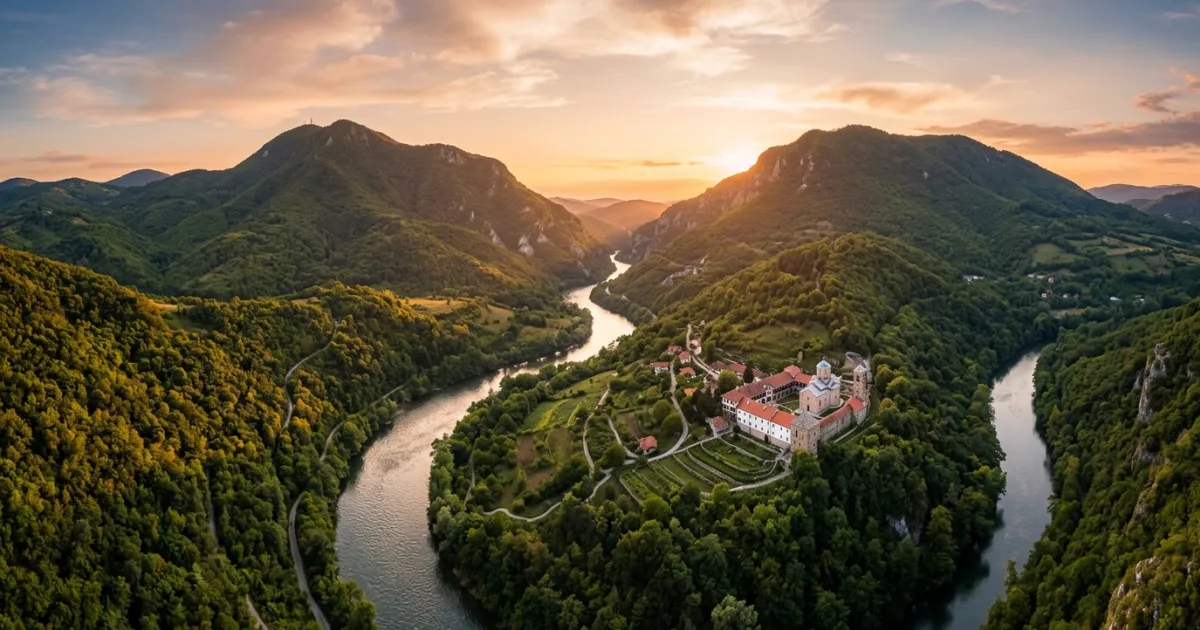
- Scenic River Gorges: Hike the dramatic ridges of Ovčar-Kablar Gorge, known as the 'Serbian Mount Athos', offering panoramic switchback river views and hidden hillside sanctuaries.
- Royal Wine Heritage: Sample crisp regional white and indigenous Prokupac red wines across the sunny slopes of Oplenac and the historic royal cellars in Topola.
- Authentic Rural Ethno-Tourism: Stay in preserved timber cottages, participate in seasonal harvests, and experience world-renowned Serbian hospitality.
- Thermal Wellness Spas: Rejuvenate in mineral-rich thermal springs and modern wellness resorts at Vrnjačka Banja, Sokobanja, and Mataruška Banja.
Things to Avoid
- Avoid entering active Orthodox monasteries wearing shorts, sleeveless shirts, or revealing garments, as entry will be politely refused.
- Do not rely solely on debit or credit cards when venturing into rural districts and small village taverns; always keep several thousand Dinars in cash.
- Avoid speeding on secondary rural roads, as unannounced speed cameras, livestock, and unpaved shoulder patches are frequent.
- Do not take indoor photographs of monastic frescos with flash, as intense light deteriorates fragile medieval pigments.
- Avoid discussing sensitive regional political conflicts with locals unless they initiate an open and reflective dialogue.
Local Transportation Tips
Renting a personal vehicle is the most practical and flexible method for exploring Central Serbia, as scenic roads connect the major historical clusters across Šumadija and the Morava River basin. Major highways like the Miloš the Great Motorway (A2) and the Morava Corridor ensure smooth, high-speed connectivity between Belgrade and regional centers such as Čačak and Kraljevo.
Regional buses operated by carriers like Lasta connect municipal centers reliably, with frequent daily departures between Kragujevac, Kruševac, and Belgrade. However, reaching specific remote monastic enclaves or mountain trailheads requires either a rental car, a hired local taxi, or pre-arranged guided day tours from larger towns.
Travel Etiquette
- When invited into a Serbian home or rural guesthouse, it is customary to accept a spoonful of sweet fruit preserve (slatko) followed by a glass of cold water.
- A firm handshake accompanied by direct eye contact is standard when meeting someone; among close friends, three light cheek kisses represent the traditional Serbian greeting.
- Tipping in restaurants and kafanas is customary: rounding up the bill or adding 10% in cash for good service is widely appreciated.
- Remove shoes before entering traditional rural residences if you notice footwear placed outside the door or if requested by your host.
Recommended Age Group
Central Serbia offers diverse outdoor and cultural attractions tailored for varied traveler stages, balancing accessible historic landmarks with peaceful nature escapes.
- Babies (0-2 years): Neutral. Cobblestone monastery paths and hilly trail terrain can make stroller navigation challenging, though spa resort towns feature flat, shaded parks.
- Kids (3-12 years): Recommended. Children enjoy exploring medieval fortress ruins, riding retro river cruisers, visiting ethno-farms with friendly animals, and bathing in outdoor thermal pool complexes.
- Teens (13-19 years): Recommended. Offers active adventures like kayaking along river gorges, quad-biking forest trails, and exploring atmospheric underground caves and fortress ramparts.
- Adults (20-64 years): Recommended. Perfect demographic for road trips, wine tastings, culinary tours, photography expeditions, and hiking across scenic gorges.
- Seniors (65+ years): Recommended. Outstanding destination for wellness escapes, featuring world-class balneotherapy spa resorts, gentle park walkways, and culturally enriching monastic tours.
Accessibility Level: Medium
- Town centers and promenade boulevards in established spa resorts like Vrnjačka Banja feature flat, paved walkways and barrier-free park access.
- Major monastic complexes such as Žiča and Studenica offer accessible ground-level entry to central courtyards, though interior nave thresholds often have historic stone steps.
- Public buses and regional transit options generally lack hydraulic wheelchair ramps; private accessible vehicle hire from Belgrade is recommended for wheelchair users.
- Modern 4-star hotels in Kragujevac and Vrnjačka Banja provide step-free entrances and elevator access, but historic rural ethno-cottages typically feature elevated wooden stairs.
Did You Know?
Central Serbia's Šumadija region takes its name from the Serbian word 'šuma', meaning forest, referencing the colossal, impenetrable ancient oak forests that completely blanketed the territory up until the 19th century.
Cool Statistics
- Home to over 300 mineral springs, making Central Serbia one of the most hydro-thermally active regions in Southeastern Europe.
- Studenica Monastery was founded in 1190 AD by Stefan Nemanja and houses some of the best-preserved 13th-century Byzantine gold-leaf frescoes in existence.
- The Šumadija region accounts for a significant portion of Serbia's plum production, which supplies the world with premium slivovitz brandy.






Buy a compatible power adapter for your trip