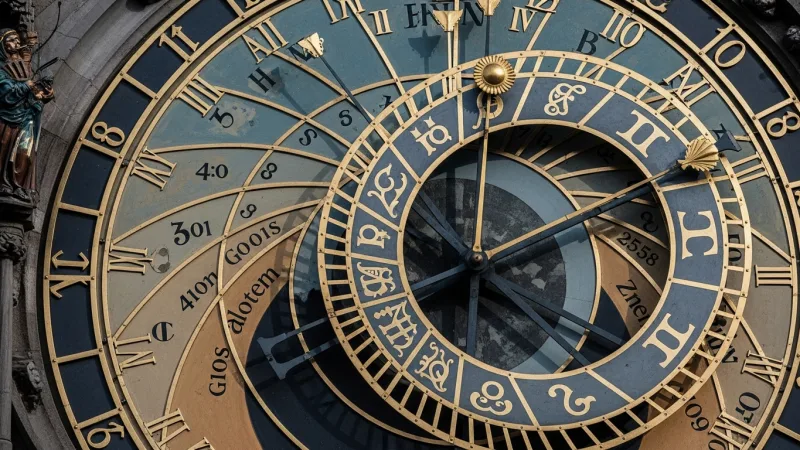
The Astronomical Clock, or Orloj, is far more than just a time-telling device; it's a medieval marvel of engineering, art, and cosmology. Don't just watch the hourly procession of the Apostles and move on; take a moment to understand the three main components that make this clock so extraordinary:
1. Astronomical Dial: This is the oldest part, showing the position of the Sun and Moon, various astronomical details (like the zodiac signs), and representing the Earth as the center of the universe—a geocentric model prevalent in medieval times. It tells Bohemian, Old Bohemian, and Babylonian time.
2. Calendar Dial: Located below the astronomical dial, this intricate dial depicts the months of the year, zodiac signs, and various saints' days, often illustrated with beautiful allegorical scenes representing rural life in Bohemia. It was added later and is a masterpiece in itself.
3. The Walk of the Apostles: This is the famous hourly show. As the clock strikes the hour, the figures of the Apostles emerge and parade past two windows, accompanied by other moving figures like Death (a skeleton ringing a bell) and the Turk (representing pleasure or temptation). Understanding these layers will transform your viewing from a simple spectacle into a profound appreciation of its historical, scientific, and artistic significance. Consider downloading a detailed guide or joining a walking tour that specifically explains its symbolism and history.







Buy a compatible power adapter for your trip