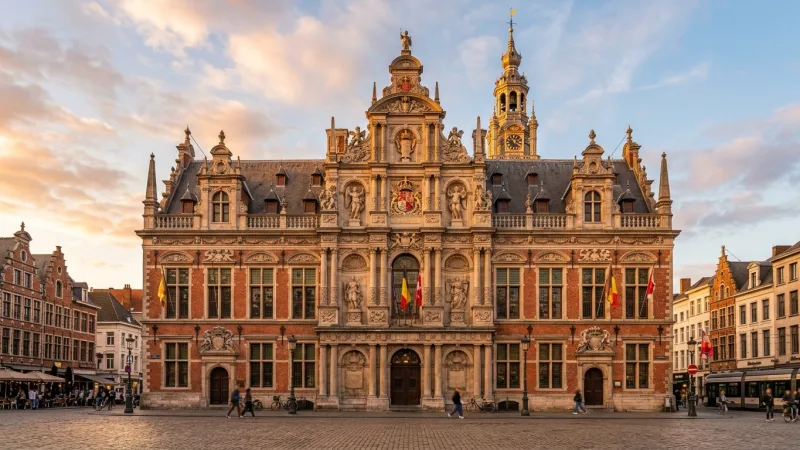
Before rushing into the courtyard, take time to study the exterior facing the Grand Place. Designed by master builder Julien Destrée between 1652 and 1653, the building is actually an ensemble of 24 separate merchant houses cleverly unified behind a single lavish Flemish Renaissance facade to reflect local merchant wealth under Spanish dominion.
Inspect the carved stone pediments above the upper windows: each contains distinct allegorical motifs representing trade, science, and navigation, such as cornucopias, navigation globes, scales of justice, and lion cartouches. For the most balanced view of the central copper-clad campanile topped by a statue of Mercury, stand on the far side of the plaza near the Goddess column.







Buy a compatible power adapter for your trip