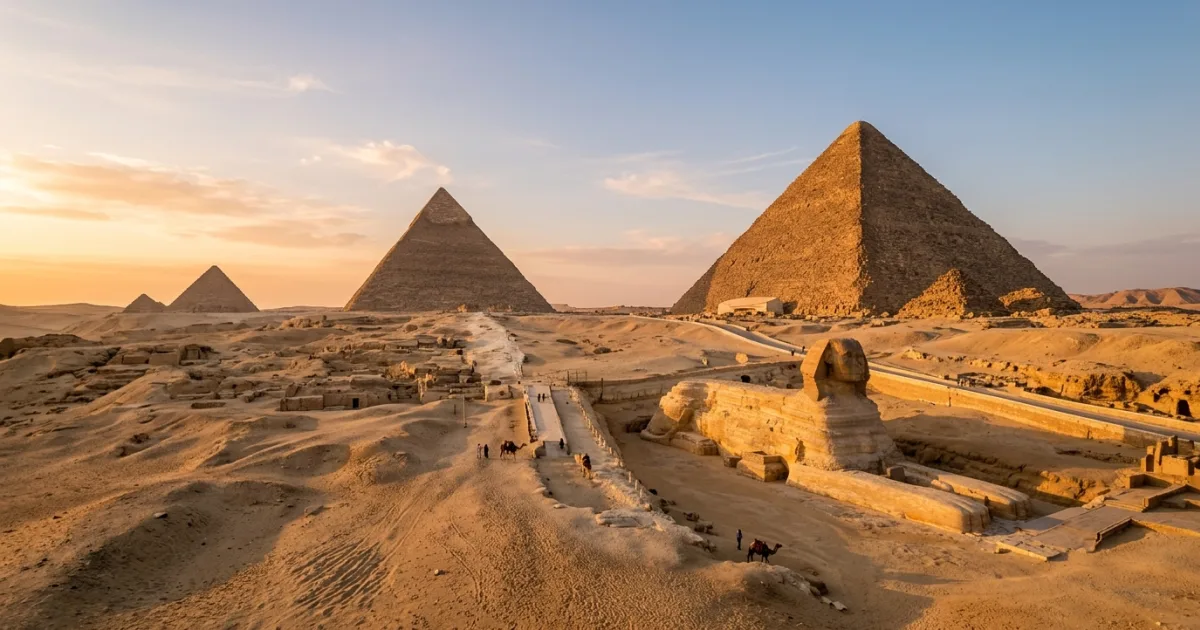
Giza Governorate represents one of Egypt's most historically critical regions, extending from the urban sprawl along the west bank of the Nile to the open sands of the Libyan Desert. While most visitors immediately associate Giza with the world-famous trio of fourth-dynasty pyramids, the governorate contains an expansive continuum of ancient history. At Saqqara, the burial grounds of ancient Memphis reveal the birthplace of monumental stone masonry with Imhotep's Step Pyramid of Djoser, surrounded by elaborately decorated Old Kingdom mastaba tombs containing pristine wall reliefs.
In Dahshur, travelers can marvel at King Sneferu's Bent Pyramid and the Red Pyramid—the first successful smooth-sided pyramid ever built. Meanwhile, the opening of the Grand Egyptian Museum (GEM) near the Giza Plateau redefines modern cultural curation, consolidating over 100,000 artifacts into an architectural masterpiece overlooking the ancient monuments. In addition to heritage landmarks, modern Giza is a thriving commercial hub comprising major university centers, botanical gardens, and expanding suburban settlements, making it an indispensable part of any Egyptian journey.
Reasons to Visit
- Home to the Pyramids of Giza and the Great Sphinx, the sole surviving Wonder of the Ancient World.
- The Grand Egyptian Museum, housing the world's most extensive collection of ancient Egyptian antiquities.
- The ancient necropolises of Saqqara and Dahshur, offering rich architectural history with fewer tourist crowds.
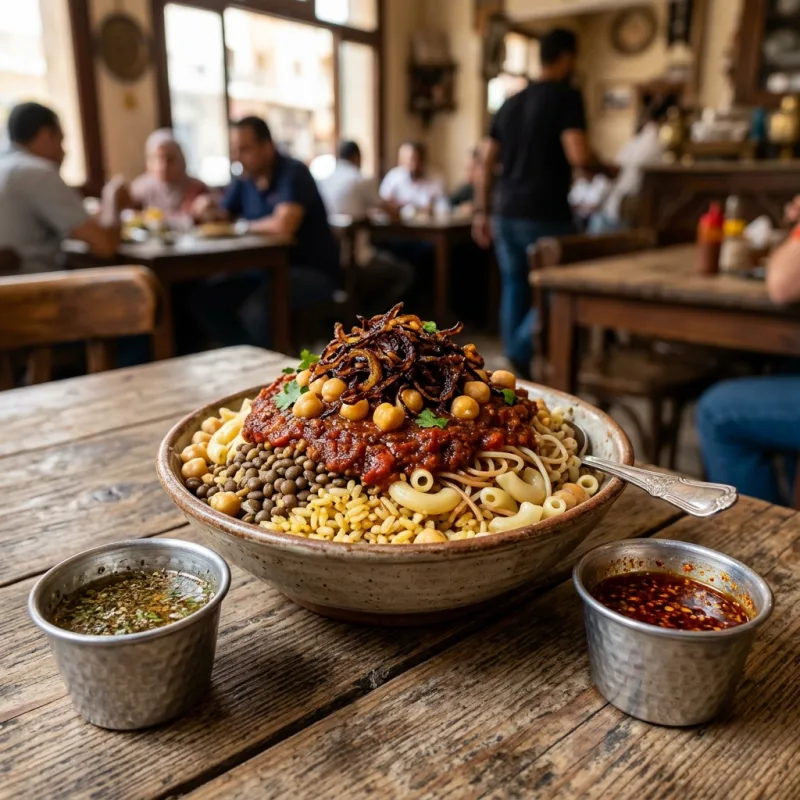
- Authentic Egyptian culinary encounters, from casual street koshary to traditional rooftop dining with pyramid views.
- Expansive desert excursions, camel treks, and archaeological discovery spanning five thousand years.
Things to Avoid
- Do not engage unauthorized street touts or unofficial guides who aggressively offer transport or tours outside the ticketing gates.
- Avoid visiting the Giza Plateau during the peak midday heat in summer months; always aim for early morning entry.
- Do not ride camels or horse carriages without agreeing on a clear, all-inclusive price before mounting.
- Avoid climbing onto the ancient monuments or removing stones, which is strictly prohibited and enforced by antiquities police.
- Do not drink unfiltered tap water; choose sealed bottled or treated water throughout your stay.
Local Transportation Tips
Giza's transit infrastructure is well-connected to Greater Cairo via the Cairo Metro (Line 2 serves key stations in Giza). For maximum convenience and comfort, app-based ride-hailing services like Uber and Careem operate extensively throughout Giza's urban core. For trips to outlying necropolises such as Saqqara and Dahshur, booking a pre-arranged private car or licensed tour driver for the full day provides the most reliable and cost-effective solution.
Travel Etiquette
- Dress conservatively when exploring urban neighborhoods and religious sites, ensuring shoulders and knees are covered.
- Practice the customary art of tipping (baksheesh) for drivers, servers, and site attendants with small local currency bills.
- Always request permission before photographing local residents or craftsmen in markets and bazaars.
- Remove your shoes when entering mosques or traditional home spaces.
Recommended Age Group
Giza Governorate welcomes diverse generations, though varying site terrains influence comfort across different ages.
- Babies (0-2 years): Not Recommended. Sandy terrains, uneven stone surfaces, and desert heat make navigating archaeological sites with strollers exceptionally difficult.
- Kids (3-12 years): Recommended. Seeing the towering pyramids, riding camels, and exploring interactive exhibits at the Grand Egyptian Museum offer thrilling real-world history adventures.
- Teens (13-19 years): Recommended. Perfect for budding photographers, adventure enthusiasts, and students fascinated by ancient mythology and architecture.
- Adults (20-64 years): Recommended. Highly rewarding for culture lovers, active walkers, and travelers seeking in-depth historical exploration.
- Seniors (65+ years): Recommended. Rewarding when utilizing private transportation, guided tours, and modern, fully accessible facilities like the Grand Egyptian Museum.
Accessibility Level: Medium
- The Grand Egyptian Museum provides full barrier-free accessibility with smooth ramps, modern elevators, and accessible restrooms.
- The Giza Plateau features paved asphalt roadways between primary viewing points, though secondary paths consist of loose sand and rough limestone.
- Interior pyramid passageways are narrow, steep, and completely inaccessible to wheelchair users.
- Hiring private, climate-controlled transport allows mobility-impaired visitors to admire monuments comfortably from outdoor perimeter viewpoints.
Did You Know?
The Great Pyramid of Khufu was the tallest human-made structure in the world for over 3,800 years until the completion of Lincoln Cathedral in England in the year 1311.
Cool Statistics
- The Great Pyramid was constructed using an estimated 2.3 million individual limestone blocks weighing an average of 2.5 tons each.
- Giza Governorate spans a total area of over 13,000 square kilometers, extending deep into Egypt's Western Desert.
- The Grand Egyptian Museum complex covers approximately 500,000 square meters, making it one of the largest museum complexes globally.






Buy a compatible power adapter for your trip