Disclosure: This site contains affiliate links. We may earn a commission if you make a purchase, at no extra cost to you.

>
>
>
Eastern Cambodia

Eastern Cambodia

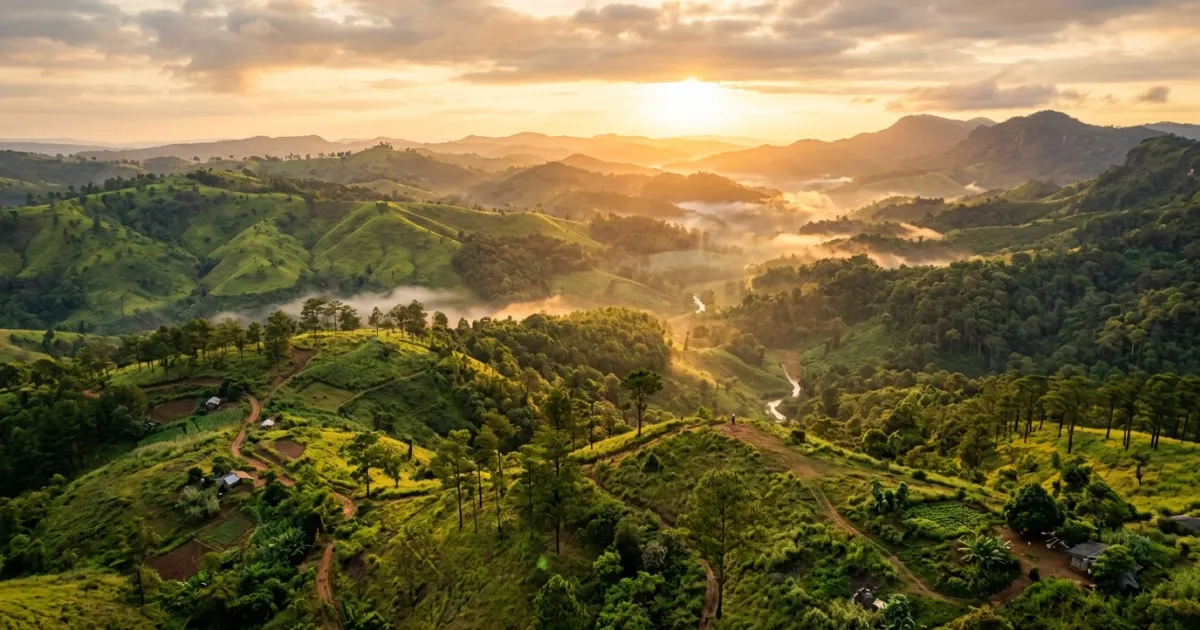
Panoramic view over the rolling green hills and forested valleys of Eastern Cambodia

Eastern Cambodia Overview & Key Highlights

Eastern Cambodia encompasses the wild, verdant provinces of Mondulkiri, Ratanakiri, Kratie, and Stung Treng, offering a refreshing, untamed contrast to the ancient stone temples of Angkor and the urban sprawl of Phnom Penh. Characterized by rolling pine-covered highlands, volcanic crater lakes, and dense tropical rainforests, this rugged frontier is home to indigenous highland communities, ethical elephant sanctuaries, and the rare freshwater Irrawaddy dolphins of the Mekong River. Travelers venturing eastward encounter an immersive landscape designed for slow overland discovery, community-based ecotourism, and deep nature trekking. Whether watching mist settle over Bousra Waterfall, swimming in the emerald waters of Yeak Laom Lake, or observing wild herds roaming protected valleys with the indigenous Bunong people, Eastern Cambodia rewards active, conscious travelers looking beyond typical tourist corridors.

Eastern Cambodia Travel Guide: Logistics & In-Depth Tips

Eastern Cambodia forms a vast, untamed landscape that dramatically reshapes common perceptions of the country. Stretching across the four provinces of Mondulkiri, Ratanakiri, Kratie, and Stung Treng, the region transitions from the alluvial plains of the Mekong Basin into dramatic undulating hills, pine plateaus, and dense canopy rainforests. The cooler climate and red basaltic soil nurture coffee plantations, rubber forests, and thundering waterfalls, presenting an environment that feels distinct from Cambodia’s lowland temple corridors.

Culturally, the eastern highlands are defined by indigenous ethnic minority groups, notably the Bunong and Tampuan peoples, who have maintained animist beliefs, spiritual forest traditions, and rotational farming systems for centuries. Ecotourism has emerged as a vital safeguard for both cultural heritage and fragile wildlife corridors, giving travelers the chance to track rescued Asian elephants through community-protected valleys, paddle along remote Mekong river bends, and experience genuine cross-cultural connection far off Southeast Asia’s beaten trail.

Reasons to Visit

  • Ethical Wildlife Encounters: Observe rescued Asian elephants thriving in their natural jungle habitat without riding or direct exploitation.
  • Rare Mekong River Dolphins: Glimpse endangered freshwater Irrawaddy dolphins surfacing in tranquil river pools near Kratie.
  • Yeak Laom Volcanic Lake: Swim in the crystalline, perfectly circular volcanic crater lake surrounded by sacred old-growth jungle in Ratanakiri.
  • Dramatic Waterfalls: Witness the two-tiered torrent of Bousra Waterfall and hidden jungle cascades like Chhaa Ong and Ka Tieng.
  • Highland Indigenous Culture: Learn about animist cosmologies, traditional herbal medicine, and woven textiles directly from Bunong and Tampuan communities.

Things to Avoid

  • Avoid participating in elephant rides or patronizing tour operators that force elephants to interact with crowds; choose validated sanctuaries instead.
  • Do not wander off marked trails in remote border forests due to unmapped historic landmines and unexploded ordnance (UXO).
  • Avoid driving motorbikes across unpaved forest tracks during the rainy season unless you possess off-road riding experience.
  • Do not photograph indigenous tribal burial sites, animal sacrifices, or sacred spirit forests without explicit permission from village elders.
  • Avoid traveling without adequate physical cash reserves, as card readers and rural ATMs are scarce and unreliable.

Local Transportation Tips

Long-distance travel between provincial centers relies primarily on comfortable shared minivans departing daily from Phnom Penh, Siem Reap, and between regional hubs. Within towns like Sen Monorom and Banlung, renting a semi-automatic motorbike is the most liberating way to explore surrounding waterfalls and plantations. Alternatively, local passapps and tuk-tuks operate within town centers, while rugged four-wheel-drive pick-ups or community tractors are hired through licensed agencies for remote forest expeditions.

Travel Etiquette

  • Dress modestly with covered shoulders and knees when visiting indigenous villages, pagodas, or community gatherings.
  • Always remove your shoes before stepping into a traditional Bunong thatched stilt house or local home.
  • Never touch anyone on the head, including children, as the head is considered the sacred seat of spiritual power in Khmer and highland cultures.
  • Always ask permission before photographing local indigenous artisans or village elders.
  • Accept food or drink offered by hosts using both hands or your right hand supported by your left forearm as a sign of deep respect.

Recommended Age Group

Eastern Cambodia is an adventure-forward ecotourism destination featuring long transit times, rugged topography, and deep nature immersion that best suits older youths and active adults.

  • Babies (0-2 years): Not Recommended. Rugged road journeys, remote medical facilities, and high exposure to insect-borne tropical pathogens make travel with infants unfeasible.
  • Kids (3-12 years): Neutral. Children with strong outdoor curiosity will enjoy swimming at crater lakes and seeing elephants, but multi-hour bumpy minivan rides can prove grueling.
  • Teens (13-19 years): Recommended. Ideal for adventurous teenagers interested in jungle trekking, mountain biking, kayaking, and authentic conservation learning.
  • Adults (20-64 years): Recommended. Perfect demographic for off-the-beaten-path hikers, motorbike road-trippers, culture seekers, and sustainable wildlife enthusiasts.
  • Seniors (65+ years): Neutral. Well-suited for active seniors seeking calm nature and dolphin cruises, provided itineraries bypass strenuous uneven jungle trekking.

Accessibility Level: Medium

  • Paved interprovincial highways connect major towns, but access trails to waterfalls, crater lakes, and elephant reserves feature steep dirt inclines, loose volcanic rock, and wooden stairs lacking handrails.
  • Standard shared minivans and local tuk-tuks lack hydraulic lifts or wheelchair restraint systems.
  • High-end eco-lodges can arrange customized ground-floor bungalow accommodations and private vehicle transfers upon advance request.
  • Wheelchair users will find provincial capitals like Kratie more manageable along flat riverfront promenades compared to the steep hillsides of Sen Monorom.

Did You Know?

Yeak Laom Lake in Ratanakiri is a near-perfect circle formed by a volcanic explosion roughly 700,000 years ago. Local Tampuan indigenous folklore reveres the lake as sacred, believing it to be the palace of a mythical water dragon.

Cool Statistics

  • Bousra Waterfall Drop: Over 40 meters across two dramatic multi-tiered cascades
  • Yeak Laom Crater Depth: Approximately 48 meters deep with exceptionally clear natural water
  • Irrawaddy Dolphin Population: Under 90 individuals surviving along this protected stretch of the Mekong River
  • Highland Elevation: Reaching over 800 meters above sea level, producing Cambodia’s coolest microclimates


Address:

Eastern Cambodia, Cambodia

Find Nearby Accommodations

Basic Info

address icon

COUNTRY & Region

Cambodia,
Asia

ACCESSIBILITY LEVEL​

Medium
Currency icon

LOCAL CURRENCY​

Cambodian Riel (KHR)
Price level icon
Low
Safety Level icon

SAFETY LEVEL

Duration icon

Recommended Duration

• 1-7 days
• More than a week

Electricity

electricity icon

Electricity

220-240V, 
50Hz
Plug Socket icon

Plug Type

• Type A (Flat blade)
• Type C (Round pin)
• Type G (Three rectangular pins in a triangular pattern)
Plug types
Click To View Plug Types
Eastern Cambodia is part of our
Off-Grid Glamping collection

Activities To Do In Eastern Cambodia

Best Time To Visit Eastern Cambodia

Eastern Cambodia experiences a tropical monsoon climate tempered significantly by highland elevation in Mondulkiri and Ratanakiri.

  • November to February (Cool & Dry Season): The optimal time to visit, characterized by clear skies, daytime temperatures between 22°C and 28°C, and cool highland nights dropping below 15°C.
  • March to May (Hot Season): Temperatures climb to 34°C, drying out backcountry dirt roads, making overland transit easier though midday treks can be physically taxing.
  • June to October (Wet/Green Season): Frequent afternoon showers revive lush greenery and bring waterfalls like Bousra to full roar, though unpaved jungle tracks often become impassable red mud slicks.

Average Temperatures Per Month

Remember to check the weather forecast a few days before the trip and before heading to the airport.

Safety Level icon

Safety Level

Eastern Cambodia is remarkably tranquil and safe regarding violent crime, but practical environmental risks require vigilance. Always hire an accredited local guide when venturing deep into secondary forests, as unexploded ordnance (UXO) remnants from past conflicts remain undocumented in deep wilderness outside recognized paths. Wear long boots and socks to protect against leeches and snakes during the monsoon. Exercise extreme caution when riding motorbikes on red-clay roads, which turn notoriously slippery after minor rain showers.

The rating is based on multi-year peace, crime, and security indices. Before you go, always verify current conditions through official government travel advisories.

Emergency Numbers

Police: 117
Ambulance: 119

No internet needed • Includes local translations • Free for TravelingWiz readers

Spoken Languages

Khmer, Bunong, Tampuan, English (in tourism services)

Learn The Language

  • Sous-dey: Hello
  • Or-kun: Thank you
  • Baht / Chaa: Yes (Male / Female)
  • Tey: No
  • Som toh: Excuse me / Sorry
  • T’lay pon-maan?: How much is this?
  • Teuk: Water
  • Chhnang: Delicious
Travel Booking Partner - TravelingWiz

Trip Cost & Budgeting for Eastern Cambodia, 2026

Everything you need to know about money while traveling
Is Eastern Cambodia expensive for tourists in 2026? No, it remains a very affordable destination for travelers. Based on Human Verified prices, expect to pay around 10,000 KHR for a cappuccino, 4,000 KHR for a local pint of beer, and 24,000 KHR for a standard mid-range restaurant meal. Overall travel costs are minimal compared to Western destinations. Use the data table below to calculate your specific daily budget based on your travel style.
Currency icon

LOCAL CURRENCY​:

Cambodian Riel (KHR)
Price level icon
Low
Cash is essential in Eastern Cambodia, as card acceptance is limited to larger hotels and upscale establishments.

Per person, per day – pocket cash for small purchases.

Local: 22500
Cambodian Riel (KHR)
≈ 6 USD

Full daily spend estimation (accommodation, food, transportation, attractions).

Travel Style
Cambodian Riel (KHR)
≈ USD ($)
Budget
123750
31
Mid-range
225000
56
Comfort
495000
122

The Prices, Daily costs, and calculator results are estimates for planning purposes only. Actual costs may vary based on season, booking timing, personal spending habits, and currency fluctuations. TravelingWiz cannot be held responsible for discrepancies between these estimates and your final trip expenses.

  • • Eat at local Khmer eateries or night markets in towns like Kratie and Banlung for cheap meals.
  • • Rent a scooter for exploring rural waterfalls and nature reserves instead of hiring private drivers.
  • • Keep small denomination KHR notes handy for street food, markets, and local tuk-tuk fares.
  • • Book intercity buses directly at terminal counters rather than through hotel desks to avoid commissions.

Pre-Order Tickets

Avoid disappointment when tickets sell out — and skip the long lines by booking online in advance. You’ll often save up to 20% too.
Save up to 20%

Travel Discounts & Coupons

Save on hotels, attractions, transport, and gear — find verified discounts for smarter travel spending.
Verified Coupons

What To Pack

  • Sturdy waterproof hiking boots with aggressive tread for slick jungle clay
  • DEET insect repellent and anti-itch bite relief cream
  • Lightweight quick-dry long trousers and UV-protective long-sleeve shirts
  • Compact rain poncho or lightweight breathable rain jacket
  • Warm fleece layer for chilly highland evenings in Sen Monorom
  • Dry bag to protect cameras and electronics during boat journeys and waterfall hikes
  • Cash in crisp, unmarked US Dollars and small denomination Cambodian Riel
  • Refillable filtered water bottle or purification tablets
  • High-SPF reef-safe sunscreen and wide-brim sun hat
We couldn't find tips for Eastern Cambodia.
If you got any, please share

Recommended Itineraries for Traveling to Eastern Cambodia

We couldn't find itineraries for Eastern Cambodia.
you can contact us for custom trip plan

Food & Drink Highlights

Local Food Overview

Gastronomy in Eastern Cambodia is shaped by the untamed forest flora, freshwater bounty of the Mekong, and ancestral culinary techniques of highland indigenous tribes like the Bunong and Tampuan. Dishes rely on bitter greens, wild mushrooms, indigenous root vegetables, and fermented fish paste (prahok). In Kratie and Stung Treng, river fish grilled over charcoal or steamed in banana leaves dominates riverside markets. Mondulkiri is celebrated for robust organic Arabica and Robusta coffees grown on rich volcanic soils, paired with indigenous mountain rice and fragrant wild forest honey.
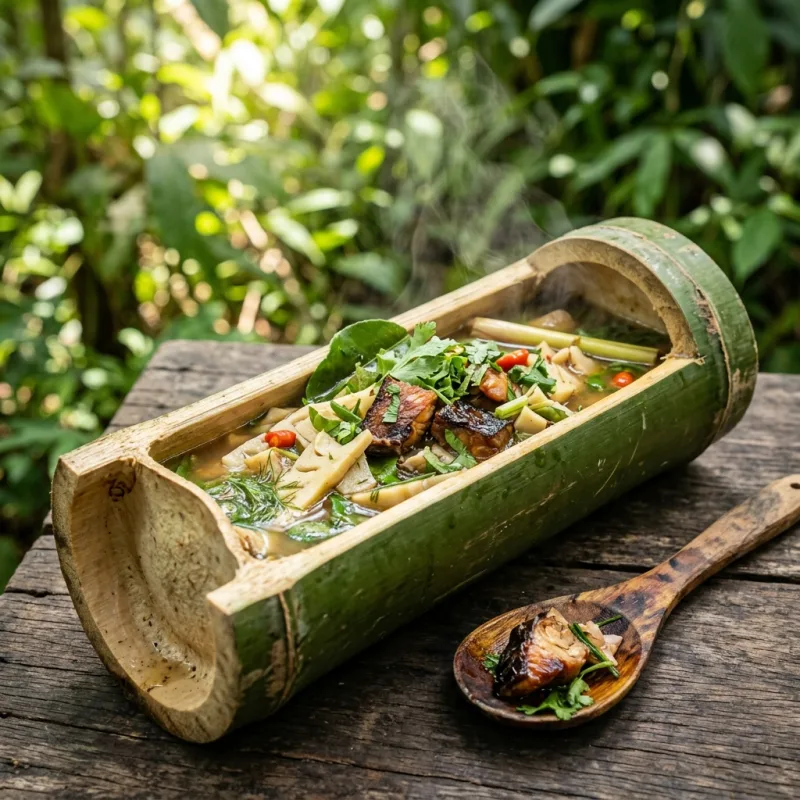
Bunong Bamboo Soup served inside a halved green bamboo stalk with herbs

Must Try Dish

Bunong Bamboo Soup (Samlor Trok) - A sacred indigenous specialty prepared by slow-simmering wild forest greens, young bamboo shoots, smoked meats, and pounded aromatic tubers directly inside a green bamboo stalk over an open fire. The resulting broth is earthy, herbaceous, and smoky with a distinctive forest aroma.
Food Experiences Title Icon

Food
Experiences

Discover cooking classes, tastings and local food tours

No food experience found
Maya, the human travel expert at TravelingWiz, offering curated, non-AI expertise

Maya’s Final Checklist for Eastern Cambodia

Logistics shouldn’t be the focus of your trip—the experience should. I’ve hand-vetted these essential partners to ensure your arrival, stay, and exploration are as smooth as an Athenian breeze.

Where to Stay

From boutique hotels to local apartments—compare thousands of options and find the perfect stay in the best neighborhood.

Air Travel

Getting there should be seamless. Compare the best routes and prices across top airlines to start your journey on the right note.

Local Guides

Connect with experts who know the destination best. Get personalized advice and insider tips to help you plan your perfect trip.

Travel Protection

The “Engineer’s” rule: always have a backup. Secure your trip with a plan that covers every “what if” and unexpected change.

Car Rentals

Explore at your own pace with total freedom. Compare reliable rental options and find the right vehicle for your adventure.

Visa Services

Don’t let paperwork slow you down. Get expert assistance with your application to ensure all your entry documents are in order.

FAQs

Modern air-conditioned minivans operated by companies like Virak Buntham and Kim Seng Express run daily routes from Phnom Penh to Kratie (4-5 hours), Sen Monorom (5-6 hours), and Banlung (8-9 hours) along fully paved national highways.
Mondulkiri Province is home to renowned ethical sanctuaries such as the Elephant Valley Project and Mondulkiri Project. These sanctuaries strictly prohibit elephant riding and bathing, allowing rescued working elephants to wander freely in protected natural forest reserves.
Yes, the deep freshwater pools of Kampi, located approximately 15 kilometers north of Kratie along the Mekong River, host one of the last remaining populations of critically endangered Irrawaddy dolphins. Small community-run eco-boats take visitors out during early mornings and late afternoons.
While major towns like Kratie, Sen Monorom, and Banlung have low transmission rates, rural jungle areas and forest borders remain higher risk for mosquito-borne illnesses like malaria and dengue. Consult a travel medicine clinic before departure and carry quality insect repellent.

Your Insights Matter

TravelingWiz grows through the stories of our community. If you’ve recently explored ,Eastern Cambodia share your tips and stories to help us perfect our guides for the next traveler.

Related Articles

Check out our related articles and blog posts to learn even more about the destination.

No related articles found

Don’t Travel Alone

Share with your friends and family

Where should we send your offline card?

We hate spam just as much as you do

newsletter_consent *