Disclosure: This site contains affiliate links. We may earn a commission if you make a purchase, at no extra cost to you.
Western Cambodia

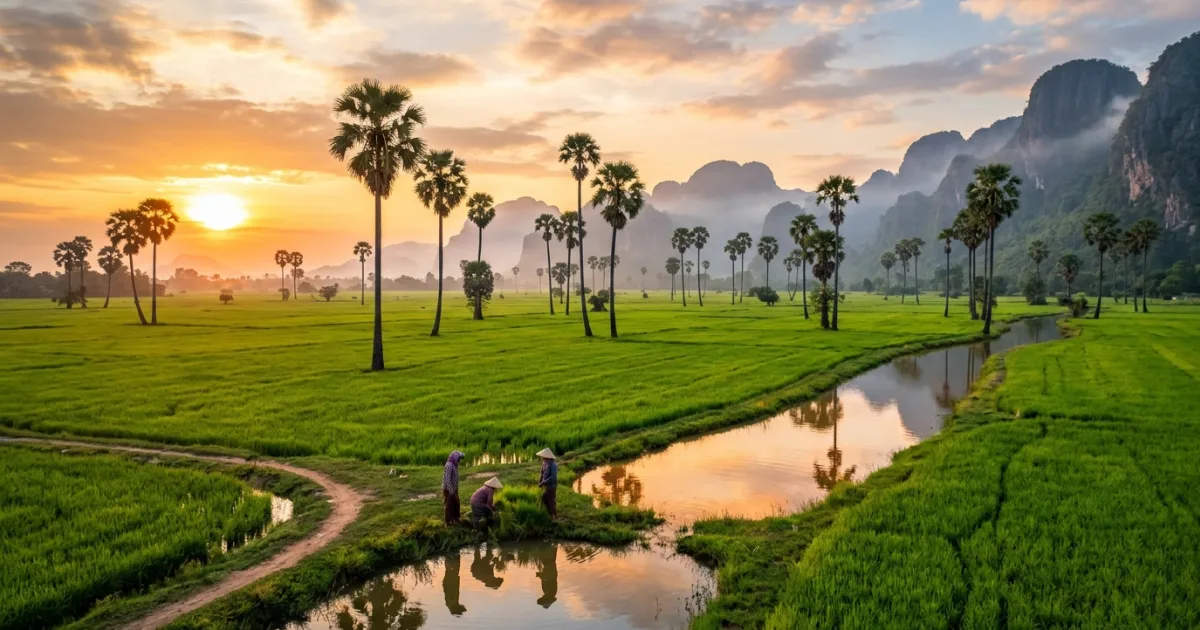
Panoramic sunset over Western Cambodia countryside with rice fields and limestone karsts

Basic Info

COUNTRY & Region

Cambodia,
Asia

ACCESSIBILITY LEVEL​

  • High: Widely accessible with good facilities for disabilities.
  • Medium: Some accessible options, but limitations exist.
  • Low: Limited accessibility; many barriers for disabilities.
Medium

LOCAL CURRENCY​

Cambodian Riel (KHR)

Price Level

Low – budget‑friendly basics

Medium – moderate mid‑range costs

High – pricey lodging, dining & transport

Low

SAFETY LEVEL

5 shields = Excellent – very low crime or conflict.

4 shields = Safe – low risk, routine care.

3 shields = Relatively safe – use normal street smarts.

2 shields = Use caution – higher crime or periodic unrest.

1 shields = Avoid – active conflict or extreme danger.

Scores are derived from multi-year peace, homicide and security indices blended into a single 1-to-5 scale.

Recommended Duration

1-7 days, More than a week

Western Cambodia Overview & Key Highlights

Western Cambodia encompasses an evocative expanse of fertile floodplains, rugged border hills, and untouched cultural landmarks stretching from the Tonle Sap basin to the Thai border. Anchored by Battambang, Cambodia's second-largest city renowned for its French colonial shophouses and burgeoning art scene, the region extends west into the gem-rich hills of Pailin and north toward Banteay Meanchey's remote jungle temples. Unlike the heavily touristed corridors of Siem Reap and Phnom Penh, this territory rewards overland explorers with pastoral scenery, limestone karst formations, and authentic agrarian daily life. Travelers journeying through Western Cambodia encounter exceptional heritage sites such as the ancient temple outpost of Banteay Chhmar, alongside sobering recent history etched into borderland outposts. The landscape shifts dramatically from green paddy fields dotted with sugar palms to the forested slopes of the Cardamom Mountains. Whether boarding the novelty Nori bamboo railway, watching millions of wrinkle-lipped bats emerge at dusk from Phnom Sampeau, or kayaking through Tonle Sap's flooded forests, the region provides an immersive and unvarnished encounter with contemporary and historic Cambodia.

Western Cambodia Travel Guide: Logistics & In-Depth Tips

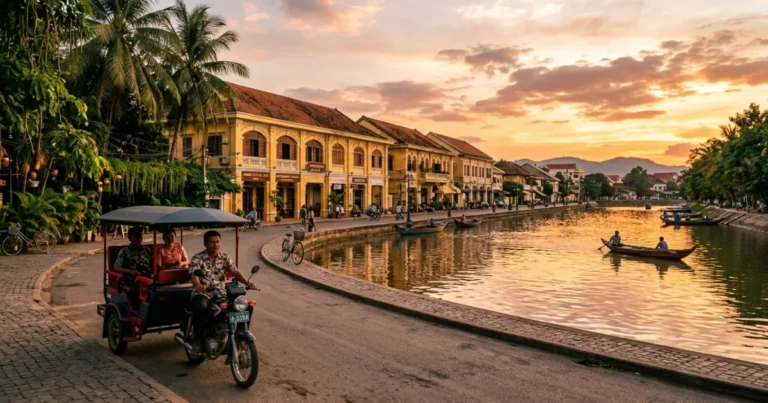
Western Cambodia presents a compelling counterpoint to the country's conventional tourism circuit. Centered around the Sangker River basin and stretching to the northern foothills of the Cardamom range, this territory is characterized by deep red soil, emerald agricultural plains, and distinctive karst outcrops. Battambang functions as the cultural capital of the west, where centuries of French Indochina governance left behind grand riverside villas, administrative buildings, and traditional Chinese shopfronts. Beyond urban centers, the region showcases a profound relationship with the land, functioning as Cambodia's primary producer of rice, corn, and tropical fruit.

Historically, Western Cambodia has witnessed dramatic transformations, serving as an ancient Angkorian bastion, an annexed territory of Siam, and later one of the final strongholds of the Khmer Rouge during the late 20th century. Today, this historical complexity fuels a revitalized cultural identity. Independent art galleries, social enterprises like Phare Ponleu Selpak circus school, and community-run heritage tours welcome travelers seeking genuine cultural exchanges without the commercialized crowds seen elsewhere in Southeast Asia.

Reasons to Visit

  • Battambang's Architectural Heritage: Wander along the Sangker River to view some of the best-preserved French colonial and traditional Khmer architecture in Southeast Asia.
  • Phnom Sampeau Bat Exodus: Witness an awe-inspiring natural spectacle at dusk when millions of bats pour from limestone cliff caverns across the evening sky.
  • Banteay Chhmar Temple Ruins: Explore a massive, secluded 12th-century Angkorian complex adorned with bas-reliefs showing multi-armed Avalokiteshvaras, largely free from tourist congestion.
  • Phare Ponleu Selpak Circus: Attend world-class performances by a renowned grassroots arts institution providing education and circus arts training to local youth.
  • Culinary and Agritourism Trails: Sample artisanal rice paper, dried bananas, sticky bamboo rice, and traditional lotus farm harvests directly from family producers.

Things to Avoid

  • Do not stray off marked trails in remote border regions: Pailin and remote sectors of Banteay Meanchey still harbor uncleared landmines; stick strictly to clear tracks with certified guides.
  • Avoid touching monks or pointing feet at Buddha statues: Monks are deeply revered; women must never touch a monk or hand items directly to them, and feet should be tucked behind you when seated in temples.
  • Do not accept torn or stained US dollar notes: Local businesses strictly scrutinize foreign currency and will refuse bills with minor tears, marks, or excessive wear.
  • Avoid renting motorbikes without proper riding experience: Traffic behavior on main rural arterial roads is unpredictable, and emergency medical infrastructure in remote areas is rudimentary.

Local Transportation Tips

Tuk-tuks (remorks) are the lifeblood of local transit in towns and for suburban temple excursions, typically costing between $15 and $25 USD for a full-day guided hire. For inter-provincial travel between Battambang, Sisophon, and Pailin, air-conditioned minibuses operate regularly along National Road 5 and National Road 57. The historic passenger train line connecting Phnom Penh to Poipet on the Thai border stops in Battambang, offering a slow but scenic rail journey through the pastoral countryside.

Travel Etiquette

  • Dress respectfully at religious sites: Always cover shoulders and knees when visiting pagodas, sacred hilltops, and ancient ruins.
  • Use both hands when giving or receiving: Presenting payments, business cards, or gifts with both hands (or right hand supported by the left wrist) demonstrates respect.
  • Perform the Sampeah greeting: Pressing your palms together in front of your chest with a slight bow is the traditional and polite greeting.
  • Remove footwear before entering homes and temple halls: Footwear should always be placed outside temple sanctuaries and residential thresholds.

Recommended Age Group

Western Cambodia provides distinct experiences depending on traveler stamina, interest in historical depth, and comfort with rugged rural travel.

  • Babies (0-2 years): Not Recommended. Tropical heat, limited specialized pediatric facilities outside Siem Reap, and unpaved, bumpy transport make the region challenging for infants.
  • Kids (3-12 years): Neutral. Children often enjoy the bamboo train and the dusk bat spectacle, though long driving distances and historical sites require patience.
  • Teens (13-19 years): Recommended. Older youth will appreciate the active cycling routes, cave climbs, circus performances, and immersive cultural exposure.
  • Adults (20-64 years): Recommended. Ideal for independent travelers, active adventurers, and history buffs looking to explore beyond the standard tourist trail.
  • Seniors (65+ years): Neutral. Downtown Battambang is leisurely and accessible, but uneven stone temple grounds and high-step hill climbs require sturdy balance.

Accessibility Level: Medium

  • Pavement Quality: Sidewalks in urban Battambang are frequently uneven or blocked by parked motorbikes, presenting hurdles for wheelchair users.
  • Temple Access: Ancient ruins such as Banteay Chhmar, Phnom Banan, and Ek Phnom feature steep staircases, narrow dirt pathways, and unpaved terrain lacking ramp access.
  • Public Transport: Standard tuk-tuks, local minibuses, and railway carriages lack hydraulic lifts or wheelchair tie-downs; manual lifting is generally required.
  • Accessible Lodging: A handful of boutique hotels and higher-end resorts in Battambang feature ground-floor garden rooms and step-free communal areas.

Did You Know?

Phnom Sampeau is home to over 6 million wrinkle-lipped bats that consume dozens of tons of crop-damaging insects every single night, functioning as a vital organic pest-control system that protects Western Cambodia's valuable rice and crop yields.

Cool Statistics

  • Over 6,000,000: Estimated number of bats that exit Phnom Sampeau cave every evening around dusk.
  • 800+: Number of colonial-era and traditional heritage structures inventoried in Battambang province.
  • 12th Century: Construction era of the Banteay Chhmar temple complex under King Jayavarman VII.

Address:

Western Cambodia, Cambodia

Find Nearby Accommodations

Electricity

220-240V, 
50Hz

Plug Type

Type A (Flat blade), Type C (Round pin), Type G (Three rectangular pins in a triangular pattern)
Plug types
Click To View Plug Types
Western Cambodia is part of our
Conscious Travel collection

Activities To Do In Western Cambodia

Best Time To Visit Western Cambodia

Western Cambodia features a distinct tropical monsoon climate characterized by a dry cooler window, intense pre-monsoon heat, and seasonal rainfall.

  • November to February (Peak Dry Season): The most comfortable period with minimal rain, lower humidity, and daytime temperatures around 28°C to 31°C, perfect for rural cycling and temple touring.
  • March to May (Hot Season): Temperatures frequently exceed 38°C with dry conditions, making midday sightseeing taxing; early morning exploration is recommended.
  • June to October (Wet Season): The countryside turns lush emerald green and Tonle Sap water levels rise; afternoon rains are heavy but usually brief, keeping dust low and crowds minimal.

Average Temperatures Per Month

Average monthly temperaturesMonthly source values, with Celsius and Fahrenheit equivalents in the following data table.20°68°24°75°28°82°31°88°35°95°JanJan: 27°C / 81°FFebFeb: 28°C / 82°FMarMar: 30°C / 86°FAprApr: 30°C / 86°FMayMay: 29°C / 84°FJunJun: 29°C / 84°FJulJul: 28°C / 82°FAugAug: 28°C / 82°FSepSep: 27°C / 81°FOctOct: 27°C / 81°FNovNov: 27°C / 81°FDecDec: 26°C / 79°F
View temperature data
Average monthly temperatures
Month°C°F
Jan2781
Feb2882
Mar3086
Apr3086
May2984
Jun2984
Jul2882
Aug2882
Sep2781
Oct2781
Nov2781
Dec2679

Remember to check the weather forecast a few days before the trip and before heading to the airport.

Safety Level

5 shields = Excellent – very low crime or conflict.

4 shields = Safe – low risk, routine care.

3 shields = Relatively safe – use normal street smarts.

2 shields = Use caution – higher crime or periodic unrest.

1 shields = Avoid – active conflict or extreme danger.

Scores are derived from multi-year peace, homicide and security indices blended into a single 1-to-5 scale.

Western Cambodia is generally very peaceful and welcoming, but basic situational awareness is required. Road safety is the primary physical hazard; avoid driving motorbikes at night on National Road 5 due to unlit heavy transport trucks and agricultural vehicles. In rural border sectors near Pailin and Banteay Meanchey, strictly adhere to marked tracks and do not wander into untamed brush due to legacy unexploded ordnance (UXO). Keep your bags and smartphones secure when riding in open-air tuk-tuks through city centers to prevent opportunistic snatch-and-grab thefts.

The rating is based on multi-year peace, crime, and security indices. Before you go, always verify current conditions through official government travel advisories.

Emergency Numbers

Police: 117
Ambulance: 119

No internet needed • Includes local translations • Free for TravelingWiz readers

Spoken Languages

Khmer is the national language; basic English is understood in tourist businesses in Battambang, while Thai is frequently spoken in border towns.
Travel Booking Partner - TravelingWiz

Learn The Language

  • Hello: Choum Reap Sour (formal) / Sous-dey (informal)
  • Thank you: Aw kohn
  • Yes: Baat (male) / Chaa (female)
  • No: Dteh
  • How much?: T’lay pon-man?
  • Delicious: Chhnang
  • Where is…?: …Nou ae na?
  • Goodbye: Choum Reap Lea

Trip Cost & Budgeting for Western Cambodia, 2026

Everything you need to know about money while traveling
Is Western Cambodia expensive for tourists in 2026? No, Western Cambodia remains an exceptionally affordable destination for travelers. Based on our Human Verified prices, you can expect to pay around 6,000 KHR for a cappuccino, 3,500 KHR for a domestic draft beer, and roughly 25,000 KHR for a satisfying meal at a mid-range restaurant. Comfortable hotels and local tuk-tuks are also very cheap. Use the data table below to calculate your specific daily budget based on your travel style.

LOCAL CURRENCY​:

Cambodian Riel (KHR)

Price Level:

Low – budget‑friendly basics

Medium – moderate mid‑range costs

High – pricey lodging, dining & transport

Low

Cards Vs. Cash

Cash is essential in Western Cambodia, as cards are only accepted at larger hotels and select upscale venues.

How Much Cash to Carry (on you)

Per person, per day – pocket cash for small purchases.

Local: 80000
Cambodian Riel (KHR)
≈ 20 USD

Average Daily Costs (per person)

Full daily spend estimation (accommodation, food, transportation, attractions).

Travel Style
Cambodian Riel (KHR)
≈ USD ($)
Budget
126500
31
Mid-range
230000
57
Comfort
506000
124
Note

The Prices, Daily costs, and calculator results are estimates for planning purposes only. Actual costs may vary based on season, booking timing, personal spending habits, and currency fluctuations. TravelingWiz cannot be held responsible for discrepancies between these estimates and your final trip expenses.

Best Value Tips

  • • Hire a remork driver for a full day of sightseeing to secure a better flat rate than individual trips.
  • • Dine at local markets and family eateries where authentic Khmer dishes cost significantly less than in tourist cafes.
  • • Use ride-hailing apps like PassApp or Grab in urban areas to avoid inflated tourist fares.
  • • Withdraw Cambodian Riel rather than US dollars from ATMs to prevent issues with torn or rejected bills.

Tours & Tickets

Explore tours, attractions, and ticket options to plan your visit.
Plan ahead

Travel Offers & Coupons

Browse travel offers and coupons from our affiliate partners.
Affiliate partner offers

What To Pack

  • Lightweight breathable clothing: Loose cotton or linen garments to handle high daytime humidity and tropical heat.
  • Modest temple attire: Shirts covering shoulders and trousers or long skirts covering knees for sacred sites like Wat Ek Phnom.
  • Sturdy hiking shoes: Trail runners or boots with good tread for exploring bat caves and jungle temple pathways.
  • DEET insect repellent: High-strength repellent to guard against mosquitoes in rural river basins and forest edges.
  • Rechargeable headlamp: Critical for exploring unlit cave systems and navigating during occasional rural power blackouts.
  • Compact rain shell: Waterproof jacket or poncho essential during monsoon downpours between May and October.
  • Cash pouch: Small-denomination US Dollars and Cambodian Riel, as card terminals remain scarce outside major Battambang hotels.
Only the good stuff!
Browse recommended travel gear
Check out our free packing list tool

Recommended Itineraries for Traveling to Western Cambodia

Take your itinerary with you

Choose a ready-made itinerary, plan your own trip, and keep TravelingWiz by your side while you travel.

Get the TravelingWiz app

Food & Drink Highlights

Local Food Overview

Western Cambodia, anchored by Battambang's expansive rice plains, serves as the agricultural heartland of the country. The regional cuisine balances fresh river catch with aromatic herbs, coconut curries, and pungent fermented bases. Battambang is nationally celebrated for having the country's finest jasmine rice, sweet local oranges, and savory cured meats. Street food stalls around Psar Nat market serve comforting noodle soups alongside smoked river fish and charcoal-grilled skewers. The province is also known for producing high-grade prahok (fermented fish paste) and krolan (sticky rice with black beans steamed inside bamboo tubes).

Must Try Dish

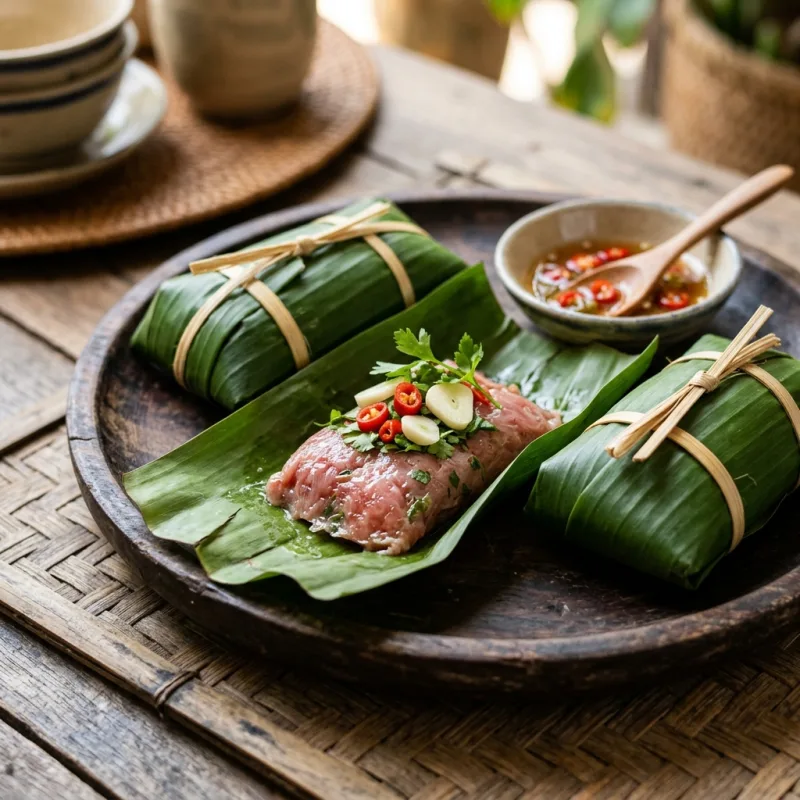
Nem Trey (Fermented Fish Cakes) - A traditional culinary staple of Battambang consisting of minced freshwater fish blended with salt, garlic, and chilies before being wrapped in banana leaves to cure. It delivers a savory, slightly sour, and aromatic profile that is traditionally eaten raw with bird's eye chilies and garlic cloves.
Authentic Battambang Nem Trey cured fish cakes served with fresh chilies and garlic

Maya’s Final Checklist for Western Cambodia

Logistics shouldn’t be the focus of your trip—the experience should. I’ve hand-vetted these essential partners to ensure your arrival, stay, and exploration are as smooth as an Athenian breeze.

Maya, the human travel expert at TravelingWiz, offering curated, non-AI expertise

Where to Stay

Compare accommodation options and choose a stay that suits your plans and budget.

Air Travel

Compare flight options and find a route that fits your plans.

Local Guides

Connect with local guides for personalized help planning and exploring.

Travel Protection

The “Engineer’s” rule: always have a backup. Secure your trip with a plan that covers every “what if” and unexpected change.

Car Rentals

Compare rental options and choose a car that suits your trip.

Visa Information

Don’t let paperwork slow you down. Get expert assistance with your application to ensure all your entry documents are in order.

FAQs

Private remork (tuk-tuk) drivers are the most convenient method for day tours in Battambang and surrounding temples. For intercity transit between Battambang, Pailin, and Sisophon, shared minibuses, private taxis, or rental cars with drivers provide reliable connectivity.
The original rustic railway tracks have mostly been replaced by official train modernization, but relocated tracks operate primarily as tourist attractions near Phnom Banan. While tailored for visitors, riding the motorized bamboo platform (nori) at 30 km/h offers scenic views of rice fields.
Cash remains dominant outside major Battambang hotels and upscale cafes. Carry Cambodian Riel and clean, undamaged US dollar notes for tuk-tuks, markets, rural homestays, and roadside fruit stands.
Banteay Chhmar is located roughly 120 kilometers north of Battambang in Banteay Meanchey province. It takes approximately 2.5 to 3 hours by private vehicle, making it feasible as an ambitious day trip or an overnight community-based ecotourism stay.

Your Insights Matter

TravelingWiz grows through the stories of our community. If you’ve recently explored ,Western Cambodia share your tips and stories to help us perfect our guides for the next traveler.

Where should we send your offline card?

We hate spam just as much as you do

newsletter_consent *