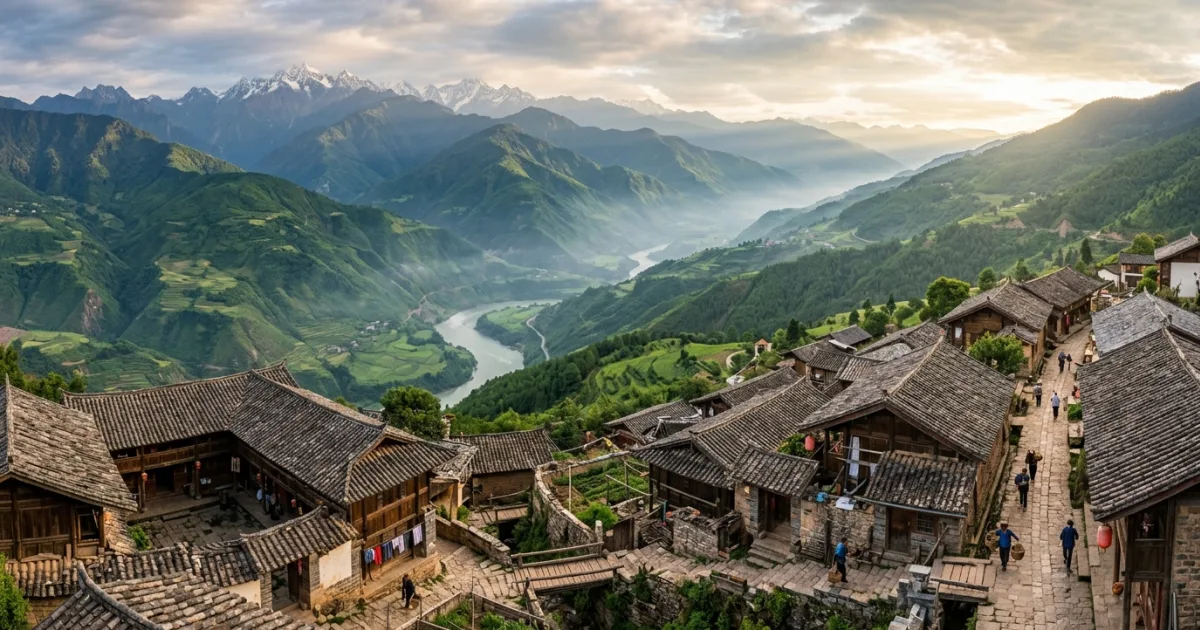
Western Yunnan is defined by dramatic geological fissures where the Indian and Eurasian tectonic plates converge, resulting in deep river gorges and thermal active zones. The region encompasses ancient trading towns like Heshun, geothermal calderas near Tengchong, and the ecological sanctuary of the Gaoligong Mountain Range. Historically, caravans laden with Pu'er tea, jade, and silk traversed these arduous mountain passes en route to Myanmar and India, leaving behind rich architecture and diverse folkways.
Today, visitors discover an exceptional balance between untouched wilderness and sophisticated cultural retreats. From picking high-altitude Arabica coffee cherries in the Lujiangba Valley to soaking in natural sulfur springs and walking ancient stone trails, Western Yunnan delivers a distinct, contemplative alternative to crowded coastal destinations.
Reasons to Visit
- Geothermal Hot Springs: Soak in natural volcanic mineral waters scattered across Tengchong's geothermal parks.
- Gaoligongshan Biodiversity: Trek through a UNESCO-recognized biosphere reserve renowned for rare rhododendrons, gibbons, and bird species.
- Historic Tea Horse Road Towns: Explore beautifully preserved cobblestone towns like Heshun and Shaxi without urban hyper-commercialization.
- Yunnan Coffee Culture: Tour sun-drenched plantations in Lujiangba, the epicenter of China's specialty coffee revolution.
Things to Avoid
- Avoid Wild Mushroom Foraging Without Experts: Western Yunnan's forests produce deadly fungi; consume wild mushrooms only in vetted, professional restaurants.
- Do Not Forget Altitude Precautions: Ascending rapidly to mountain passes above 3,000 meters can cause altitude sickness if not properly hydrated.
- Avoid Traveling Without Digital Payment Setup: Cash acceptance can be cumbersome; set up WeChat Pay or Alipay before arriving.
Local Transportation Tips
Travel across Western Yunnan is facilitated by high-speed rail lines linking major valley cities, supplemented by regional airports in Baoshan, Tengchong, and Mangshi. For regional travel across mountain passes, licensed shared taxis (pinche), local buses, and private rental cars with drivers are the standard options.
Travel Etiquette
- Respect Minority Customs: Always ask permission before photographing residents in traditional Dai, Bai, or Jingpo attire.
- Temple Courtesy: Walk clockwise around Buddhist shrines and pagodas, and remove hats and sunglasses before entering temple halls.
- Tea Ceremony Etiquette: Tap your index and middle fingers gently on the table to silently thank your host when tea is refilled.
Recommended Age Group
Western Yunnan suits adventurous travelers seeking natural heritage, scenic pacing, and cultural discovery across various life stages.
- Babies (0-2 years): Not Recommended. Mountain transport, winding roads, elevation shifts, and cobblestone town streets present significant stroller and logistical challenges.
- Kids (3-12 years): Neutral. Children enjoy volcanic geological sites and wildlife parks, though long driving distances through mountain passes require patience.
- Teens (13-19 years): Recommended. Excellent destination for active teenagers interested in volcano treks, river gorges, photography, and hands-on tea workshops.
- Adults (20-64 years): Recommended. Ideal for independent exploration, hiking, specialty coffee tasting, hot spring relaxation, and cultural photography.
- Seniors (65+ years): Recommended. Perfect for slow-paced travel focused on geothermal wellness retreats and scenic historical villages, provided steep trails are avoided.
Accessibility Level: Medium
- Terrain Challenges: Historic towns such as Heshun feature uneven basalt and stone paving that is challenging for standard wheelchairs.
- Public Transport Accessibility: Modern high-speed railway stations feature step-free elevators, but local buses and minivans lack specialized ramp access.
- Thermal Resort Accommodations: Major modern wellness resorts in Tengchong offer elevators and ground-floor private soaking pools.
Did You Know?
The Gaoligong Mountains in Western Yunnan are often referred to by biologists as the 'Gene Bank of the World' due to sheltering over 5,000 species of higher plants and hundreds of rare bird varieties along a single alpine corridor.
Cool Statistics
- Over 90 Volcanic Cones: Tengchong Geothermal Volcanic Park preserves one of China's densest concentrations of dormant volcanic vents.
- Elevation Span: Western Yunnan ranges dramatically from river valleys at 600 meters to jagged peaks exceeding 4,000 meters.
- Over 600 Bird Species: Gaoligongshan attracts international ornithologists as one of the world's most concentrated avian sanctuaries.






Buy a compatible power adapter for your trip