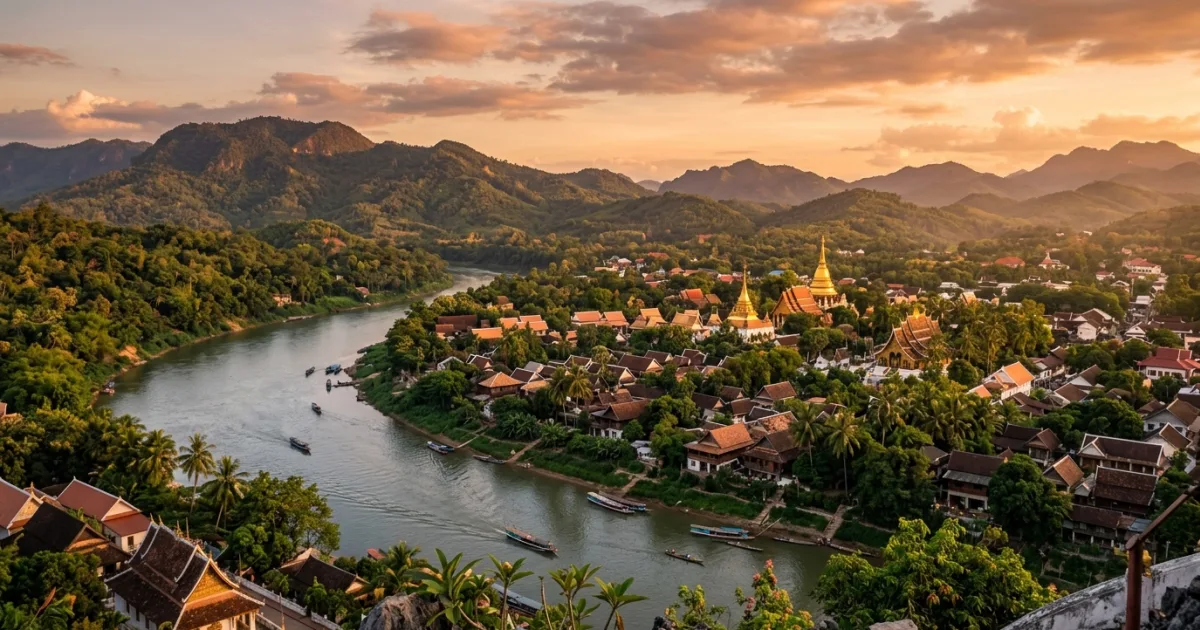
Luang Prabang stands as the cultural and spiritual anchor of Laos, established as the royal seat of the Lan Xang Kingdom in the fourteenth century. Encircled by forested hills and bordered by the Mekong and Nam Khan rivers, the town boasts an exceptionally intact urban fabric where French Indochinese colonial villas stand harmoniously alongside multi-tiered Buddhist monasteries.
Daily life moves to the cadence of temple drum strikes, early-morning alms processions (Tak Bat), and riverside trading. The designated UNESCO preservation zone safeguards traditional construction techniques, street layouts, and ecological systems, creating an atmosphere that feels unhurried, scholarly, and deeply connected to ancestral traditions.
Reasons to Visit
- Witness thirty-three active Buddhist temples showcasing sweeping roofs, golden mosaics, and classical Luang Prabang wooden architecture.
- Swim in the multi-tiered turquoise limestone pools of Kuang Si Waterfall set within dense tropical rainforest.
- Explore the lively Morning Market and handicraft Night Market offering hill-tribe textiles, handmade paper, and street snacks.
- Cruise the Mekong River aboard traditional longtail boats to visit ancient Buddha statues sheltered within the Pak Ou Caves.
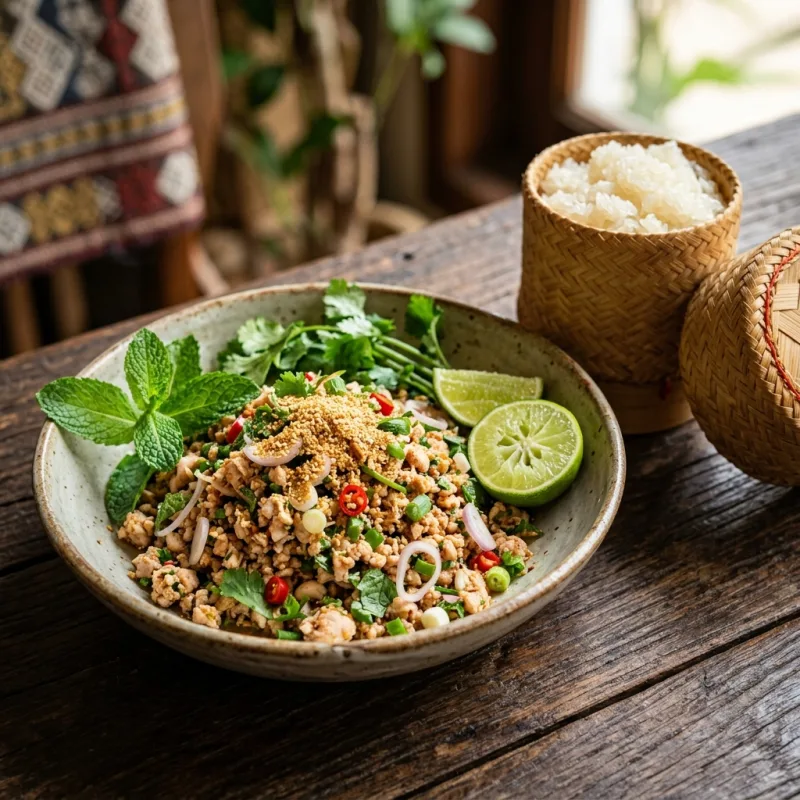
- Savor distinct Lao gastronomy characterized by herbal pastes, wood-fired river fish, and sticky rice.
Things to Avoid
- Avoid stepping into monasteries with shoes on or bare shoulders; strict modesty standards apply universally.
- Do not crowd or photograph monks during the sacred Morning Alms ceremony using flash photography or obtrusive lenses.
- Avoid touching anyone on the head or pointing feet directly at Buddha statues or local residents, as both gestures cause cultural offense.
- Do not purchase antique Buddha statues or wildlife derivatives, which violates national export and conservation regulations.
- Avoid drinking unboiled municipal tap water or unsealed ice at remote roadside stalls.
Local Transportation Tips
Luang Prabang Old Town is exceptionally walkable and best navigated on foot or via bicycle. Shared songthaews and tuk-tuks operate along main avenues and can be hailed for transport to outer districts, train terminals, or regional attractions. The Laos-China Railway connects Luang Prabang station to Vang Vieng and Vientiane with fast, modern services located 25 minutes east of town.
Travel Etiquette
- Greet locals using the traditional 'Nop' gesture (palms pressed together near chest height accompanied by a slight bow).
- Always remove your shoes before stepping into a temple ordination hall or a private residence.
- Speak softly and move gently when visiting active monastic sanctuaries.
- Dress conservatively throughout the town, reserving revealing beachwear strictly for private swimming pools and waterfall basins.
Recommended Age Group
Luang Prabang provides rich historical and cultural experiences suited across multiple generations, though accessibility infrastructure varies across heritage sites.
- Babies (0-2 years): Neutral. Cobblestone roads, high curbs, and temple steps make stroller navigation challenging, though local hospitality is deeply welcoming to young infants.
- Kids (3-12 years): Recommended. Children enjoy boat excursions on the Mekong, swimming in Kuang Si Waterfall, and interactive rice farming workshops.
- Teens (13-19 years): Recommended. Excellent opportunities for cycling, kayaking along the Nam Khan, night market discovery, and photography.
- Adults (20-64 years): Recommended. An ideal destination for cultural immersion, culinary courses, wellness retreats, and temple architecture.
- Seniors (65+ years): Recommended. Flat peninsula streets make leisurely walks enjoyable, though climbing Mount Phousi requires caution due to uneven stone steps.
Accessibility Level: Medium
- Historic Old Town features mostly flat roads, though footpaths often have high curbs and intermittent tree roots.
- Major temples including Wat Xieng Thong require ascending stone entry steps, limiting full wheelchair accessibility inside main halls.
- Kuang Si Falls features paved lower boardwalks, but upper pools require navigating dirt trails and slippery inclines.
- Modern high-speed train connections provide level platform access and designated priority seating for travelers with limited mobility.
Did You Know?
The name Luang Prabang translates to 'Royal Buddha Image', named after the Phra Bang—an eighty-three-centimeter-tall sacred gold Buddha statue cast in Sri Lanka that was gifted to King Fa Ngum in the fourteenth century and currently resides in the Royal Palace Museum complex.
Cool Statistics
- Recognized as a UNESCO World Heritage Site in 1995 across an expansive conservation zone.
- Home to over 30 historic Buddhist monasteries (wats) active within the immediate peninsula.
- Enclosed by 328 steep stone steps leading to the 100-meter-high summit of Mount Phousi.
- Maintains zero large-scale commercial buses or high-rise modern developments within its historic core.






Buy a compatible power adapter for your trip