Disclosure: This site contains affiliate links. We may earn a commission if you make a purchase, at no extra cost to you.

>
>
>
>
Bolaven Plateau

Bolaven Plateau

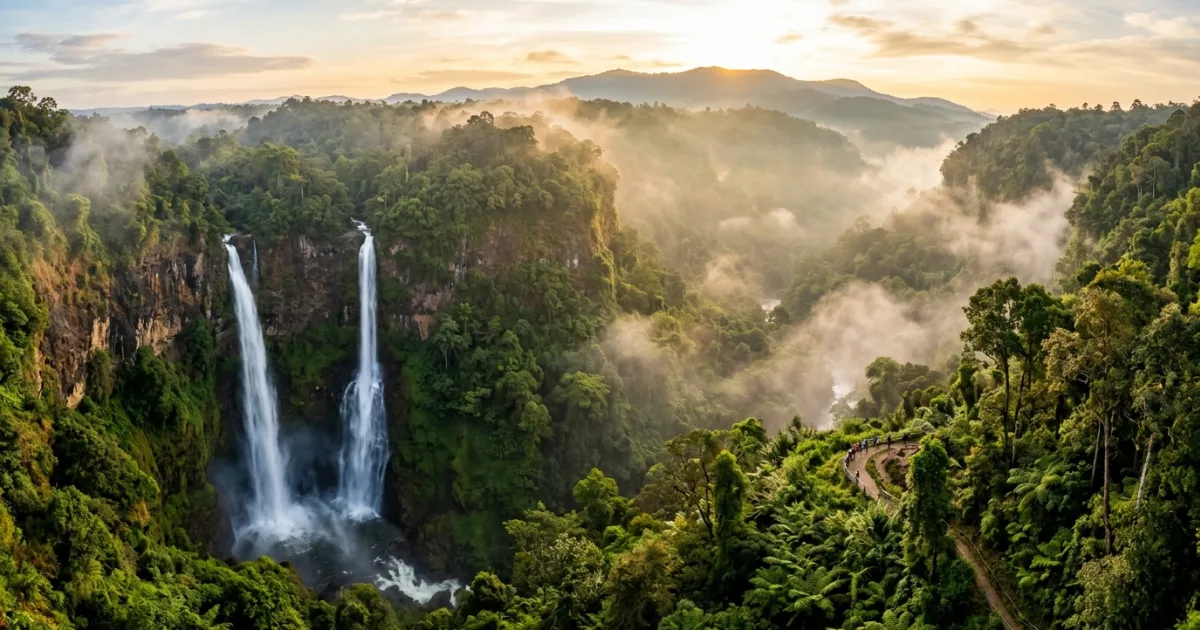
Tad Fane twin waterfalls cascading into a lush jungle ravine on the Bolaven Plateau Laos

Bolaven Plateau Overview & Key Highlights

The Bolaven Plateau is an elevated highland volcanic plain situated across Champasak, Salavan, and Sekong provinces in southern Laos. Rising between 1,000 and 1,350 meters above sea level, the plateau offers a distinctly cool microclimate, fertile soil, and dramatic topography characterized by thundering twin waterfalls, dense jungle canopies, and extensive coffee plantations. Most travelers navigate the region via the famed Bolaven Motorbike Loop, which originates in Pakse and branches into either a shorter two-day excursion or an expansive four-day route covering remote ethnic minority hamlets. Beyond its scenic ribbon roads, the plateau stands as the epicenter of Laos's artisanal Arabica and Robusta agricultural industry. Farm-to-cup coffee tours allow visitors to pick cherries, roast beans, and engage directly with indigenous Katu and Alak farming communities. Natural highlights include the jaw-dropping 120-meter drop of Tad Fane, the serene swimming pools of Tad Lo, and jungle canopy ziplining circuits. Whether traveling by self-drive scooter or chartered four-wheel drive, the Bolaven Plateau delivers one of Southeast Asia's most authentic overland adventures.

Bolaven Plateau Travel Guide: Logistics & In-Depth Tips

The Bolaven Plateau is an expansive upland plateau situated in southern Laos, elevated between 1,000 and 1,350 meters above the Mekong River valley. Created by an ancient volcanic eruption millions of years ago, the region features rich basaltic red soil that supports one of Southeast Asia's premier coffee and tea production hubs. The plateau encompasses parts of Champasak, Salavan, and Sekong provinces, serving as a tranquil rural sanctuary defined by evergreen forests, dramatic cataracts, and scattered indigenous agricultural settlements.

For global adventurers, the plateau is most celebrated for its multi-day motorbike circuit starting and ending in the riverside hub of Pakse. Traversing the loop introduces travelers to breathtaking sights such as the dramatic twin plumes of Tad Fane plunging into a jungle abyss, the wide tiered cascades of Tad Gneuang, and community-led guesthouses along the peaceful riverbanks of Tad Lo. With cool highland temperatures that provide immediate relief from the tropical heat of the lowlands, the Bolaven Plateau offers an immersive journey through rural Lao culture, sustainable agritourism, and pristine geological beauty.

Reasons to Visit

  • Witness monumental natural spectacles including the 120-meter twin chutes of Tad Fane and lush swimming lagoons at Tad Champee.
  • Explore authentic organic coffee plantations and learn sustainable roasting techniques from multi-generational farming families.
  • Ride one of Southeast Asia's most scenic overland road circuits through serene rural mountain communities.
  • Soar across deep jungle canyons on the world-class high-wire zipline circuit facing Tad Fane waterfall.
  • Enjoy a cool, temperate highland microclimate that provides a refreshing escape from lowland tropical heat.

Things to Avoid

  • Do not drive motorbikes after dark; roads lack streetlights, and stray cattle or unlit farm machinery present major hazards.
  • Do not wander off marked trails or explore uncleared secondary forests due to persistent unexploded ordnance (UXO) risks.
  • Do not photograph indigenous villagers, particularly children and elders in animist communities, without asking permission first.
  • Do not enter sacred village grounds, spirit houses, or residential verandas without an explicit local invitation.
  • Do not leave your rented motorbike unattended without engaging steering locks and disk locks, particularly at roadside trailheads.

Local Transportation Tips

Motorbike rental is the primary method of transportation for traversing the Bolaven Plateau, with manual, semi-automatic, and automatic bikes readily available in Pakse for $7 to $12 USD per day. Paved highways Route 16 and Route 20 connect primary settlements, though secondary paths leading to hidden waterfalls consist of unpaved red dirt that becomes slick during rain. Travelers preferring not to ride can hire private songthaews (passenger pickup trucks), charter air-conditioned minivans from Pakse tour operators, or join guided group day trips.

Travel Etiquette

  • Greet locals with a warm 'nop' (palms pressed together near chest height) accompanied by the spoken greeting 'Sabaidee'.
  • Dress modestly by covering shoulders, chest, and knees when walking through ethnic minority villages and Buddhist temples.
  • Remove footwear before stepping into any local home, guesthouse sleeping area, or temple building.
  • Touch neither another person's head nor sacred animist totems, as the head is considered the spiritually highest part of the body.
  • Speak in calm, moderate tones and avoid showing public frustration, which causes loss of face in Lao society.

Recommended Age Group

The Bolaven Plateau is best enjoyed by active travelers capable of handling outdoor physical adventures and variable road conditions.

  • Babies (0-2 years): Not Recommended. Rugged road journeys, basic rural medical facilities, and potential mosquito-borne illnesses make the region ill-suited for infants.
  • Kids (3-12 years): Neutral. Children can enjoy visiting coffee estates and mellow waterfall pools if traveling via private car, though long scooter rides are hazardous.
  • Teens (13-19 years): Recommended. Thrilling waterfall ziplining, jungle river swimming, and scenic cycling make this an exhilarating destination for teenagers.
  • Adults (20-64 years): Recommended. Perfect terrain for self-drive motorcycle touring, trekking, artisanal coffee tastings, and authentic cultural engagement.
  • Seniors (65+ years): Neutral. Rewarding for active seniors touring by private air-conditioned vehicle; slippery trails and steep waterfall staircases require sturdy footing.

Accessibility Level: Medium

  • Terrain around waterfalls is primarily rugged, featuring unpaved volcanic dirt paths, exposed tree roots, and steep, unrailed stone steps.
  • Wheelchair access is virtually non-existent at most natural waterfall viewpoints, guesthouses, and rural restaurants.
  • Select modern eco-resorts near Paksong offer step-free access to dining terraces and panoramic garden pavilions.
  • Travelers with limited mobility are advised to charter a private four-wheel-drive vehicle to visit roadside viewpoints comfortably.

Did You Know?

The Bolaven Plateau's unique agricultural heritage was initiated by French colonialists in the early 1920s, who recognized that the highland volcanic soil and cool altitude mirrored the premier coffee-growing regions of East Africa and South America. Today, the plateau produces nearly all of Laos's coffee exports, transforming the nation into one of the world's most distinctive specialty bean producers.

Cool Statistics

  • The plateau reaches an average altitude between 1,000 and 1,350 meters above sea level.
  • Tad Fane's twin falls plummet roughly 120 meters (393 feet) down sheer basalt cliff walls into an enclosed volcanic gorge.
  • Over 95% of all coffee cultivated in Laos originates from the volcanic soils of the Bolaven Plateau.
  • The full outer motorbike loop extends across approximately 320 kilometers of diverse terrain.

Address:

Bolaven Plateau, Laos

Find Nearby Accommodations

Basic Info

address icon

COUNTRY & Region

Laos,
Asia

ACCESSIBILITY LEVEL​

Medium
Currency icon

LOCAL CURRENCY​

Lao Kip (LAK)
Price level icon
Low
Safety Level icon

SAFETY LEVEL

Duration icon

Recommended Duration

• 1-7 days
• Full day

Electricity

electricity icon

Electricity

220-240V, 
50Hz
Plug Socket icon

Plug Type

• Type A (Flat blade)
• Type B (Flat blade with grounding pin)
• Type C (Round pin)
• Type E (Two round pins with earth pin)
• Type F (Two round pins with earth clips)
Plug types
Click To View Plug Types
Bolaven Plateau is part of our
Coolcation collection

Activities To Do In Bolaven Plateau

Best Time To Visit Bolaven Plateau

The Bolaven Plateau is best explored between November and February during the dry, cool season, when roads are clear and humidity is minimal.

  • November to February (Cool & Dry Season): Optimal road conditions, lush post-monsoon greenery, crisp evening air, and active coffee harvesting.
  • March to May (Hot Season): Warmer temperatures across lowlands, though the plateau remains significantly cooler than Pakse; river levels begin to decrease.
  • June to October (Wet Season): Waterfalls roar at maximum volume, but unpaved secondary loop roads become treacherous with deep mud and slick red clay.

Average Temperatures Per Month

Remember to check the weather forecast a few days before the trip and before heading to the airport.

Safety Level icon

Safety Level

Wear a certified full-face helmet and protective clothing when driving the plateau loop, as gravel patches and sudden livestock crossings cause frequent scooter accidents. Always stick to established trails when hiking around waterfalls; unexploded ordnance (UXO) remnants from the Indochina War still exist in remote, uncleared bushland across southern Laos. Avoid swimming directly at the edge or base of heavy cataracts where submerged currents are treacherous.

The rating is based on multi-year peace, crime, and security indices. Before you go, always verify current conditions through official government travel advisories.

Emergency Numbers

Police: 191
Ambulance: 195

No internet needed • Includes local translations • Free for TravelingWiz readers

Spoken Languages

Lao is the official language. Indigenous languages such as Katu, Alak, and Laven are spoken in rural villages. Basic English is understood by guesthouse operators, tour guides, and coffee plantation managers.

Learn The Language

  • Sabaidee: Hello
  • Khob chai: Thank you
  • Khob chai lai lai: Thank you very much
  • Baw pen nyang: You’re welcome / No problem
  • Thao dai?: How much?
  • Saeep lai: Very delicious
  • Hong nam yu sai?: Where is the restroom?
  • La gorn: Goodbye
Travel Booking Partner - TravelingWiz

Trip Cost & Budgeting for Bolaven Plateau, 2026

Everything you need to know about money while traveling
Is Bolaven Plateau expensive for tourists in 2026? No, southern Laos remains one of the most budget-friendly destinations in Southeast Asia. Expect to pay around 35,000 LAK for a cup of fresh highland coffee, 25,000 LAK for a domestic beer, and 70,000 LAK for a mid-range meal. Thanks to our Human Verified prices, budgeting for your trip is easy. Use the data table below to calculate your specific daily budget based on your travel style.
Currency icon

LOCAL CURRENCY​:

Lao Kip (LAK)
Price level icon
Low
Cash is essential on the Bolaven Plateau, as credit cards are almost never accepted outside major Pakse hotels.

Per person, per day – pocket cash for small purchases.

Local: 78000
Lao Kip (LAK)
≈ 3 USD

Full daily spend estimation (accommodation, food, transportation, attractions).

Travel Style
Lao Kip (LAK)
≈ USD ($)
Budget
429000
19
Mid-range
780000
35
Comfort
1716000
77

The Prices, Daily costs, and calculator results are estimates for planning purposes only. Actual costs may vary based on season, booking timing, personal spending habits, and currency fluctuations. TravelingWiz cannot be held responsible for discrepancies between these estimates and your final trip expenses.

  • • Rent a motorbike in Pakse for around 150,000 LAK daily instead of booking expensive guided tours.
  • • Buy fresh coffee directly from family-run plantations along the plateau for high quality at wholesale prices.
  • • Stay overnight in local guesthouses in Tad Lo or Paksong to save on accommodation and fuel costs.
  • • Keep small Kip notes handy for waterfall entry tickets, parking fees, and small roadside food stalls.

Pre-Order Tickets

Avoid disappointment when tickets sell out — and skip the long lines by booking online in advance. You’ll often save up to 20% too.
Save up to 20%

Travel Discounts & Coupons

Save on hotels, attractions, transport, and gear — find verified discounts for smarter travel spending.
Verified Coupons

What To Pack

  • Windproof and waterproof jacket for sudden highland downpours and chilly mountain rides
  • Sturdy closed-toe hiking boots with deep tread for slick volcanic mud trails around waterfalls
  • Layers of warm fleece or sweaters, as night temperatures can plummet below 15°C (59°F)
  • Universal power adapter and high-capacity portable power bank for long stretches between towns
  • Insect repellent containing DEET for forest treks and evening waterfall walks
  • Dry bag to protect cameras, smartphones, and documents during rainfall and waterfall spray
  • Modest clothing covering shoulders and knees when visiting indigenous villages
  • Small first-aid kit containing antiseptic ointment, bandages, and burn cream for minor road scrapes
We couldn't find tips for Bolaven Plateau.
If you got any, please share

Recommended Itineraries for Traveling to Bolaven Plateau

We couldn't find itineraries for Bolaven Plateau.
you can contact us for custom trip plan

Food & Drink Highlights

Local Food Overview

Cuisine on the Bolaven Plateau combines classic southern Lao culinary traditions with highland agricultural produce. Staples revolve around glutinous sticky rice (khao niao) served in woven bamboo baskets, accompanied by herbaceous salads, charcoal-grilled meats, and robust chili dipping pastes (jaew). The fertile volcanic soil yields unusually crisp mountain greens, wild mushrooms, and root vegetables not commonly found in the lowlands. No meal on the plateau is complete without sampling the locally grown coffee, typically served dark and intense over sweetened condensed milk.
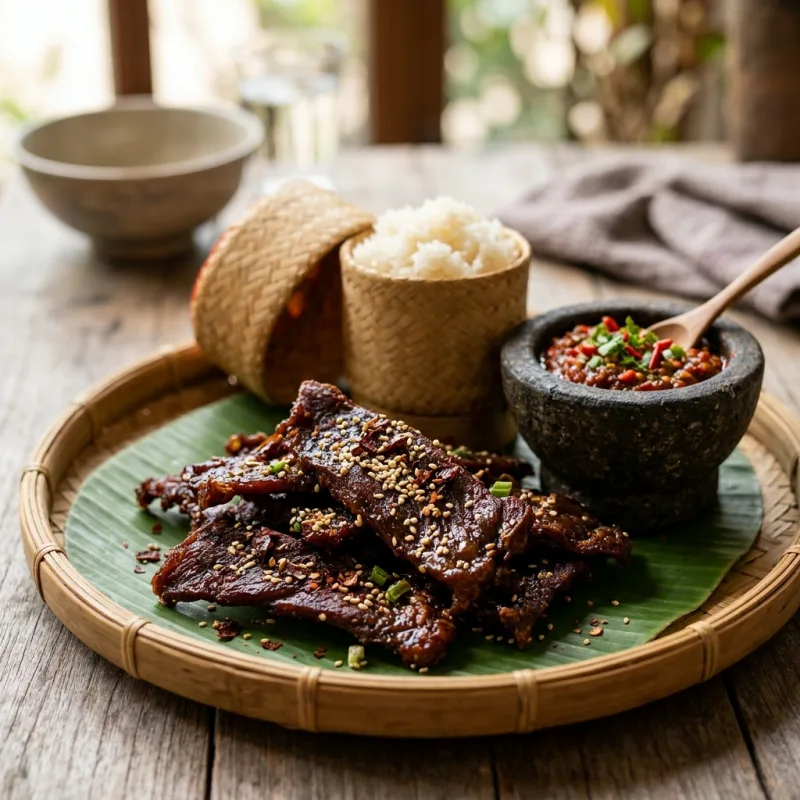
Lao Sin Savanh crispy sesame beef served on banana leaves with sticky rice

Must Try Dish

Sin Savanh - Marinated strips of local beef seasoned with garlic, palm sugar, soy sauce, and sesame seeds, sun-dried on bamboo racks and flash-fried to crispy perfection. It is traditionally eaten with steaming sticky rice and pungent jaew bong chili paste.
Food Experiences Title Icon

Food
Experiences

Discover cooking classes, tastings and local food tours

No food experience found
Maya, the human travel expert at TravelingWiz, offering curated, non-AI expertise

Maya’s Final Checklist for Bolaven Plateau

Logistics shouldn’t be the focus of your trip—the experience should. I’ve hand-vetted these essential partners to ensure your arrival, stay, and exploration are as smooth as an Athenian breeze.

Where to Stay

From boutique hotels to local apartments—compare thousands of options and find the perfect stay in the best neighborhood.

Air Travel

Getting there should be seamless. Compare the best routes and prices across top airlines to start your journey on the right note.

Local Guides

Connect with experts who know the destination best. Get personalized advice and insider tips to help you plan your perfect trip.

Travel Protection

The “Engineer’s” rule: always have a backup. Secure your trip with a plan that covers every “what if” and unexpected change.

Car Rentals

Explore at your own pace with total freedom. Compare reliable rental options and find the right vehicle for your adventure.

Visa Services

Don’t let paperwork slow you down. Get expert assistance with your application to ensure all your entry documents are in order.

FAQs

The small loop covers approximately 200 kilometers and can be completed comfortably in two days with an overnight stay in Tad Lo. The big loop spans roughly 320 kilometers and takes three to four days, allowing extended visits to Sekong, Attapeu border passes, and remote Katu craft villages.
Riding is generally safe for travelers with basic scooter experience, as the main paved roads (Route 16 and Route 20) are well-sealed. However, caution is required due to loose gravel, wandering water buffalo, sudden rain showers, and careless truck drivers. Beginners should consider booking a guided minivan tour instead.
The coffee harvesting season runs from late October through February. Visiting during this period offers the opportunity to observe hand-picking of ripe Arabica cherries, outdoor wet processing, and sun-drying on vast woven mats along the road.
Swimming is permitted and popular in designated calm pools, such as those below Tad Lo, Tad Hang, and Tad Champee. However, high-drop cataracts like Tad Fane and Tad Gneuang have restricted areas due to dangerous hydraulic undercurrents and steep drop-offs.

Your Insights Matter

TravelingWiz grows through the stories of our community. If you’ve recently explored ,Bolaven Plateau share your tips and stories to help us perfect our guides for the next traveler.

Related Articles

Check out our related articles and blog posts to learn even more about the destination.

No related articles found

Don’t Travel Alone

Share with your friends and family

Where should we send your offline card?

We hate spam just as much as you do

newsletter_consent *