Si Phan Don is a labyrinthine archipelago formed where the mighty Mekong River broadens to nearly 14 kilometers across during the rainy season, splintering into thousands of islets, sandbars, and rocky outcrops before cascading across the Cambodian border. The islands possess a rich micro-history; during French colonial rule, engineers constructed a narrow-gauge railway across Don Khon and Don Det to bypass the impassable Khone Phapheng rapids, allowing cargo vessels to navigate between Saigon and southwestern China. Today, the rusted remnants of steam locomotive 131 and the historic arched concrete bridge serve as enduring open-air monuments to this industrial ambition.
Daily life across the islands moves at the serene tempo of the river. Fishermen navigate churning whitewater using ingenious bamboo fish traps anchored to sheer boulders, a centuries-old fishing tradition unique to this stretch of the Mekong. For travelers, Si Phan Don represents one of the few remaining destinations in Southeast Asia where the landscape remains unburdened by high-rise developments, traffic jams, and mega-resorts. Days are spent reading in hammocks slung over river verandas, pedaling past grazing buffalo and golden Buddhist wats, and listening to the rhythmic roar of waterfalls echoing through the tropical evening air.
Reasons to Visit
- Witness the immense power of Khone Phapheng Falls, the largest waterfall by volume in Southeast Asia.
- Pedal across the historic French railway bridge linking Don Det and Don Khon past colonial ruins.
- Explore the roaring cascades of Somphamit (Li Phi) Waterfalls crashing through black basalt gorges.
- Experience untamed, slow-paced village life largely untouched by high-density commercial tourism.
- Paddle through mangrove forests and tranquil side channels on guided kayaking expeditions.
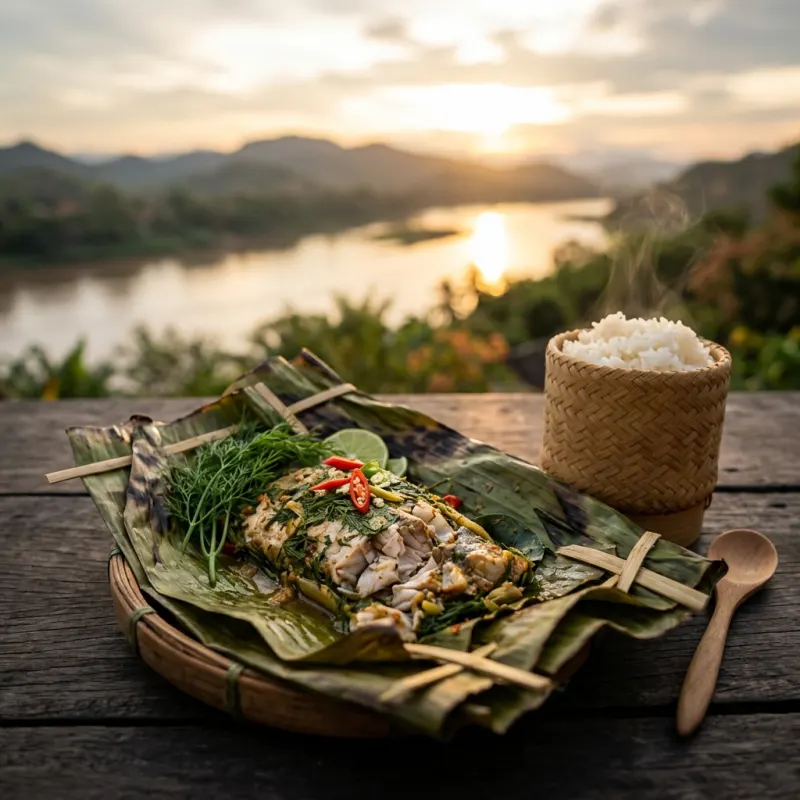
- Enjoy uninterrupted panoramic river sunsets while dining on fresh, locally caught Mekong cuisine.
Things to Avoid
- Do not enter the Mekong River near rapids, rocky drops, or outside designated swimming zones due to lethal undertows.
- Avoid traveling to the islands without sufficient paper cash, as local ATMs frequently fail.
- Do not ride bicycles on muddy dirt tracks after dark without a functioning headlamp or torch.
- Avoid wearing revealing swimwear or walking topless through local island villages and residential streets.
- Do not disturb or harass the traditional bamboo fish traps erected by local fishermen in the river channels.
Local Transportation Tips
Transportation within Si Phan Don is decidedly low-tech and unhurried. Between the mainland and the islands, wooden longtail boats run regularly between Ban Nakasang pier and the north ports of Don Det and Don Khon. On the islands themselves, walking and cycling are the primary modes of travel; single-speed beach cruisers can be rented across every village for roughly $1 to $2 USD per day. For heavier luggage or longer journeys, local motorized farm carts equipped with bench seats (known locally as songthaews or island tuk-tuks) can be chartered through guesthouses. Don Khong, which connects to the mainland by highway bridge, also accommodates motorbikes and small passenger minivans.
Travel Etiquette
- Greet locals with a warm smile and a traditional 'Nop' (palms pressed together near the chest with a slight bow).
- Dress modestly when walking through residential villages and Buddhist monasteries, ensuring knees and shoulders are covered.
- Remove your footwear before entering any Lao family home, guesthouse bedroom, or temple sanctuary.
- Never touch another person's head or point your feet toward people or religious statues, as feet are deemed the lowest part of the body.
- Maintain a gentle, composed voice; showing public anger or shouting causes severe loss of face and resolves nothing.
Recommended Age Group
Si Phan Don offers a rustic, laid-back experience suited to adventurous and self-reliant travelers, but its limited medical infrastructure and physical barriers require careful consideration.
- Babies (0-2 years): Not Recommended. The tropical heat, presence of mosquito-borne illnesses, unpaved terrain impassable for strollers, and absence of pediatric medical care make the islands difficult for infants.
- Kids (3-12 years): Neutral. Children who enjoy nature and cycling will appreciate the outdoor scenery, but swift river currents present severe hazards, and boat transfers require constant vigilance.
- Teens (13-19 years): Recommended. Teenagers will enjoy renting bicycles, kayaking river channels, exploring waterfall paths, and experiencing an off-the-grid adventure.
- Adults (20-64 years): Recommended. Perfect for couples, friends, and solo travelers wanting to unplug, read in hammocks, hike natural trails, and absorb slow-paced river culture.
- Seniors (65+ years): Neutral. Ideal for active seniors seeking calm nature, though boarding low wooden longtail boats, unpaved uneven gravel tracks, and basic healthcare facilities can be challenging for those with mobility issues.
Accessibility Level: Medium
- Boarding longtail river boats requires stepping across wet wooden planks and uneven riverbanks without handrails.
- Island roads consist of packed earth, loose gravel, and mud tracks with no paved sidewalks or curb cuts.
- Most bungalows and guesthouses feature elevated wooden stilt construction accessible only via steep flights of stairs.
- Standard wheelchair access is virtually non-existent across Don Det and Don Khon; travelers with severe mobility limitations should consider staying at accessible mainland hotels in Pakse or modern road-accessible resorts on Don Khong.
Did You Know?
Khone Phapheng Falls in Si Phan Don are the primary reason the Mekong River is not fully navigable into China from the sea. French explorers in the late 19th century hoped the Mekong would provide a direct water trade route into Yunnan, but the churning torrents of these cascades proved entirely impassable to steamboats, forcing them to build a portage railway across Don Khon instead.
Cool Statistics
- 14 kilometers: The width of the Mekong River at Si Phan Don during peak rainy season, making it one of the widest river sections on Earth.
- 11,000 cubic meters per second: The average water discharge over Khone Phapheng Falls, nearly double the flow rate of Niagara Falls.
- 1893: The year the French colonial administration completed the Don Det–Don Khon narrow-gauge railway to transport cargo past river rapids.






Buy a compatible power adapter for your trip