Disclosure: This site contains affiliate links. We may earn a commission if you make a purchase, at no extra cost to you.
Hsinchu

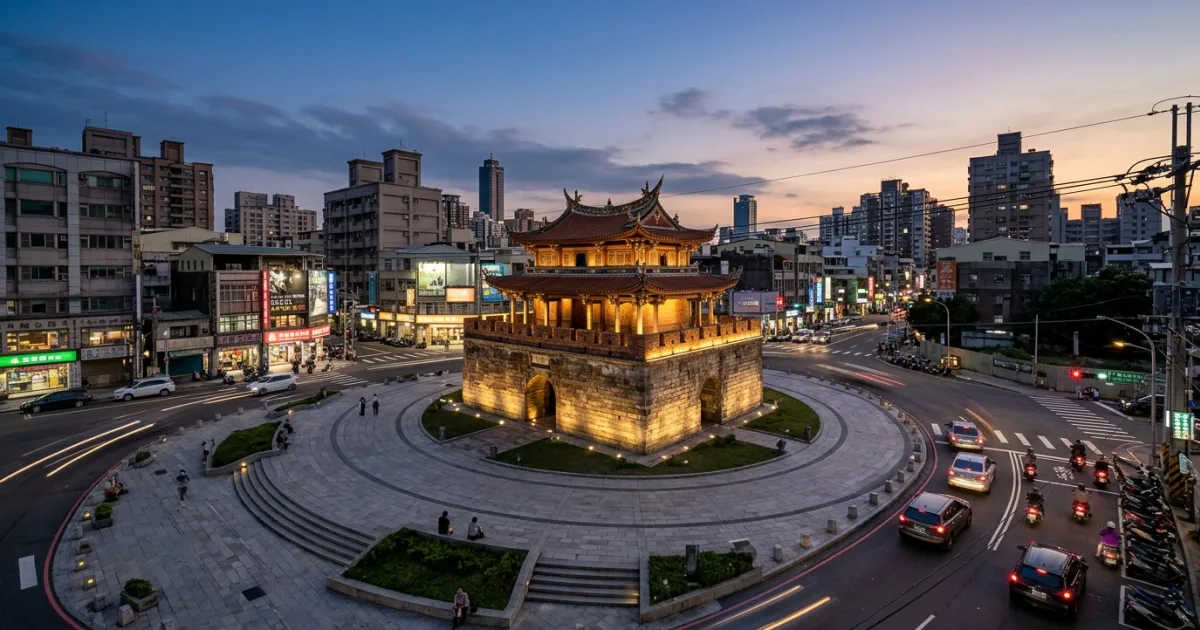
The illuminated historic East Gate Yingxi Gate at twilight in Hsinchu Taiwan

Basic Info

COUNTRY & Region

Taiwan,
Asia

ACCESSIBILITY LEVEL​

  • High: Widely accessible with good facilities for disabilities.
  • Medium: Some accessible options, but limitations exist.
  • Low: Limited accessibility; many barriers for disabilities.
Medium

LOCAL CURRENCY​

New Taiwan Dollar (NTD)

Price Level

Low – budget‑friendly basics

Medium – moderate mid‑range costs

High – pricey lodging, dining & transport

Medium

SAFETY LEVEL

5 shields = Excellent – very low crime or conflict.

4 shields = Safe – low risk, routine care.

3 shields = Relatively safe – use normal street smarts.

2 shields = Use caution – higher crime or periodic unrest.

1 shields = Avoid – active conflict or extreme danger.

Scores are derived from multi-year peace, homicide and security indices blended into a single 1-to-5 scale.

Recommended Duration

1-7 days, Full day

Hsinchu Overview & Key Highlights

Hsinchu sits on the northwestern coast of Taiwan, famously dubbed the 'Windy City' and celebrated globally as the epicenter of semiconductor manufacturing. Beyond its high-tech veneer at the Hsinchu Science Park, the municipality preserves the deepest historical legacy in northern Taiwan, predating Taipei as an administrative hub. Centered around the grand 18th-century City God Temple (Cheng Huang Temple), vibrant night markets serve distinct Hakka- and Hokkien-influenced fare, while preserved Qing dynasty gates and Japanese colonial edifices dot the compact downtown grid. Travelers find an appealing blend of urban grit, rich culinary heritage, and scenic outdoor escapes. The city's coastal stretch offers the 17-Kilometer Coastline Scenic Area, popular for cycling past tidal mudflats and wind turbines, while inland foothills lead to historic Hakka settlements like Beipu. With high-speed rail connections putting it within 30 minutes of Taipei, Hsinchu serves as an accessible destination for cultural exploration and specialized foodie expeditions.

Hsinchu Travel Guide: Logistics & In-Depth Tips

Established during the early 18th century as Zhuqian, Hsinchu developed as the political, economic, and defensive anchor of northern Taiwan long before Taipei rose to prominence. Surviving architecture from the Qing and Japanese eras—including the iconic 1829 East Gate (Yingxi Gate) and the ornate City God Temple—stands juxtaposed against contemporary research parks and university campuses. This dual character gives Hsinchu a distinctive pace, where centuries-old temple guilds coexist with engineers developing global microchips.

For travelers, the compact urban core permits effortless walking itineraries rich in heritage and gastronomy. The bustling market plaza around the City God Temple represents the city's social heart, offering an overwhelming variety of street stalls. Outside the urban core, the city's green belt encompasses Hsinchu Park, historic glass craft museums, and expansive coastline cycling paths, delivering a well-rounded portrait of northern Taiwanese life without the tourist crowds of Taipei.

Reasons to Visit

  • Sample world-renowned sun-cured rice vermicelli and handcrafted pork meatballs directly at the historic market source.
  • Explore authentic Qing dynasty military architecture and beautifully restored Japanese-era civic buildings.
  • Cycle the 17-Kilometer Coastline Scenic Area along the Taiwan Strait past natural wetlands and scenic wind turbines.
  • Experience a modern Taiwanese tech powerhouse grounded in centuries-old Hakka and Hokkien religious traditions.
  • Enjoy a quick 30-minute day-trip escape from Taipei's metropolitan density.

Things to Avoid

  • Avoid using flimsy fold-up umbrellas during gusty winter months; opt for wind-resistant jackets with secure hoods instead.
  • Do not confuse the Hsinchu THSR station with the downtown TRA station; they are located in different districts and require a 20-minute local train or bus transfer.
  • Avoid planning outdoor coastal cycling during peak summer mid-day hours due to intense, unshaded sun exposure.
  • Do not skip the stalls situated directly inside the inner sanctum of the City God Temple, where the oldest culinary vendors operate.

Local Transportation Tips

Hsinchu Downtown is highly walkable, with major historical sites, shopping centers, and food markets concentrated within a 1.5-kilometer radius of the TRA Hsinchu Station. For longer trips across the municipality, the YouBike 2.0 public bike-share system features numerous stations and is easily accessed via credit card or EasyCard. Local public bus routes connect downtown with the Hsinchu Science Park and coastal recreation zones, while metered yellow taxis and Uber provide efficient, inexpensive on-demand transit.

Travel Etiquette

  • Step over temple thresholds rather than stepping directly on them when entering religious sites like the City God Temple.
  • Clear food trays and dispose of waste into designated recycling, food scrap, and general trash bins at public food courts and night markets.
  • Keep right on train station escalators and yield seats marked for elderly, disabled, or pregnant passengers on public transit.
  • Refrain from eating or drinking inside the stations or cars of the Taiwan High Speed Rail shuttle train and metro lines.

Recommended Age Group

Hsinchu offers straightforward logistics and engaging experiences suited to diverse generational needs.

  • Babies (0-2 years): Neutral. Older city sidewalks and historic night markets can be crowded and bumpy for strollers, though suburban parks offer gentle walking areas.
  • Kids (3-12 years): Recommended. Hsinchu Zoo, coastal cycling trails, and interactive glass-blowing workshops provide excellent family engagement.
  • Teens (13-19 years): Recommended. Night market exploration, tech culture, and waterfront cycling appeal strongly to adolescent travelers.
  • Adults (20-64 years): Recommended. Rich culinary itineraries, historical architecture, and regional day trips offer deep engagement for independent travelers.
  • Seniors (65+ years): Recommended. Flat urban walking, high safety levels, and accessible high-speed rail connections make it very comfortable for mature visitors.

Accessibility Level: Medium

  • Major train stations (THSR and TRA) feature step-free boarding access, elevators, and tactile guidance paths.
  • Sidewalks in the historic market area around the City God Temple are narrow and occasionally interrupted by shop displays, requiring caution for wheelchair users.
  • Public bus lines connecting major rail hubs increasingly utilize low-floor accessible vehicles equipped with ramp access.
  • Hsinchu Park and the coastal cycling path feature broad, paved, level terrain suitable for mobility equipment.

Did You Know?

Hsinchu produces the world's most advanced microchips at the Hsinchu Science Park, often credited with fueling up to 90% of global advanced semiconductor production. In an interesting local superstition, tech workers famously place green bags of Kuai Kuai coconut snacks on top of server racks to ensure computers run without errors—as 'kuai kuai' translates literally to 'obedient' or 'well-behaved'.

Cool Statistics

  • Established in 1748, the Hsinchu City God Temple is considered the highest-ranking City God temple in Taiwan.
  • Hsinchu experiences average wind speeds exceeding 20 kilometers per hour during winter monsoon periods.
  • The downtown railway station, completed in 1913, is the oldest operating train station building in Taiwan.

Address:

Hsinchu City, Taiwan

Find Nearby Accommodations

Electricity

110-120V, 
60Hz

Plug Type

Type A (Flat blade), Type B (Flat blade with grounding pin)
Plug types
Click To View Plug Types
Hsinchu is part of our
Solo Female Friendly collection

Activities To Do In Hsinchu

Best Time To Visit Hsinchu

Hsinchu experiences a subtropical climate characterized by fierce monsoonal winds from autumn through winter, making shoulder seasons optimal for outdoor activities.

  • October to December: Peak season with mild temperatures, minimal rainfall, and the famous dried persimmon harvest in nearby hills.
  • March to May: Pleasant spring weather ideal for urban walking tours and cycling along the coastline.
  • June to September: Hot, humid summer with occasional afternoon thunderstorms and typhoon risks.
  • January to February: Cool, brisk winter with intense northeasterly winds requiring sturdy windproof outerwear.

Average Temperatures Per Month

Average monthly temperaturesMonthly source values, with Celsius and Fahrenheit equivalents in the following data table.10°50°16°61°23°73°29°84°35°95°JanJan: 16°C / 61°FFebFeb: 17°C / 63°FMarMar: 19°C / 66°FAprApr: 22°C / 72°FMayMay: 25°C / 77°FJunJun: 28°C / 82°FJulJul: 29°C / 84°FAugAug: 29°C / 84°FSepSep: 28°C / 82°FOctOct: 25°C / 77°FNovNov: 22°C / 72°FDecDec: 17°C / 63°F
View temperature data
Average monthly temperatures
Month°C°F
Jan1661
Feb1763
Mar1966
Apr2272
May2577
Jun2882
Jul2984
Aug2984
Sep2882
Oct2577
Nov2272
Dec1763

Remember to check the weather forecast a few days before the trip and before heading to the airport.

Safety Level

5 shields = Excellent – very low crime or conflict.

4 shields = Safe – low risk, routine care.

3 shields = Relatively safe – use normal street smarts.

2 shields = Use caution – higher crime or periodic unrest.

1 shields = Avoid – active conflict or extreme danger.

Scores are derived from multi-year peace, homicide and security indices blended into a single 1-to-5 scale.

Hsinchu ranks exceptionally safe with low violent crime rates. Be vigilant around scooter traffic when crossing unsignaled alleys. Cyclists along the coastal bike path should mind fierce crosswinds that can destabilize lightweight riders.

The rating is based on multi-year peace, crime, and security indices. Before you go, always verify current conditions through official government travel advisories.

Emergency Numbers

Police: 110
Ambulance: 119

No internet needed • Includes local translations • Free for TravelingWiz readers

Spoken Languages

Mandarin Chinese, Taiwanese Hokkien, Hakka, English (limited in traditional markets, common in hotels/transit)
Travel Booking Partner - TravelingWiz

Learn The Language

  • Hello: Nǐ hǎo (你好)
  • Thank you: Xièxiè (謝謝)
  • Please: Qǐng (請)
  • How much is this?: Zhège duōshǎo qián? (這個多少錢?)
  • Where is…?: …Zài nǎlǐ? (…在哪裡?)
  • Delicious: Hǎochī (好吃)
  • Bill, please: Mǎidān (買單)
  • Goodbye: Zàijiàn (再見)

Trip Cost & Budgeting for Hsinchu, 2026

Everything you need to know about money while traveling
Is Hsinchu expensive for tourists in 2026? No, Hsinchu offers moderate, budget-friendly prices compared to Taipei and other major East Asian tech hubs. Our Human Verified prices show you can expect to pay around NT$95 for a cappuccino, NT$60 for a domestic beer, and NT$450 for a mid-range restaurant meal. Affordable street food stalls and cheap local transit keep daily expenses very manageable. Use the data table below to calculate your specific daily budget based on your travel style.

LOCAL CURRENCY​:

New Taiwan Dollar (NTD)

Price Level:

Low – budget‑friendly basics

Medium – moderate mid‑range costs

High – pricey lodging, dining & transport

Medium

Cards Vs. Cash

Major hotels and malls accept credit cards, but cash is essential for night markets, local diners, and transit.

How Much Cash to Carry (on you)

Per person, per day – pocket cash for small purchases.

Local: 800
New Taiwan Dollar (NTD)
≈ USD

Average Daily Costs (per person)

Full daily spend estimation (accommodation, food, transportation, attractions).

Travel Style
New Taiwan Dollar (NTD)
≈ USD ($)
Budget
1730
Mid-range
3150
Comfort
6950
Note

The Prices, Daily costs, and calculator results are estimates for planning purposes only. Actual costs may vary based on season, booking timing, personal spending habits, and currency fluctuations. TravelingWiz cannot be held responsible for discrepancies between these estimates and your final trip expenses.

Best Value Tips

  • • Feast at the Chenghuang Temple Night Market for iconic local dishes like pork meatballs and rice noodles under NT$100.
  • • Buy an EasyCard or iPASS to save on local bus fares and unlock affordable YouBike rentals for short trips.
  • • Stay in the central East District near Hsinchu Railway Station to walk to key sights and avoid taxi fares.
  • • Take advantage of free public attractions including the historic East Gate, the Moat Park, and the scenic coastal bike paths.

Tours & Tickets

Explore tours, attractions, and ticket options to plan your visit.
Plan ahead

Travel Offers & Coupons

Browse travel offers and coupons from our affiliate partners.
Affiliate partner offers

What To Pack

  • Windbreaker or wind-resistant jacket to counter the city's strong, persistent seasonal gusts.
  • Comfortable walking shoes with slip-resistant soles for wet market floors and brick lanes.
  • Universal Type A/B plug adapter for small consumer electronics.
  • Compact, sturdy umbrella built to withstand sudden coastal downpours and heavy crosswinds.
  • Lightweight, breathable cotton layers for high-humidity summer months.
Only the good stuff!
Browse recommended travel gear
Check out our free packing list tool

Recommended Itineraries for Traveling to Hsinchu

Take your itinerary with you

Choose a ready-made itinerary, plan your own trip, and keep TravelingWiz by your side while you travel.

Get the TravelingWiz app

Food & Drink Highlights

Local Food Overview

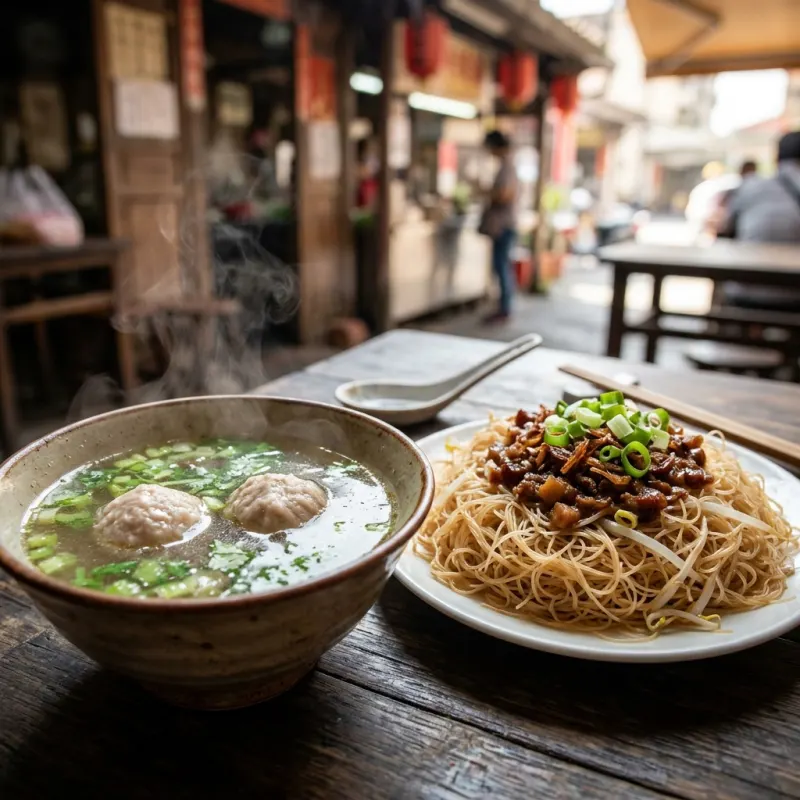
Hsinchu's culinary scene revolves around two historic staples: thin, sun-dried rice vermicelli (mifen) and bouncy pork meatballs (gongwan). The local microclimate—characterized by intense, dry autumn winds—creates ideal conditions for curing rice noodles outdoors, giving them exceptional chew and resilience. Centered within the perimeter of the City God Temple, food stalls dish out traditional braised pork rice, savory meat pies, and rich Hakka dishes flavored with shallots, dried radish, and thick savory broths.

Must Try Dish

Hsinchu Mifen and Gongwan Soup - Sun-dried springy rice vermicelli stir-fried with fragrant shallots, dried shrimp, and braised pork, served alongside a clear broth featuring dense, handcrafted pork meatballs. The combination delivers quintessential northern Taiwanese comfort food with satisfying textural contrast.
Authentic bowl of Hsinchu pork meatball soup alongside stir-fried rice vermicelli

Maya’s Final Checklist for Hsinchu

Logistics shouldn’t be the focus of your trip—the experience should. I’ve hand-vetted these essential partners to ensure your arrival, stay, and exploration are as smooth as an Athenian breeze.

Maya, the human travel expert at TravelingWiz, offering curated, non-AI expertise

Where to Stay

Compare accommodation options and choose a stay that suits your plans and budget.

Air Travel

Compare flight options and find a route that fits your plans.

Local Guides

Connect with local guides for personalized help planning and exploring.

Travel Protection

The “Engineer’s” rule: always have a backup. Secure your trip with a plan that covers every “what if” and unexpected change.

Car Rentals

Compare rental options and choose a car that suits your trip.

Visa Information

Don’t let paperwork slow you down. Get expert assistance with your application to ensure all your entry documents are in order.

FAQs

Hsinchu’s coastal topography funnels the prevailing northeasterly monsoon winds through a narrow sea-mountain corridor, generating consistent, forceful gusts that are traditionally harnessed to air-dry local rice noodles and persimmons.
Taiwan High Speed Rail (THSR) connects Taipei Main Station to Hsinchu Station in approximately 30 minutes. Alternatively, regular Taiwan Railways (TRA) trains travel directly into the historic downtown center in about 60 to 80 minutes.
The historic core around the City God Temple and East Gate is best explored on foot. For outlying attractions like the coastal scenic path or Science Park, YouBike public bicycle shares, local city buses, and readily available metered taxis or rideshares offer convenient transit.

Your Insights Matter

TravelingWiz grows through the stories of our community. If you’ve recently explored ,Hsinchu share your tips and stories to help us perfect our guides for the next traveler.

Where should we send your offline card?

We hate spam just as much as you do

newsletter_consent *