Disclosure: This site contains affiliate links. We may earn a commission if you make a purchase, at no extra cost to you.

>
>
>
Isan
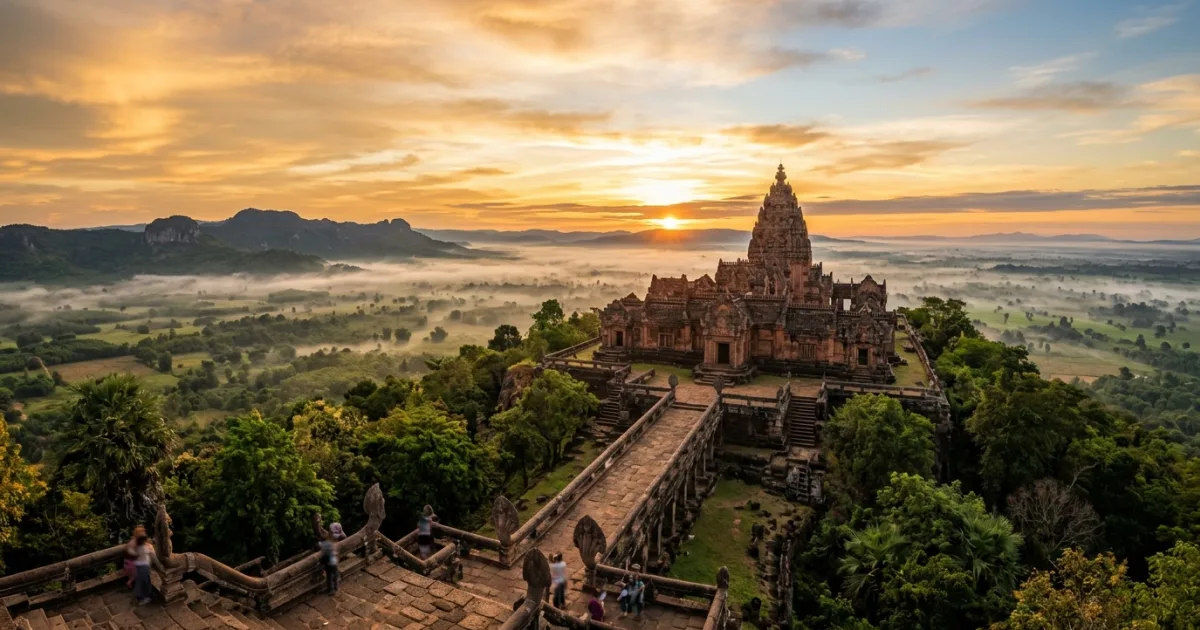
Phanom Rung ancient Khmer temple sanctuary on an extinct volcano at sunrise in Isan Thailand

Isan Overview & Key Highlights

Isan covers Thailand's expansive northeastern plateau, bordered to the north and east by the Mekong River and rich with ancient Khmer stone temples, prehistoric rock art, and rugged national parks. The region spans twenty provinces defined by distinct Lao and Thai cultural fusions, characterized by emerald rice paddies, traditional weaving hamlets, and historic mountain passes. Travelers encounter a stark contrast to Thailand's southern beach strips, entering a pastoral landscape shaped by agrarian traditions and vibrant heritage festivals. Road-tripping across Isan reveals major historical monuments such as the 10th-century volcanic temple of Phanom Rung and the cliffside murals of Pha Taem overlooking Laos. Beyond archaeological wonders, the region serves as the culinary engine of the country, famous worldwide for sticky rice, sharp salads, and chargrilled meats. With minimal commercial mass tourism, Isan offers an immersive and unvarnished encounter with rural Southeast Asian life.

Isan Travel Guide: Logistics & In-Depth Tips

The Isan plateau encompasses roughly a third of Thailand's landmass, bordered gracefully by the Mekong River as it flows past Laos. Historically linked to both the Lan Xang Kingdom and the Angkorian Khmer Empire, the region displays a rich blend of architecture, music, and dialects unique in Southeast Asia. Vast agricultural plains dotted with sugar cane and rice paddies transition into sandstone mountain ranges in provinces like Loei and Chaiyaphum.

Despite its significant cultural contributions to modern Thailand, Isan receives only a small percentage of international tourism, maintaining an untouched and genuine rhythm of life. Visitors can marvel at grand Angkor-era stone temples without the heavy crowds found across the border, hike through peaceful pine-clad plateaus in Phu Kradueng National Park, and witness historic festivals such as the Bun Bang Fai Rocket Festival or the Dan Sai Ghost Mask Festival (Phi Ta Khon).

Reasons to Visit

  • Witness majestic Angkor-period sanctuaries such as Phanom Rung and Phimai Historical Parks with minimal crowds.
  • Taste authentic northeastern Thai culinary classics at their geographic and cultural origin.
  • Traverse scenic road trip routes along the dramatic cliffs and tranquil curves of the Mekong River.
  • Experience unique cultural festivals like the Yasothon Rocket Festival and Loei's Phi Ta Khon mask festivities.
  • Encounter unvarnished rural Thai hospitality in tranquil silk-weaving and pottery villages.

Things to Avoid

  • Do not underestimate chili levels; always specify 'mai phet' (not spicy) if you cannot tolerate extreme heat.
  • Avoid driving rural highways after dark due to unlit agricultural vehicles and wandering livestock.
  • Do not wear revealing clothing when visiting active Buddhist temples or rural religious shrines.
  • Do not drink tap water; stick exclusively to sealed bottled or purified water.
  • Avoid visiting during the peak hot season (April to May) without planning shaded or air-conditioned midday activities.

Local Transportation Tips

Intercity transit in Isan is anchored by the State Railway of Thailand, with rail lines running from Bangkok through Nakhon Ratchasima to both Nong Khai on the Lao border and Ubon Ratchathani in the east. Provincial bus companies provide extensive routes connecting medium and small towns. Within individual cities, songthaews (converted pickup passenger trucks), tuk-tuks, and Grab app rides are standard. For comprehensive exploration of remote archaeological sites and nature reserves, renting a vehicle at provincial airports is strongly recommended.

Travel Etiquette

  • Perform a polite 'wai' (palms pressed together with a slight bow) when greeting elders or monks.
  • Remove shoes before stepping into temples, traditional shops, or local family homes.
  • Treat all Buddhist images and monks with absolute reverence, avoiding pointing your feet toward them.
  • Eat sticky rice cleanly with your right hand, rolling it into small balls to scoop up side dishes.
  • Avoid displays of public anger; maintaining a calm, friendly demeanor ('jai yen') ensures smooth interactions.

Recommended Age Group

Isan offers diverse experiences suited for independent explorers, families, and cultural enthusiasts who appreciate authentic regional travel.

  • Babies (0-2 years): Neutral. Long travel distances between sites and hot weather can be taxing for infants, though local communities adore young children.
  • Kids (3-12 years): Recommended. Fascinating ancient ruins, dinosaur fossil museums in Khon Kaen and Kalasin, and colorful festivals offer engaging educational value.
  • Teens (13-19 years): Recommended. Active adventures including national park hiking, night market exploration, and motorbiking rural trails appeal strongly to teenagers.
  • Adults (20-64 years): Recommended. The ultimate destination for foodies, cultural adventurers, photographers, and self-drive road-trippers seeking uncommercialized routes.
  • Seniors (65+ years): Recommended. Accessible historical parks, comfortable private tour options, and relaxing riverside stays along the Mekong offer an unhurried, rich travel pace.

Accessibility Level: Medium

  • Major archaeological sites like Phimai and Phanom Rung feature paved main pathways, though uneven stone thresholds can present challenges for manual wheelchairs.
  • Provincial airports in Udon Thani, Khon Kaen, and Ubon Ratchathani provide standard ramp accessibility and elevator facilities.
  • Modern shopping centers and larger regional hotels offer step-free access, but rural guesthouses frequently have stepped entrances.
  • Public buses and local songthaews are generally not wheelchair accessible, making private accessible van hire the most reliable option for mobility-impaired visitors.

Did You Know?

Phanom Rung Historical Park sits atop an extinct volcano and was constructed such that four times a year, the rising or setting sun aligns precisely through all fifteen inner sanctuary doorways.

Cool Statistics

  • Covers 20 provinces across northeastern Thailand, spanning over 160,000 square kilometers.
  • Home to Ban Chiang, an archaeological site dating back over 3,000 years and recognized as a UNESCO World Heritage site.
  • Produces a substantial portion of Thailand's premium jasmine rice (Hom Mali), cultivated in the mineral-rich Thung Kula Ronghai plain.


Address:

Isan, Thailand

Find Nearby Accommodations

Basic Info

address icon

COUNTRY & Region

Thailand,
Asia

ACCESSIBILITY LEVEL​

Medium
Currency icon

LOCAL CURRENCY​

Thai Baht (THB)
Price level icon
Low
Safety Level icon

SAFETY LEVEL

Duration icon

Recommended Duration

• 1-7 days
• More than a week

Electricity

electricity icon

Electricity

220-240V, 
50Hz
Plug Socket icon

Plug Type

• Type A (Flat blade)
• Type B (Flat blade with grounding pin)
• Type C (Round pin)
• Type O (Three round pins)
Plug types
Click To View Plug Types
Isan is part of our
Slow Travel & Nature collection

Activities To Do In Isan

Best Time To Visit Isan

Isan experiences three distinct seasons: cool and dry, hot, and wet.

  • November to February (Cool Season): The optimal period for travel, featuring clear skies, comfortable daytime temperatures around 26-30°C, and refreshing evenings.
  • March to May (Hot Season): Temperatures regularly surpass 38°C, making midday archaeological sightseeing strenuous without air-conditioned transport.
  • June to October (Monsoon Season): Heavy downpours transform the countryside into vibrant green rice plains, with dramatic waterfalls at full volume despite intermittent travel delays.

Average Temperatures Per Month

Remember to check the weather forecast a few days before the trip and before heading to the airport.

Safety Level icon

Safety Level

Isan is exceptionally safe regarding personal security, with low rates of violent crime directed toward visitors. The primary safety concern revolves around road transit; provincial routes can feature speeding vehicles, erratic agricultural machinery, and poorly illuminated stretches at night. When renting scooters or motorbikes, always wear a helmet, possess a valid international driving permit, and remain alert. Heat exhaustion is common during the dry months, requiring constant hydration, and stray dogs (soi dogs) in rural villages should be given a wide berth.

The rating is based on multi-year peace, crime, and security indices. Before you go, always verify current conditions through official government travel advisories.

Emergency Numbers

Police: 191
Ambulance: 1669

No internet needed • Includes local translations • Free for TravelingWiz readers

Spoken Languages

Thai, Isan (Northeastern Thai / Lao dialect)

Learn The Language

  • Sawatdee khrap/kha: Hello
  • Khawp khun khrap/kha: Thank you
  • Sabai dee mai?: How are you?
  • Sep lai lai: Very delicious (Isan dialect)
  • Tao rai khrap/kha?: How much is this?
  • Mai phet: Not spicy
  • Hong nam yoo tee nai?: Where is the restroom?
  • Chai / Mai chai: Yes / No
Travel Booking Partner - TravelingWiz

Trip Cost & Budgeting for Isan, 2026

Everything you need to know about money while traveling
Isan remains one of the most remarkably economical destinations in Southeast Asia, offering incredible value across dining, regional transport, and rural accommodations. Sumptuous street-side banquets featuring grilled meats and fresh salads cost only a couple of dollars, while comfortable regional guesthouses offer high quality at nominal rates. With TravelingWiz's Human Verified data, a typical traveler should expect to spend around $38 USD per day for a mid-range trip. A generous portion of spicy grilled pork and sticky rice costs around $2.50 USD, and provincial train tickets rarely exceed $4 USD. Click the Trip Cost Calculator button below the table to work out your personal budget for this trip.
Currency icon

LOCAL CURRENCY​:

Thai Baht (THB)
Price level icon
Low
Cash is indispensable throughout Isan. Major hotels and large modern shopping malls in cities like Khon Kaen or Udon Thani accept international credit cards, but rural markets, street vendors, and provincial transport operators deal exclusively in cash. ATMs are plentiful in all towns, though travelers should carry sufficient physical Thai Baht banknotes when driving into remote villages or national reserves.

Per person, per day – pocket cash for small purchases.

Local: 1000
Thai Baht (THB)
≈ 28 USD

Full daily spend estimation (accommodation, food, transportation, attractions).

Travel Style
Thai Baht (THB)
≈ USD ($)
Budget
700
20
Mid-range
1350
38
Comfort
2800
80

The Prices, Daily costs, and calculator results are estimates for planning purposes only. Actual costs may vary based on season, booking timing, personal spending habits, and currency fluctuations. TravelingWiz cannot be held responsible for discrepancies between these estimates and your final trip expenses.

  • Rent a car or scooter to explore rural temple complexes independently instead of booking private tour vans from Bangkok.
  • Dine at open-air night markets and roadside stalls where authentic meals rarely exceed 50 to 80 THB.
  • Utilize State Railway of Thailand local trains for scenic, inexpensive transit between major provincial hubs like Nakhon Ratchasima, Khon Kaen, and Ubon Ratchathani.
  • Stay in family-run boutique guesthouses or farm stays rather than chain hotels to secure personalized travel advice alongside affordable lodging.
  • Visit national parks and historical sanctuaries early in the morning to maximize sightseeing before midday heat and avoid weekend domestic crowds.

Pre-Order Tickets

Avoid disappointment when tickets sell out — and skip the long lines by booking online in advance. You’ll often save up to 20% too.
Save up to 20%

Travel Discounts & Coupons

Save on hotels, attractions, transport, and gear — find verified discounts for smarter travel spending.
Verified Coupons

What To Pack

  • Breathable lightweight cotton or linen garments for daytime heat
  • Modest temple attire covering shoulders and knees (sarong or light trousers)
  • Sturdy walking shoes or hiking boots for Khmer ruins and national park trails
  • Light fleece or jacket for cool highland evenings between November and February
  • High-SPF sunscreen, wide-brim hat, and UV sunglasses
  • DEET-based insect repellent for rural and forested areas
  • Universal power adapter compatible with Type A, B, C, and O sockets
  • Slip-on sandals for effortless footwear removal at temples and homes
  • Pocket cash in Thai Baht, essential for rural markets and local eateries
We couldn't find tips for Isan.
If you got any, please share

Recommended Itineraries for Traveling to Isan

We couldn't find itineraries for Isan.
you can contact us for custom trip plan

Food & Drink Highlights

Local Food Overview

Isan cuisine represents the culinary soul of rural Thailand, defined by intense chili heat, sour lime accents, fresh herbs, and the pungent umami of pla ra (fermented river fish seasoning). Glutinous sticky rice (khao niao), served in woven bamboo baskets, forms the staple base of every meal, eaten with the hands and dipped into fiery dipping sauces like jaew. Dishes such as som tum (shredded green papaya salad), larb (minced meat salad tossed with toasted ground rice, mint, and lime), and gai yang (marinated lemongrass grilled chicken) originated here before becoming global culinary icons.
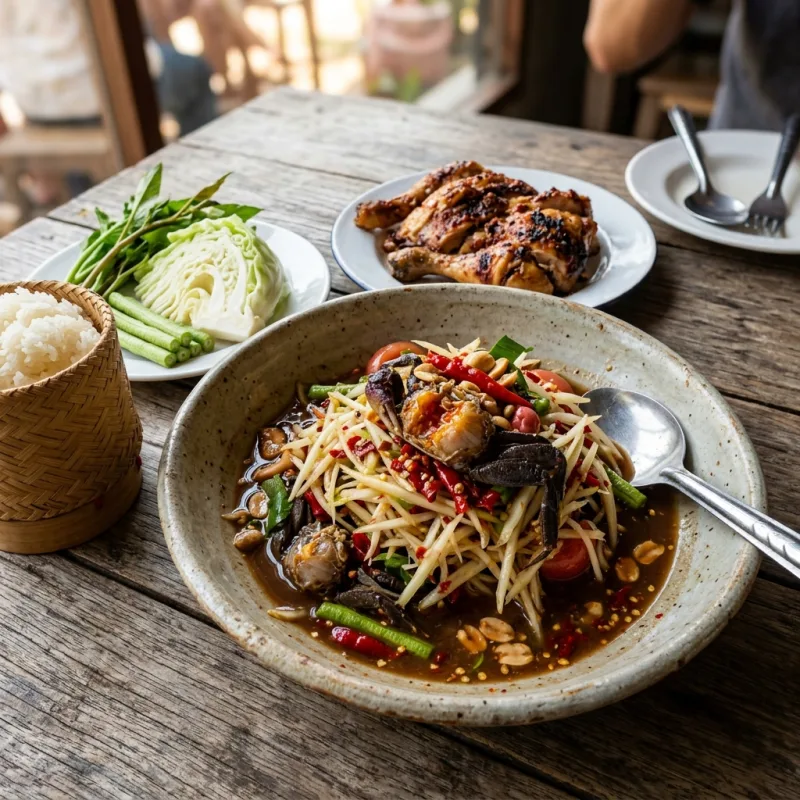
Authentic Som Tum Isan papaya salad with fermented fish sauce and side vegetables

Must Try Dish

Som Tum Isan - Pungent, fiery, and deeply savory green papaya salad pounded in a clay mortar with fermented fish sauce (pla ra) and salted field crab. Unlike central Thai variations, it omits peanuts and excessive palm sugar, delivering an earthy, sour, and uncompromised chili punch.
Food Experiences Title Icon

Food
Experiences

Discover cooking classes, tastings and local food tours

No food experience found
Maya, the human travel expert at TravelingWiz, offering curated, non-AI expertise

Maya’s Final Checklist for Isan

Logistics shouldn’t be the focus of your trip—the experience should. I’ve hand-vetted these essential partners to ensure your arrival, stay, and exploration are as smooth as an Athenian breeze.

Where to Stay

From boutique hotels to local apartments—compare thousands of options and find the perfect stay in the best neighborhood.

Air Travel

Getting there should be seamless. Compare the best routes and prices across top airlines to start your journey on the right note.

Local Guides

Connect with experts who know the destination best. Get personalized advice and insider tips to help you plan your perfect trip.

Travel Protection

The “Engineer’s” rule: always have a backup. Secure your trip with a plan that covers every “what if” and unexpected change.

Car Rentals

Explore at your own pace with total freedom. Compare reliable rental options and find the right vehicle for your adventure.

Visa Services

Don’t let paperwork slow you down. Get expert assistance with your application to ensure all your entry documents are in order.

FAQs

Yes, Isan is considered one of the safest regions in Thailand for solo travelers due to its peaceful rural communities and low violent crime rates. English is less widely spoken outside major university cities, so downloading offline translation apps is helpful.
Renting a car provides the greatest freedom to reach remote Khmer ruins and national parks. Alternatively, reliable state trains and intercity buses connect main provincial hubs like Korat, Khon Kaen, Udon Thani, and Ubon Ratchathani.
The cool season from November to February is ideal, bringing dry weather, clear blue skies, and mild temperatures suitable for temple exploration and hiking.
Isan cuisine relies heavily on sticky rice instead of jasmine rice and features minimal coconut milk. Flavors are typically sour, spicy, and savory, enriched by fermented fish seasoning (pla ra) and fresh herbs.

Your Insights Matter

TravelingWiz grows through the stories of our community. If you’ve recently explored ,Isan share your tips and stories to help us perfect our guides for the next traveler.

Related Articles

Check out our related articles and blog posts to learn even more about the destination.

No related articles found

Don’t Travel Alone

Share with your friends and family

Where should we send your offline card?

We hate spam just as much as you do

newsletter_consent *