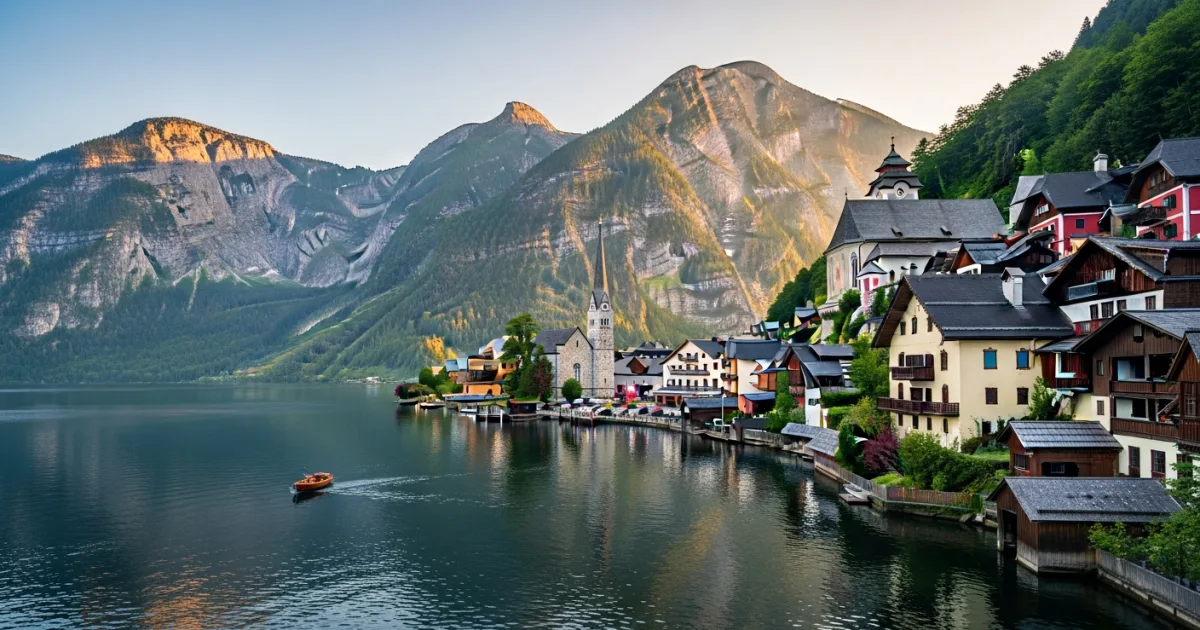
Geological formations in the Dachstein massif dictate Hallstatt's physical constraints, limiting the town's footprint to a narrow strip of land between the lake and steep mountain slopes. The Hallstatt Salt Mine, accessible via a 3-minute funicular ride or a 45-minute hike, contains 65 kilometers of subterranean tunnels, though only a fraction is open to the public. Excavations in the 19th century by Johann Georg Ramsauer uncovered an Iron Age cemetery containing 1,045 burials, leading archaeologists to name the early Iron Age culture (800–450 BC) the 'Hallstatt culture.' The local architectural vernacular features 16th-century timber-framed houses built directly into the bedrock, many of which utilize traditional wooden shingles. Environmental conservation efforts currently focus on managing the ecological impact of high tourist volumes on the oligotrophic waters of Lake Hallstatt.
Reasons to Visit
- The Salzwelten Hallstatt operates as the oldest continuously functioning salt mine in the world, featuring a 64-meter subterranean wooden slide.
- The Dachstein Krippenstein cable car transports visitors to an elevation of 2,100 meters, providing access to the Five Fingers viewing platform.
- The Hallstatt Charnel House (Ossuary) contains over 1,200 human skulls, with 610 featuring intricate hand-painted floral motifs and family names.
- Lake Hallstatt covers 8.55 square kilometers, offering regulated zones for electric boat rentals and cold-water swimming.
Things to Avoid
- Driving personal vehicles into the town center between 10:00 and 17:00, as municipal barriers physically block non-resident access.
- Arriving between 11:00 and 15:00 during July and August, when daily visitor counts peak and pedestrian bottlenecks occur on Seestraße.
- Flying drones within the municipal boundaries, as local privacy laws and aviation regulations strictly prohibit unauthorized aerial photography.
- Relying solely on late-evening public transportation, as the final ferry connecting to the ÖBB railway station departs at 18:15.
Local Transportation Tips
Public transportation infrastructure relies on a multimodal system integrating the ÖBB railway network and the Hallstättersee Schifffahrt ferry service. The Hallstatt train station sits on the eastern shore of the lake, requiring passengers to board the 'Stefanie' ferry for a 15-minute crossing to the town center. Regional Postbus routes (specifically Line 542 and 543) connect Hallstatt to neighboring municipalities like Obertraun, Bad Ischl, and Gosau, operating on 60-minute intervals during peak season. Vehicular parking is restricted to three designated peripheral lots (P1, P2, P3), equipped with electronic capacity displays and charging €15 for a 12-hour duration.
Travel Etiquette
- Maintain low noise levels in residential zones, as local ordinances strictly enforce quiet hours to protect the 780 permanent residents.
- Refrain from trespassing on private property or entering residential gardens to secure photographic vantage points.
- Dispose of all waste in designated municipal sorting bins, which separate paper, plastics, and biological waste according to Austrian environmental laws.
- Greet shop owners and service staff with a formal 'Grüß Gott' upon entering commercial establishments.
Recommended Age Group
Demographic data and terrain analysis indicate varying levels of suitability for different age cohorts visiting Hallstatt.
- Babies (0-2 years): Not Recommended. The steep, cobblestone streets and lack of elevator access at key historical sites severely limit stroller mobility.
- Kids (3-12 years): Recommended. The Salzwelten salt mine offers interactive exhibits and subterranean slides specifically designed for children over the age of four.
- Teens (13-19 years): Recommended. The Dachstein Krippenstein area provides high-adrenaline activities, including the Five Fingers viewing platform and extensive hiking trails.
- Adults (20-64 years): Recommended. This demographic can fully utilize the regional infrastructure, from strenuous alpine hikes to historical tours and culinary experiences.
- Seniors (65+ years): Neutral. While the ferry ride and central market square are easily accessible, the 400-meter elevation gain to the salt mine and steep residential staircases pose significant mobility challenges.
Accessibility Level: Medium
- The Hallstättersee Schifffahrt ferry provides ramp access for standard-sized wheelchairs, though motorized chairs may face weight restrictions.
- The Salzwelten funicular accommodates wheelchairs, but the subterranean salt mine tour itself requires navigating narrow tunnels and is not wheelchair accessible.
- Public restrooms located at the P1 parking area and near the central tourist information office feature ADA-compliant facilities.
- Cobblestone paving on Seestraße and steep inclines on the terraced residential streets present significant navigational challenges for individuals with limited mobility.
Did You Know?
In 2011, a Chinese mining company constructed a full-scale replica of Hallstatt's historic town center in Guangdong province, China. The replica project cost an estimated $940 million and meticulously copied the architectural details of the parish church, the market square, and various historic timber houses. This architectural cloning initially surprised Hallstatt's municipal government but ultimately resulted in a formal cultural exchange agreement and a significant surge in Asian tourism to the original Austrian site.
Cool Statistics
- The Hallstatt Salt Mine contains a wooden staircase dating back to 1344 BC, recognized as the oldest wooden staircase in Europe.
- Lake Hallstatt reaches a maximum depth of 125 meters and maintains an average summer surface temperature of 19°C.
- The local ossuary houses exactly 610 painted skulls, a tradition initiated in 1720 due to spatial constraints in the municipal cemetery.
- Pre-pandemic tourism metrics recorded 1.08 million overnight stays in the broader Salzkammergut region annually.







Buy a compatible power adapter for your trip