Disclosure: This site contains affiliate links. We may earn a commission if you make a purchase, at no extra cost to you.

>
>
>
>
Durnstein
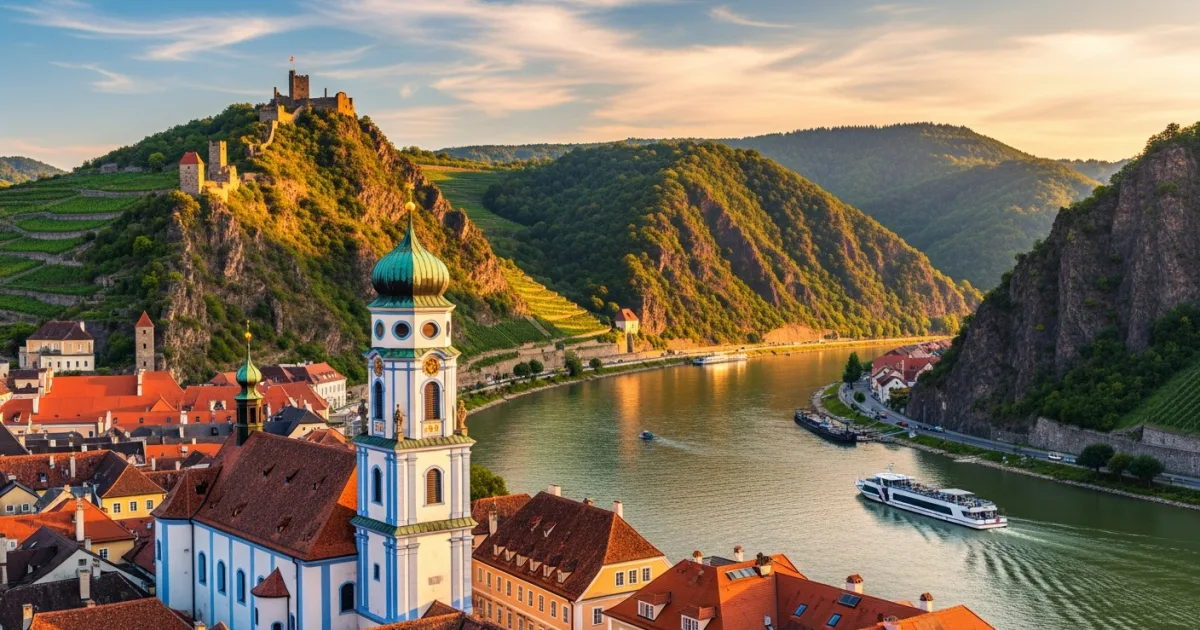
Panoramic view of Dürnstein with the blue Abbey tower and Danube River

Durnstein Overview & Key Highlights

Dürnstein is a historic municipality located in the Wachau Valley of Lower Austria, situated along the banks of the Danube River. The town is globally recognized for its iconic blue-and-white Baroque tower of the Dürnstein Abbey, completed in 1733, and the medieval Burgruine Dürnstein, the ruined castle where King Richard the Lionheart of England was imprisoned in 1192. Encompassing an area of 16.81 square kilometers, this UNESCO World Heritage landscape is characterized by terraced vineyards that produce world-class Riesling and Grüner Veltliner wines. Tourism in Dürnstein peaks between May and October, driven by river cruise passengers and cycling enthusiasts navigating the 285-kilometer Danube Cycle Path. The local economy relies heavily on viticulture and the cultivation of the Wachauer Marille, a protected designation of origin apricot used in regional culinary specialties. Visitors typically spend a full day exploring the cobblestone streets, hiking the steep 20-minute trail to the castle ruins for panoramic river views, and participating in guided wine tastings at local Heurigen (wine taverns).

Durnstein Travel Guide: Logistics & In-Depth Tips

Dürnstein functions as a primary cultural and economic hub within the Wachau Valley, a 36-kilometer stretch of the Danube River recognized as a UNESCO World Heritage site since 2000. The town's architectural layout reflects its medieval origins, featuring preserved defensive walls, narrow cobblestone alleys, and historic burgher houses dating back to the 16th century. The Dürnstein Abbey, originally founded in 1410 by Augustinian canons, underwent extensive Baroque renovations in the early 18th century, resulting in its distinctive blue-and-white tower that serves as the region's most photographed landmark.

Economically, the municipality sustains itself through high-yield viticulture, utilizing the steep, stone-terraced hillsides that benefit from a unique microclimate created by the intersection of western Atlantic and eastern Pannonian weather systems. This climate is also crucial for the cultivation of the Wachauer Marille, an apricot variety protected by the European Union, which is harvested annually in mid-July and celebrated through various local festivals. The integration of historical preservation and active agricultural production makes Dürnstein a vital center for both heritage tourism and the Austrian wine industry.

Reasons to Visit

  • Historical significance: Explore the Burgruine Dürnstein, the 12th-century castle ruins where King Richard the Lionheart was held for ransom in 1192.
  • Architectural heritage: Visit the Dürnstein Abbey, featuring a striking blue-and-white Baroque tower and an ornate interior dating back to 1733.
  • Viticulture: Participate in wine tastings at local estates, sampling world-renowned Grüner Veltliner and Riesling cultivated on the surrounding stone terraces.
  • Outdoor recreation: Cycle along the Danube Cycle Path (Donauradweg) or hike sections of the 180-kilometer Wachau World Heritage Trail.
  • Culinary specialties: Consume authentic Wachauer Marille products, including apricot dumplings, jams, and regional liqueurs.

Things to Avoid

  • Peak hour crowds: Avoid visiting the main street (Hauptstraße) between 10:00 AM and 2:00 PM during summer months when river cruise ships dock and offload large tour groups.
  • Inappropriate footwear: Do not wear sandals or high heels when hiking the steep, rocky, and uneven 20-minute trail to the castle ruins.
  • Unplanned dining: Avoid expecting late-night dining options, as most local restaurants and Heurigen close their kitchens by 9:00 PM.
  • Driving in the center: Do not attempt to drive through the historic town center, which is restricted to residents; utilize the designated parking lots outside the town walls.

Local Transportation Tips

Transportation within Dürnstein is primarily pedestrian, as the historic town center is compact and restricted to vehicular traffic. Visitors arriving by car must utilize the paid parking zones (P1 through P6) located immediately outside the town walls. Public transit access is facilitated by the Wachaubahn, a heritage railway operating between Krems and Emmersdorf from April to November, and regional bus lines (WL1 and WL2) that connect Dürnstein to neighboring municipalities.

River navigation is a major transport mode, with scheduled passenger ferries operated by DDSG Blue Danube and Brandner Schiffahrt docking at the Dürnstein pier daily during the tourist season. Bicycles remain a highly efficient transit method, supported by extensive rental networks and dedicated lanes along the Danube Cycle Path, allowing visitors to easily navigate between Dürnstein and adjacent wine-producing villages.

Travel Etiquette

  • Greeting customs: Initiate interactions in shops and restaurants with a polite "Grüß Gott" (God greet you) or "Guten Tag".
  • Tipping practices: Round up the bill or add a 5-10% tip in restaurants and cafes, handing the cash directly to the server rather than leaving it on the table.
  • Heurigen rules: Look for a bundle of pine branches (Buschen) hung above a tavern door, indicating that the establishment is open and serving its own new wine.
  • Trail etiquette: Yield to descending hikers on the narrow path to the castle ruins and remain on marked trails to protect the fragile vineyard terraces.

Recommended Age Group

Dürnstein offers a blend of historical exploration and outdoor activities suitable for various age demographics, though its physical terrain presents specific challenges.

  • Babies (0-2 years): Neutral. The town is scenic, but historic cobblestone streets and steep inclines make stroller navigation challenging.
  • Kids (3-12 years): Recommended. Children enjoy exploring the castle ruins and participating in boat rides on the Danube River.
  • Teens (13-19 years): Recommended. The area offers active outdoor pursuits like cycling the Danube path and hiking the Wachau trails.
  • Adults (20-64 years): Recommended. Adults can fully engage with the region's primary attractions, including wine tasting, historical tours, and fine dining.
  • Seniors (65+ years): Recommended. The town offers accessible river cruises, flat walking paths along the Danube, and easily reachable wine taverns, though the castle hike may be too strenuous.

Accessibility Level: Medium

  • Wheelchair users will find the main street (Hauptstraße) navigable, though the historic cobblestones can cause significant vibration and uneven surfaces.
  • The Dürnstein Abbey offers limited accessibility; the courtyard and church ground floor are accessible, but upper exhibition rooms lack elevator access.
  • The hike to the Burgruine Dürnstein (castle ruins) is entirely inaccessible to individuals with mobility impairments due to steep, rocky, and unpaved terrain.
  • Public restrooms located near the main parking lots (P2 and P3) include designated, fully equipped accessible facilities.
  • Passenger ferries operating on the Danube generally provide ramp access and accessible main decks, but travelers should verify specific vessel capabilities prior to booking.

Did You Know?

The ransom demanded for the release of King Richard the Lionheart from Dürnstein in 1193 was 150,000 marks, equivalent to two to three times the annual income of the English Crown at the time. This massive sum was used by Duke Leopold V of Austria to mint the first silver coins in Vienna, fund the construction of the city walls of Vienna, and establish the towns of Wiener Neustadt and Friedberg.

Cool Statistics

  • Elevation: Dürnstein sits at an elevation of 209 meters (686 feet) above sea level.
  • Population: The municipality maintains a permanent population of approximately 800 residents.
  • Wine production: The Wachau Valley encompasses roughly 1,350 hectares of vineyard area, with Dürnstein being a central production hub.
  • Castle construction: The Burgruine Dürnstein was originally constructed between 1140 and 1145 by the Kuenringer family.


Address:

Dürnstein, Austria

Find Nearby Accommodations

Basic Info

address icon

COUNTRY & Region

Austria,
Europe

ACCESSIBILITY LEVEL​

Medium
Currency icon

LOCAL CURRENCY​

Euro (EUR)
Price level icon
High
Safety Level icon

SAFETY LEVEL

Duration icon

Recommended Duration

• 3-5 hours (Half a day)
• Full day
• Overnight
• 1-7 days

Electricity

electricity icon

Electricity

220-240V, 
50Hz
Plug Socket icon

Plug Type

• Type C (Round pin)
• Type F (Two round pins with earth clips)
Plug types
Click To View Plug Types

Activities To Do In Durnstein

Best Time To Visit Durnstein

The optimal timeframe for visiting Dürnstein spans from late April to October, aligning with the operational season of Danube river cruises and the Wachau Valley's agricultural cycles.

  • April to May: Spring brings the blooming of the Wachauer Marille (apricot) trees, typically occurring in early to mid-April, offering picturesque landscapes and moderate temperatures averaging 15°C (59°F).
  • June to August: Summer represents the peak tourist season, characterized by temperatures reaching 25°C (77°F), extended daylight hours, and the annual Apricot Festival (Marillenkirtag) held in July.
  • September to October: Autumn is defined by the grape harvest (Weinlese), featuring vibrant foliage, active wine taverns (Heurigen), and cooler, comfortable hiking conditions averaging 18°C (64°F).

Average Temperatures Per Month

Remember to check the weather forecast a few days before the trip and before heading to the airport.

Safety Level icon

Safety Level

Excellent. Dürnstein is an exceptionally safe rural town with virtually non-existent violent crime rates. Visitors should exercise standard situational awareness, particularly regarding uneven cobblestone streets and the steep, unpaved hiking trail leading to the castle ruins, which can become slippery during rain.

The rating is based on multi-year peace, crime, and security indices. Before you go, always verify current conditions through official government travel advisories.

Emergency Numbers

Police: 112 (Universal) / 133
Ambulance: 112 (Universal) / 144

No internet needed • Includes local translations • Free for TravelingWiz readers

Spoken Languages

German is the official and primary language spoken in Dürnstein. English is widely understood and spoken fluently by hospitality workers, tour guides, and younger residents due to the town's high volume of international tourists.

Learn The Language

  • Guten Tag (Good day)
  • Bitte (Please / You’re welcome)
  • Danke (Thank you)
  • Sprechen Sie Englisch? (Do you speak English?)
  • Wo ist die Toilette? (Where is the bathroom?)
  • Ein Glas Wein, bitte (A glass of wine, please)
  • Wie viel kostet das? (How much does this cost?)
  • Auf Wiedersehen (Goodbye)
Travel Booking Partner - TravelingWiz

Trip Cost & Budgeting for Durnstein, 2026

Everything you need to know about money while traveling
Is Durnstein expensive for tourists in 2026? Yes, Durnstein is moderately expensive, reflecting typical Austrian high-season prices. Visitors can expect to pay around 4.00 EUR for a cappuccino, 4.80 EUR for a pint of domestic beer, and 22.00 EUR for a main meal at a mid-range restaurant. Featuring Human Verified prices, local travel expenses can add up quickly during peak season. Use the data table below to calculate your specific daily budget based on your travel style.
Currency icon

LOCAL CURRENCY​:

Euro (EUR)
Price level icon
High
Credit cards are accepted in most hotels and restaurants, but cash is necessary for small wineries, bakeries, and parking.

Per person, per day – pocket cash for small purchases.

Local: 18
Euro (EUR)
≈ 21 USD

Full daily spend estimation (accommodation, food, transportation, attractions).

Travel Style
Euro (EUR)
≈ USD ($)
Budget
95
110
Mid-range
175
202
Comfort
390
451

The Prices, Daily costs, and calculator results are estimates for planning purposes only. Actual costs may vary based on season, booking timing, personal spending habits, and currency fluctuations. TravelingWiz cannot be held responsible for discrepancies between these estimates and your final trip expenses.

  • • Rent a bicycle in Krems to ride along the Danube river trail to Dürnstein instead of paying for taxis.
  • • Enjoy wine tastings and meals at traditional local Heurigen wine taverns rather than upscale hotel dining.
  • • Purchase a Wachau regional day ticket if traveling between multiple villages along the Danube river.
  • • Hike up to the free-to-visit Dürnstein Castle ruins for panoramic river views without paying admission fees.

Pre-Order Tickets

Avoid disappointment when tickets sell out — and skip the long lines by booking online in advance. You’ll often save up to 20% too.
Save up to 20%

Travel Discounts & Coupons

Save on hotels, attractions, transport, and gear — find verified discounts for smarter travel spending.
Verified Coupons

What To Pack

  • Sturdy hiking boots are essential for navigating the steep, rocky, and unpaved 20-minute trail leading to the Burgruine Dürnstein castle ruins.
  • A lightweight rain jacket is recommended, as the Wachau Valley experiences sudden precipitation, particularly during the spring and early summer months.
  • Sun protection, including a wide-brimmed hat and SPF 50 sunscreen, is necessary due to the high UV exposure on the unshaded vineyard terraces and riverboats.
  • A reusable water bottle is highly advised to maintain hydration during outdoor activities, with potable tap water readily available throughout the municipality.
  • A daypack is useful for carrying local purchases, such as bottles of Grüner Veltliner wine or jars of Wachauer Marille apricot jam, while keeping hands free for cycling or hiking.
We couldn't find tips for Durnstein.
If you got any, please share

Recommended Itineraries for Traveling to Durnstein

We couldn't find itineraries for Durnstein.
you can contact us for custom trip plan

Food & Drink Highlights

Local Food Overview

Dürnstein's culinary landscape is defined by its agricultural heritage, specifically the Wachauer Marille (apricot) and regional viticulture. Local menus prominently feature freshwater fish from the Danube, such as zander, alongside traditional Austrian tavern fare like roasted pork and seasonal game. Wine taverns, known as Heurigen, offer cold platters of cured meats, local cheeses, and dark bread, perfectly paired with the region's signature Grüner Veltliner and Riesling wines.
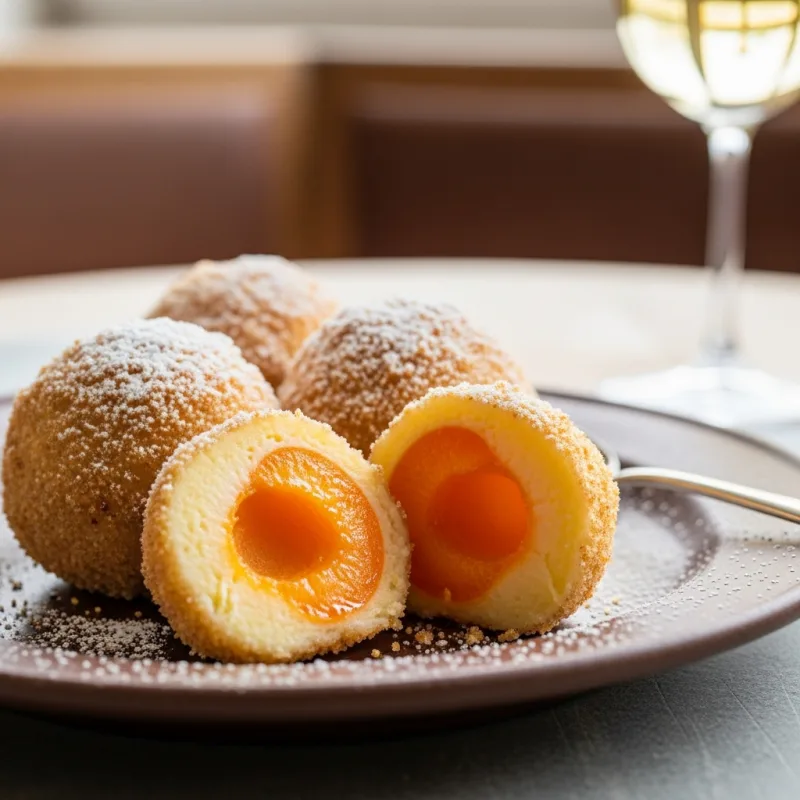
Wachauer Marillenknödel apricot dumplings on a plate

Must Try Dish

Wachauer Marillenknödel - Traditional Austrian apricot dumplings feature a whole, pitted Wachauer Marille encased in a light curd cheese (Topfen) dough. The dumplings are boiled and then rolled in butter-toasted breadcrumbs, typically served dusted with powdered sugar.
Food Experiences Title Icon

Food
Experiences

Discover cooking classes, tastings and local food tours

No food experience found
Maya, the human travel expert at TravelingWiz, offering curated, non-AI expertise

Maya’s Final Checklist for Durnstein

Logistics shouldn’t be the focus of your trip—the experience should. I’ve hand-vetted these essential partners to ensure your arrival, stay, and exploration are as smooth as an Athenian breeze.

Where to Stay

From boutique hotels to local apartments—compare thousands of options and find the perfect stay in the best neighborhood.

Air Travel

Getting there should be seamless. Compare the best routes and prices across top airlines to start your journey on the right note.

Local Guides

Connect with experts who know the destination best. Get personalized advice and insider tips to help you plan your perfect trip.

Travel Protection

The “Engineer’s” rule: always have a backup. Secure your trip with a plan that covers every “what if” and unexpected change.

Car Rentals

Explore at your own pace with total freedom. Compare reliable rental options and find the right vehicle for your adventure.

Visa Services

Don’t let paperwork slow you down. Get expert assistance with your application to ensure all your entry documents are in order.

FAQs

The hike to Burgruine Dürnstein takes approximately 20 to 30 minutes from the town center. The trail is steep, rocky, and requires sturdy footwear.
No, the historic town center of Dürnstein is restricted to resident traffic only. Visitors must park in the designated paid parking lots (P1 through P6) located just outside the town walls.
A Heuriger is a traditional Austrian wine tavern where local winemakers serve their own new wine alongside cold food platters. They are identifiable by a bundle of pine branches (Buschen) hung above the entrance.
The Wachauer Marille (apricot) trees typically bloom between late March and mid-April, depending on the weather conditions of the specific year.

Your Insights Matter

TravelingWiz grows through the stories of our community. If you’ve recently explored ,Durnstein share your tips and stories to help us perfect our guides for the next traveler.

Related Articles

Check out our related articles and blog posts to learn even more about the destination.

No related articles found

Don’t Travel Alone

Share with your friends and family

Where should we send your offline card?

We hate spam just as much as you do

newsletter_consent *