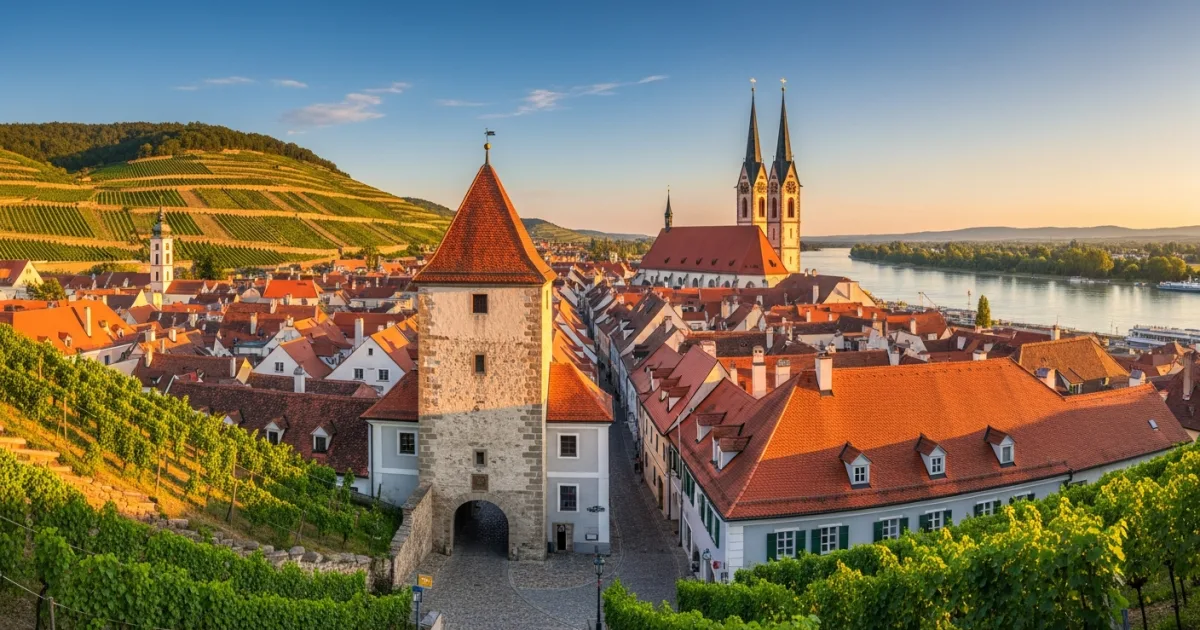
Historical records first mention Krems in 995 AD under the name 'Urbs Chremisa'. The municipality operates as a statutory city, meaning it performs the duties of both a municipality and a district. Geographically, the city sits at an elevation of 203 meters above sea level at the confluence of the Krems River and the Danube. The local climate is classified as transitional, featuring warm summers that facilitate the extensive viticulture on the primary rock soils of the surrounding hillsides.
The urban layout consists of several distinct districts, with the historical centers of Krems and Stein forming the primary tourist corridors. Educational institutions play a significant role in the modern local economy, with the University for Continuing Education Krems and the IMC University of Applied Sciences hosting thousands of students. This academic presence sustains a year-round cultural calendar, supplementing the seasonal agricultural and tourism sectors.
Reasons to Visit
- UNESCO Status: The city forms the eastern gateway to the Wachau Cultural Landscape, inscribed as a World Heritage site in 2000.
- Kunstmeile Krems: This 1.6-kilometer cultural district houses over a dozen institutions, including the only museum for caricature and cartoon art in Austria.
- Viticulture: Krems manages over 1,000 hectares of vineyards, producing internationally recognized Grüner Veltliner and Riesling wines.
- Historical Architecture: The Steiner Tor, erected in 1480, remains the sole surviving medieval city gate of the original four.
Things to Avoid
- Sunday Shopping: Retail operations, including grocery stores, strictly close on Sundays due to Austrian labor laws, with exceptions only for select bakeries and transit hub shops.
- Old Town Driving: The historic center enforces a pedestrian-only zone, and unauthorized driving incurs immediate municipal fines.
- Winter Wine Tours: Most Heurigen (traditional wine taverns) and vineyard tasting rooms cease operations between November and March.
Local Transportation Tips
Public transit within Krems relies on a municipal bus network comprising four primary lines (Lines 1-4) that connect the central train station to peripheral districts. The VOR (Verkehrsverbund Ost-Region) manages ticketing, with a standard single ride costing approximately 2.50 EUR. Bicycle infrastructure includes direct access to the Donauradweg (Danube Cycle Path), a 2,850-kilometer route stretching from Germany to the Black Sea. Regional trains operated by ÖBB provide hourly connections to Vienna and St. Pölten.
Travel Etiquette
- Tipping Standards: Service charges are included in Austrian restaurant bills, but patrons customarily round up the total by 5 to 10 percent for satisfactory service.
- Greetings: Entering retail establishments requires a formal greeting, typically 'Grüß Gott' (God greet you), followed by 'Auf Wiedersehen' upon departure.
- Waste Separation: Municipal regulations mandate strict recycling, requiring visitors to separate paper, plastic, glass, and biological waste into designated color-coded bins.
Recommended Age Group
Krems an der Donau offers varying levels of engagement depending on visitor demographics, with a strong emphasis on adult-oriented cultural and culinary tourism.
- Babies (0-2 years): Neutral. The historic center features extensive cobblestone paving, which complicates stroller navigation, though riverside paths are flat and paved.
- Kids (3-12 years): Recommended. The Karikaturmuseum provides interactive exhibits, and the Danube riverboat cruises offer engaging, low-exertion entertainment for younger travelers.
- Teens (13-19 years): Neutral. The destination lacks significant youth-oriented nightlife or high-adrenaline attractions, focusing primarily on historical architecture and art exhibitions.
- Adults (20-64 years): Recommended. The region provides extensive wine tasting opportunities, complex historical sites, and high-density art galleries tailored to adult interests.
- Seniors (65+ years): Recommended. The city features a compact, walkable pedestrian zone, accessible modern museums along the Kunstmeile, and comprehensive public transit options.
Accessibility Level: Medium
- Museum Access: All institutions along the Kunstmeile Krems, including the Landesgalerie and Karikaturmuseum, comply with modern accessibility standards, featuring ramps and elevators.
- Public Transit: The municipal bus fleet utilizes low-floor vehicles equipped with folding ramps to accommodate wheelchair users.
- Terrain Challenges: The Altstadt (Old Town) and the neighboring district of Stein contain steep inclines and uneven cobblestone streets that present mobility challenges.
- Train Station: Krems Hauptbahnhof provides step-free access to all platforms via elevators and tactile paving for visually impaired travelers.
Did You Know?
The Gozzoburg, a prominent early Gothic town palace in Krems, features secular frescoes dating back to the 13th century, representing some of the oldest non-religious mural paintings in Central Europe.
Cool Statistics
- Population: 25,271 residents (as of 2023).
- Elevation: 203 meters (666 feet) above sea level.
- Distance to Vienna: 70 kilometers (43 miles) west of the capital.
- University Enrollment: Over 15,000 students attend the University for Continuing Education Krems and other local tertiary institutions.






Buy a compatible power adapter for your trip