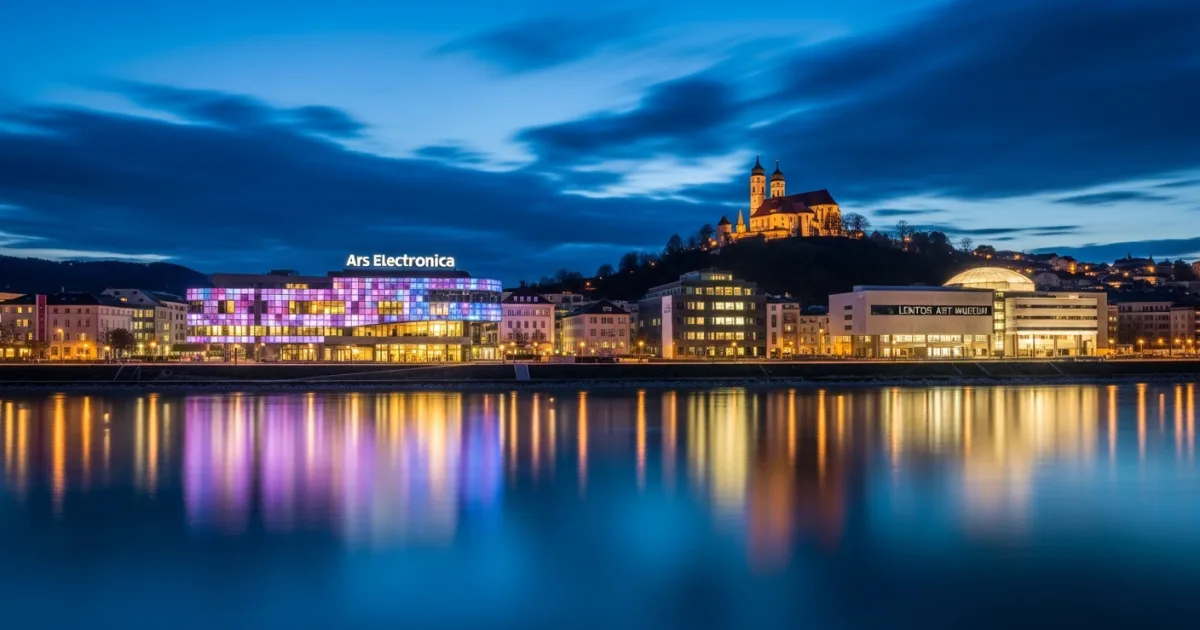
Linz operates as the industrial and cultural engine of Upper Austria, generating approximately 25% of the region's economic output. The city's transformation from a steel-producing center to a hub for digital innovation is epitomized by the Ars Electronica Center, which opened in 1996 and focuses on the intersection of art, technology, and society. The Danube River bisects the city, providing a natural corridor for both commercial shipping and recreational river cruising. Urban planning in Linz emphasizes green spaces, with parks and recreational areas covering nearly 50% of the municipal territory. The historical core, centered around the Hauptplatz, features buildings dating back to the 16th century, including the Old Town Hall and the Feichtinger House.
The educational landscape is anchored by the Johannes Kepler University, which hosts over 20,000 students and drives local research in artificial intelligence and mechatronics. Cultural programming is robust, highlighted by the Brucknerhaus concert hall, named after the locally born composer Anton Bruckner. The city's commitment to contemporary art is further demonstrated by the Lentos Art Museum, an architectural landmark that illuminates the riverbank at night. Transportation infrastructure is highly developed, with the Linz Hauptbahnhof serving as a major node in the Austrian Federal Railways (ÖBB) network, connecting the city to Vienna in under 90 minutes.
Reasons to Visit
- Ars Electronica Center: Houses interactive digital art exhibits and an 8K resolution Deep Space theater, exploring the future of technology.
- Pöstlingbergbahn: Operates as one of the steepest adhesion railways globally, climbing 288 meters in 2.9 kilometers to offer panoramic city views.
- Lentos Art Museum: Features over 1,500 works of modern and contemporary art, including significant pieces by Gustav Klimt and Egon Schiele.
- Mariendom (New Cathedral): Stands as Austria's largest church by capacity, featuring intricate stained glass windows detailing the history of Linz.
- Voestalpine Stahlwelt: Offers guided tours of a working steel plant, showcasing advanced metallurgical processes and industrial history.
Things to Avoid
- Unvalidated transit tickets: Fines of 85 EUR are strictly enforced on trams and buses for passengers caught without properly stamped tickets.
- Sunday shopping expectations: Retail stores and supermarkets are legally mandated to close on Sundays, with exceptions only at the main train station.
- Ignoring bicycle lanes: Cyclists commute at high speeds on dedicated paths; pedestrians must stay in designated walking zones to prevent collisions.
- Walking on the tram tracks: Trams run quietly and frequently through the pedestrianized Landstraße; always look both ways before crossing.
Local Transportation Tips
Linz AG Linien manages the public transportation network, comprising four tram lines and numerous bus routes that serve the metropolitan area. The tram system forms the backbone of urban transit, with Lines 1, 2, and 3 running through the central Landstraße, making it one of the busiest tram corridors in Austria. Single tickets cost approximately 2.90 EUR and are valid for one hour, while a 24-hour pass offers unlimited travel for 5.80 EUR. Tickets must be purchased at machines located at stops or via the mobile app before boarding. The city is highly walkable, particularly in the pedestrianized zones of the Altstadt (Old Town). Bicycles are widely used, supported by over 130 kilometers of dedicated cycle paths and a municipal bike-sharing program.
Travel Etiquette
- Greeting: Say 'Grüß Gott' or 'Guten Tag' when entering shops, cafes, or restaurants to acknowledge the staff.
- Tipping: Round up the bill or add 5-10% for good service in restaurants, handing the money directly to the server rather than leaving it on the table.
- Punctuality: Arrive exactly on time for tours, transport, and appointments, as Austrian culture highly values punctuality.
- Recycling: Separate waste meticulously into designated bins for paper, plastic, glass, and general refuse, which are widely available.
- Escalator etiquette: Stand on the right side of escalators in train stations and shopping centers to allow others to pass on the left.
Recommended Age Group
Linz offers a diverse range of attractions that cater to various age groups, balancing interactive technology with accessible historical sites.
- Babies (0-2 years): Neutral. The city is stroller-friendly with flat pedestrian zones, but specific attractions for this age are limited.
- Kids (3-12 years): Recommended. The Grottenbahn on the Pöstlingberg offers a fairytale ride, and the Ars Electronica Center features interactive exhibits suitable for children.
- Teens (13-19 years): Recommended. The focus on digital arts, technology at the Ars Electronica Center, and modern street art at the Mural Harbor appeal strongly to younger demographics.
- Adults (20-64 years): Recommended. Adults can fully appreciate the contemporary art museums, historical architecture, industrial tours, and the local culinary and nightlife scenes.
- Seniors (65+ years): Recommended. The city center is highly walkable and flat, public transport is highly accessible, and river cruises offer relaxed sightseeing options.
Accessibility Level: Medium
- Public transportation in Linz is highly accessible; all trams and the majority of buses feature low-floor boarding for wheelchairs and strollers.
- Major museums, including the Ars Electronica Center, Lentos Art Museum, and Schlossmuseum, are fully equipped with elevators, ramps, and accessible restrooms.
- The central pedestrian zone (Landstraße) and the Hauptplatz are flat and paved, making navigation straightforward for individuals with mobility challenges.
- The Pöstlingbergbahn offers accessible carriages, though advance notice to the operator is recommended for wheelchair users.
- Tactile paving is installed at major tram stops and pedestrian crossings to assist visually impaired travelers.
Did You Know?
Johannes Kepler, the renowned mathematician and astronomer, lived in Linz from 1612 to 1626, where he discovered his third law of planetary motion and completed the Rudolphine Tables.
Cool Statistics
- Population: Over 210,000 residents, making it Austria's third-largest city.
- Pöstlingbergbahn gradient: Reaches a maximum incline of 11.6%.
- Mariendom capacity: Can accommodate up to 20,000 people.
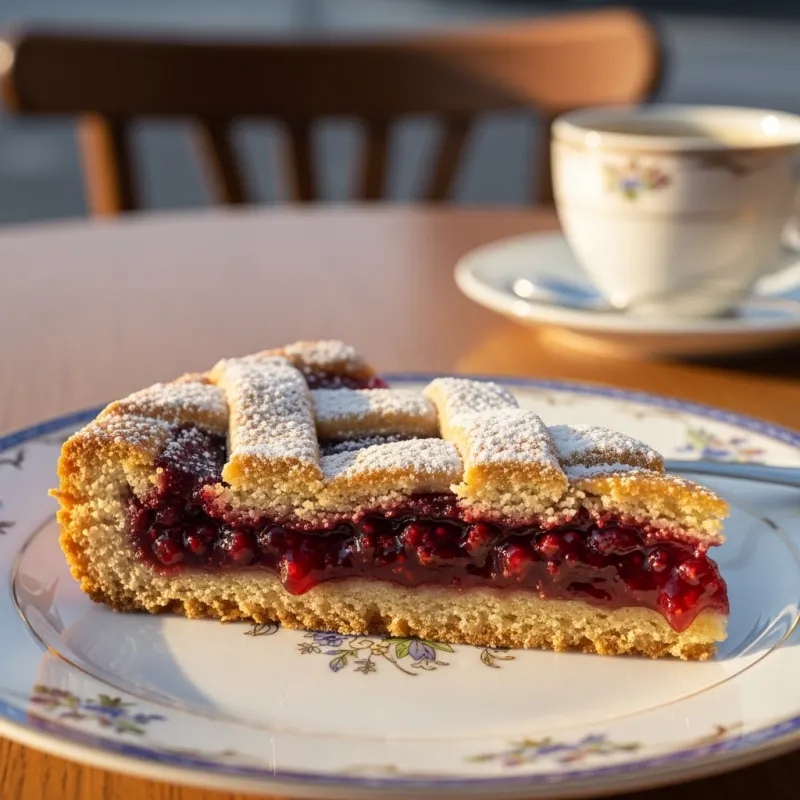
- Linzer Torte recipe date: First documented in 1653.
- Green space coverage: Approximately 50% of the municipal area is dedicated to parks and nature.






Buy a compatible power adapter for your trip