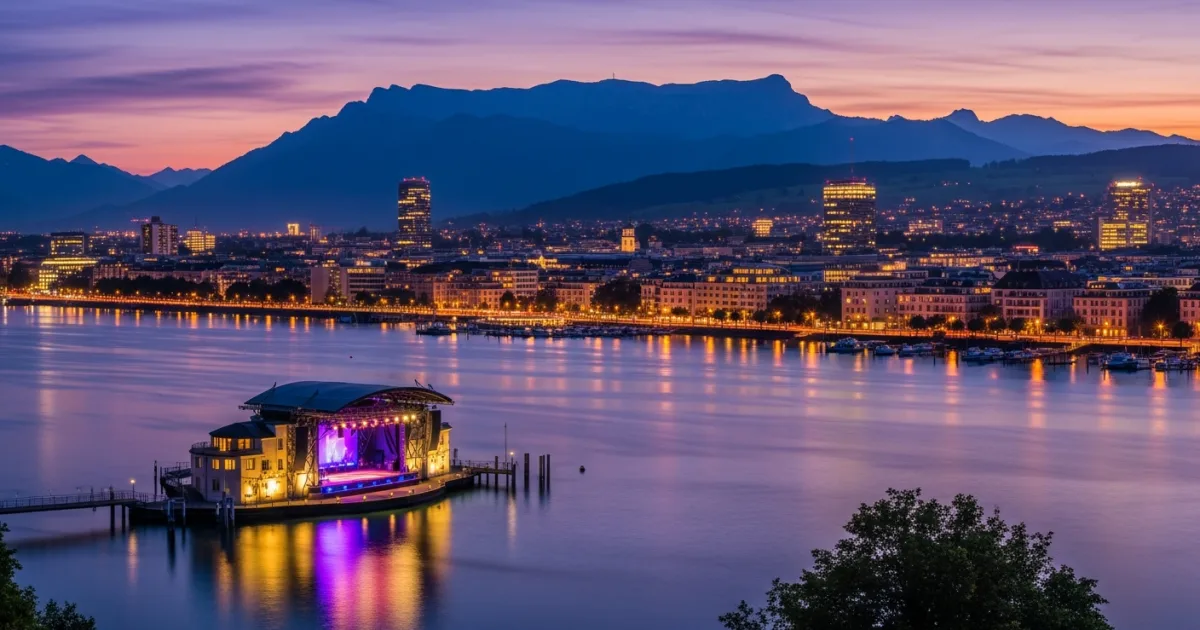
Bregenz's geographical position at the intersection of the Alps and Lake Constance creates a distinct microclimate and topography. The city's waterfront stretches for several kilometers, featuring the Molo promenade and extensive parklands that transition into the protected Mehrerauer Seeufer nature reserve. The Pfänder mountain dominates the eastern skyline, accessible via a six-minute cable car ride that ascends 600 vertical meters. This elevation provides panoramic views encompassing 240 Alpine peaks across Austria, Germany, and Switzerland.
Historical development in Bregenz spans over two millennia, beginning with the Celtic settlement of Brigantion in 1500 BC. The Romans later established the fortified camp of Brigantium in 15 BC, making it one of the oldest documented settlements in Austria. The medieval Oberstadt (Upper Town) retains its original 13th-century street plan, enclosed by remnants of the old city walls. Key structures within this district include the Martinsturm (St. Martin's Tower), built in 1601, which features the largest wooden onion dome in Central Europe and serves as the city's primary landmark.
Modern Bregenz integrates contemporary architecture with its historical foundation. The Kunsthaus Bregenz, designed by Swiss architect Peter Zumthor and opened in 1997, stands as a minimalist glass cube dedicated to contemporary art. The vorarlberg museum, redesigned in 2013, incorporates 16,656 concrete blossoms (cast from PET bottles) into its facade, reflecting innovative local design. The city's transportation network includes the Bregenz railway station, handling over 10,000 passengers daily, and the harbor, which facilitates international ferry services operated by the Vorarlberg Lines.
Reasons to Visit
- Bregenzer Festspiele: The annual summer festival features the world's largest floating stage (Seebühne), accommodating 7,000 spectators for large-scale opera productions.
- Pfänder Mountain: The 1,064-meter peak offers 360-degree views of Lake Constance and 240 Alpine peaks, accessible via the Pfänderbahn cable car.
- Kunsthaus Bregenz (KUB): This internationally recognized contemporary art museum features a distinctive glass facade and hosts rotating exhibitions across four floors.
- Medieval Oberstadt: The historic Upper Town preserves 13th-century architecture, including the Martinsturm with its iconic wooden onion dome.
- Lake Constance Waterfront: The extensive promenade and harbor area provide access to boat tours, cycling paths, and the Mehrerauer Seeufer nature reserve.
Things to Avoid
- Unplanned Festival Parking: Parking near the Seebühne during July and August festival nights reaches capacity quickly; utilizing public transit or park-and-ride facilities is necessary.
- Ignoring Border Regulations: Crossing into Germany or Switzerland via the lake or cycling paths requires carrying valid identification, as random border checks occur.
- Late Dining Expectations: Many local restaurants close their kitchens by 9:00 PM, requiring visitors to secure dinner reservations or eat earlier in the evening.
- Underestimating Alpine Weather: Weather conditions on the Pfänder mountain change rapidly; ascending without layered clothing and appropriate footwear poses safety risks.
- Skipping the Vorarlberg-Ticket: Purchasing single transit tickets is cost-inefficient; the regional day pass offers unlimited travel on buses and trains throughout Vorarlberg.
Local Transportation Tips
Public transportation in Bregenz operates under the Verkehrsverbund Vorarlberg (VVV) system, integrating buses and trains across the region. The city bus network (Stadtbus Bregenz) consists of five main lines running at 15- to 30-minute intervals from 6:00 AM to 8:00 PM. The Bregenz railway station serves as a primary hub for the ÖBB (Austrian Federal Railways), offering direct connections to Vienna, Munich, and Zurich. Regional trains (S-Bahn Vorarlberg) connect Bregenz to neighboring towns like Dornbirn and Feldkirch every 30 minutes. Bicycles represent a major transport mode, supported by the Bodensee-Radweg (Lake Constance Cycle Path) which runs directly through the city. The Vorarlberg Lines operate passenger ferries from the Bregenz harbor to destinations in Germany and Switzerland between April and October.
Travel Etiquette
- Greeting Customs: Entering shops or restaurants requires a polite 'Grüß Gott' (God greet you) or 'Guten Tag,' and leaving requires 'Auf Wiedersehen.'
- Tipping Practices: Service charges are included in restaurant bills, but rounding up the total by 5-10% is standard practice for good service.
- Punctuality: Austrian culture highly values exactness; arriving on time for tours, reservations, and public transport is expected.
- Recycling Rules: Waste separation is strictly enforced; public bins are divided into paper, plastic, glass, and general waste categories.
- Quiet Hours: Sunday is a designated day of rest (Sonntagsruhe); operating loud machinery, mowing lawns, or making excessive noise is prohibited.
Recommended Age Group
Bregenz offers a diverse range of activities suitable for various age groups, balancing outdoor recreation with cultural experiences.
- Babies (0-2 years): Neutral. Cobblestones in the Upper Town and crowded festival areas present challenges for strollers, though the lake promenade is highly accessible.
- Kids (3-12 years): Recommended. The Pfänder Alpine Wildlife Park offers free entry to see marmots and ibexes, while the lake provides safe swimming areas.
- Teens (13-19 years): Recommended. Water sports on Lake Constance, including stand-up paddleboarding, and extensive cycling routes offer active engagement.
- Adults (20-64 years): Recommended. The combination of high-end cultural events, contemporary art museums, and regional gastronomy aligns perfectly with adult travel preferences.
- Seniors (65+ years): Recommended. The city features excellent public transport, accessible cable cars, and flat walking paths along the lakefront, making it highly accommodating.
Accessibility Level: Medium
- Public Transit: All Stadtbus Bregenz vehicles feature low-floor entry and designated wheelchair spaces, ensuring full accessibility.
- Pfänderbahn: The cable car stations and cabins are fully wheelchair accessible, allowing barrier-free access to the mountain summit.
- Museums: The Kunsthaus Bregenz and vorarlberg museum provide elevators, ramps, and accessible restrooms on all public floors.
- Lake Promenade: The waterfront paths are paved, flat, and free of steps, offering miles of accessible routes for mobility devices.
- Upper Town Challenges: The medieval Oberstadt contains steep inclines and uneven cobblestone streets, requiring assistance for manual wheelchair users.
Did You Know?
Bregenz holds the record for the narrowest house facade in Europe, located at Kirchstraße 29 in the Upper Town, measuring just 57 centimeters in width. The city's Martinsturm contains frescoes dating back to 1362, which were hidden under plaster for centuries before being rediscovered in the 20th century. The Bregenzerwald narrow-gauge railway (Bregenzerwaldbahn), which operated from 1902 to 1983, originally connected Bregenz to Bezau, and a 5-kilometer section still runs as a heritage railway today. During the Roman era, Brigantium served as the headquarters for the Roman Lake Constance fleet, highlighting its strategic maritime importance over 2,000 years ago.
Cool Statistics
- Lake Constance Surface Area: 536 square kilometers, making it the third-largest freshwater lake in Central Europe.
- Pfänderbahn Capacity: The cable car transports up to 120 passengers per cabin, completing the ascent in exactly 6 minutes.
- Festival Attendance: The Bregenzer Festspiele sells approximately 200,000 tickets annually during its four-week summer run.
- Museum Architecture: The vorarlberg museum's facade features exactly 16,656 concrete casts of PET bottles.
- Cycling Network: The Bodensee-Radweg spans 260 kilometers around the lake, with Bregenz serving as a primary starting point.







Buy a compatible power adapter for your trip