The Larnaca Region serves as both the physical welcoming gate to the Republic of Cyprus and one of its most multifaceted territories. Positioned centrally along the southern coast, the district features a distinctive topographical progression from calm maritime shallows to the scenic pine-studded slopes of the lower Troodos range. While many visitors arrive through Larnaca International Airport and immediately head toward surrounding beach hubs, the region itself holds deep archaeological, spiritual, and recreational value. The historic urban fabric revolves around the Church of Saint Lazarus, a ninth-century stone monument sheltering the tomb of the biblical figure, flanked by an atmospheric Turkish-Cypriot quarter (Skala) lined with working artisan ceramics studios.
Beyond urban limits, the Larnaca Region transitions into serene agrarian landscapes dotted with heritage hamlets. Lefkara is world-renowned for its intricate Venetian-influenced lace embroidery (Lefkaritika) and silver filigree craftsmanship, preserved on the UNESCO Intangible Cultural Heritage list. To the south, coastal salt lakes offer an essential resting haven for thousands of pink flamingos every winter, set against the historic minaret of Hala Sultan Tekke. Offshore, divers flock from across the globe to descend into the waters of Larnaca Bay to explore the MS Zenobia, consistently ranked among the world's premier wreck diving destinations.
Reasons to Visit
- World-Class Wreck Diving: Dive the legendary MS Zenobia, a 172-meter roll-on/roll-off ferry that sank in 1980, now thriving as a protected artificial marine sanctuary.
- UNESCO Heritage & Craft: Explore the mountain village of Pano Lefkara, famous for its centuries-old lace embroidery and handmade silver filigree.
- Ancient Crossroads of Faith: Visit the revered 9th-century Church of Saint Lazarus and the peaceful lakeside sanctuary of Hala Sultan Tekke.
- Neolithic Wonders: Walk the stone foundations of Choirokoitia, a remarkably preserved UNESCO World Heritage Neolithic settlement dating back to the 7th millennium BC.
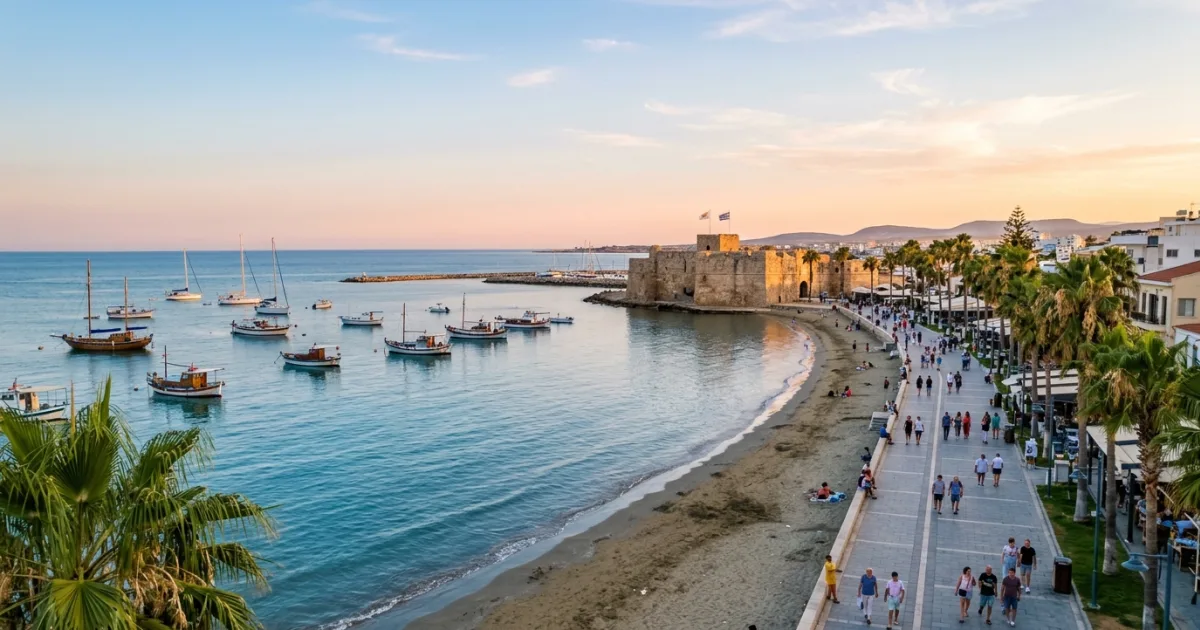
- Tranquil Coastal Escapes: Relax along the palm-lined Finikoudes promenade or unwind along the calmer sands of Governor's Beach and Faros Beach.
Things to Avoid
- Avoid entering active churches, monasteries, or mosques in beachwear, short shorts, or uncovered shoulders out of respect for local religious customs.
- Do not attempt to walk onto the Larnaca Salt Lake during rainy winter and spring months, as the mud crust is soft and ecologically sensitive.
- Avoid hiring unmetered private taxis directly outside transit hubs; always insist on the official meter or pre-arrange fixed airport transfers.
- Do not leave diving equipment or valuables in plain sight inside unattended rental cars parked along isolated beach bays.
Local Transportation Tips
Public transportation across the Larnaca Region is operated by Cyprus Public Transport (CPT), providing comfortable, air-conditioned bus services within urban Larnaca and limited routes to outlying villages. Intercity buses link Larnaca's beachfront with Limassol, Nicosia, and Paphos at fixed, economical fares. However, to access off-the-beaten-path villages such as Lefkara, Kato Drys, and rural coastal coves, hiring a rental car directly from Larnaca International Airport offers the best reliability and flexibility. Taxis are widely available in urban centers, and cycling along coastal dedicated paths is popular during cooler daylight hours.
Travel Etiquette
- Greet shopkeepers and taverna hosts with a polite 'Kalimera' (good morning) or 'Kalispera' (good evening).
- Dress respectfully when visiting religious venues; many monasteries provide wrap-around skirts or shawls at the entrance if needed.
- Tipping between 5% and 10% in sit-down restaurants is customary and appreciated for attentive service, even if service charges are listed on the bill.
- Cyprus coffee culture is meant to be savored slowly; drinking espresso or traditional Greek coffee on the go is uncommon among locals.
Recommended Age Group
The Larnaca Region provides a gentle, sun-soaked holiday experience suited to an array of travel styles and physical capabilities.
- Babies (0-2 years): Neutral. Calm shallow waters and paved beachfront promenades suit strollers, but summer midday temperatures can be excessive for infants.
- Kids (3-12 years): Recommended. Safe, wave-free sandy coastlines, camel parks in Mazotos, and hands-on pottery workshops in Skala keep younger travelers thoroughly entertained.
- Teens (13-19 years): Recommended. Water sports, snorkeling around coastal reefs, beginner diving certifications, and lively coastal cafe culture cater well to teenagers.
- Adults (20-64 years): Recommended. Ideal for coastal relaxation, deep-sea technical wreck diving, vineyard tours, architectural exploration, and village gastronomy.
- Seniors (65+ years): Recommended. Flat seaside walks, excellent accessibility, modern medical facilities, and tranquil cultural excursions create a smooth holiday pace.
Accessibility Level: Medium
- Finikoudes and Mackenzie beachfront promenades feature continuous, wide, flat paved paths with curb cuts suitable for wheelchairs and mobility scooters.
- Multiple Blue Flag beaches across Larnaca provide seasonal wooden boardwalks, floating beach wheelchairs, and specialized Seabrac access systems.
- Modern public buses managed by Cyprus Public Transport are equipped with low-floor entry and dedicated wheelchair bays.
- Inland mountain settlements such as Lefkara have steep, cobblestone alleyways that present physical navigation challenges for travelers with reduced mobility.
Did You Know?
The Larnaca Salt Lake is actually a complex network of four linked salt lakes. In ancient times, the lake was an open maritime harbor that supported flourishing Bronze Age trade before natural sedimentation sealed the basin from the open Mediterranean Sea.
Cool Statistics
- 300+ Days: Average number of cloudless sunshine days experienced across the Larnaca coastline each year.
- 42 Meters: Maximum sea depth of the MS Zenobia shipwreck seabed, with its shallowest point resting at roughly 16 meters.
- 7,000+ BC: Approximate age of the circular stone-built settlement at nearby Choirokoitia, among the oldest human settlements in the Mediterranean.






Buy a compatible power adapter for your trip