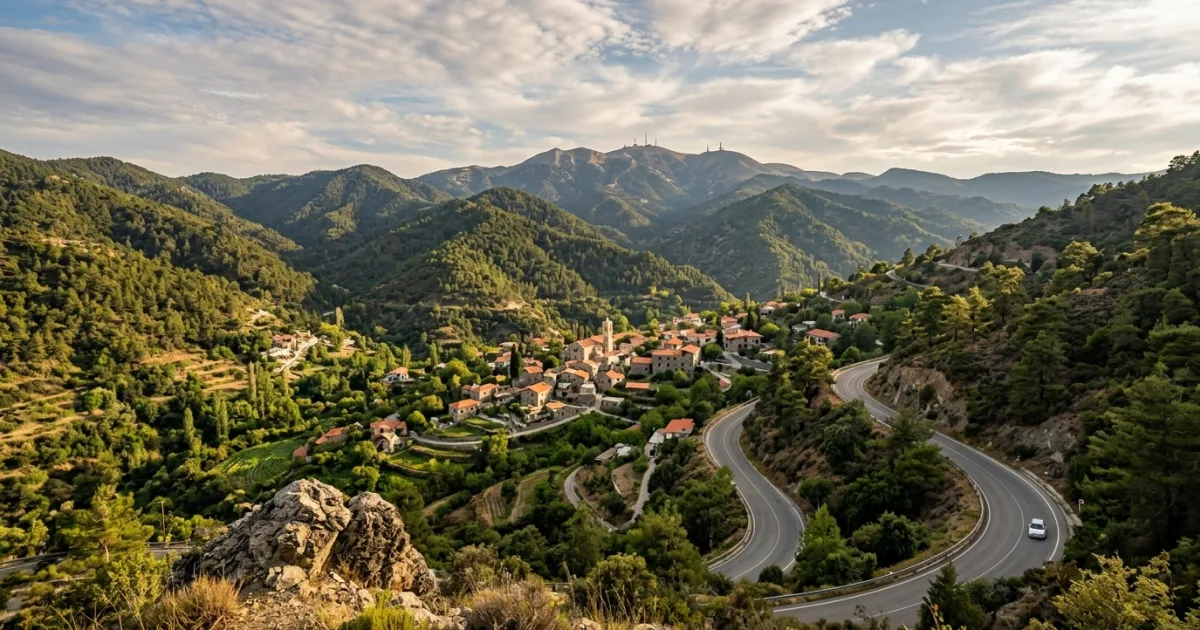
Rising majestically in the southwestern interior of Cyprus, the Troodos Mountains present an alpine sanctuary that contrasts vividly with the Mediterranean shoreline. The geological significance of the range is globally recognized: Troodos is one of the world's most intact and extensively studied ophiolite complexes, representing oceanic crust uplifted millions of years ago. Geologists and nature enthusiasts traverse pine-clad valleys where pillow lavas, sheeted dykes, and chromite deposits are exposed along road cuts and walking tracks.
Cultural immersion is anchored by historic mountain settlements characterized by dry-stone masonry, stepped alleys, and overhanging timber balconies. Notable villages such as Kakopetria, Kalopanayiotis, and Omodos house centuries-old watermills, traditional wine presses, and thermal sulphur springs. The crown jewels of regional heritage remain the ten UNESCO-listed Byzantine churches, featuring vibrant 11th-to-16th-century religious frescoes concealed within plain barn-style wooden shelters designed to survive harsh mountain winters.
Reasons to Visit
- UNESCO World Heritage Frescoes: Admire masterworks of Byzantine and post-Byzantine wall painting across ten secluded mountain churches including Panagia tou Araka and Agios Nikolaos tis Stegis.
- Alpine Hiking Network: Walk through protected natural forests along designated routes such as the circular Atalante Trail, Caledonia Waterfalls Trail, and the Madari Ridge.
- Historic Wine Routes: Sample indigenous Xinisteri white and Mavro red wines alongside historic Commandaria in the Krassochoria (wine villages) region.
- Pristine Mountain Climate: Enjoy cool breezes and crisp mountain shade during summer when coastal cities routinely surpass 38°C.
- Traditional Stone Architecture: Stay in restored heritage guesthouses featuring stone fireplaces, wooden rafters, and village hospitality.
Things to Avoid
- Do not attempt to hike long alpine trails without adequate water, as mountain dehydration occurs rapidly under Mediterranean sunshine.
- Avoid speeding on narrow mountain roads, as oncoming buses and sharp blind curves require slow, cautious driving.
- Do not photograph inside UNESCO churches without formal permission, and never touch delicate ancient frescoes.
- Avoid relying exclusively on public transit; mountain bus routes are infrequent and rarely connect disparate trailheads or remote hamlets.
- Do not enter religious monasteries or active sanctuaries wearing beachwear, shorts, or sleeveless shirts.
Local Transportation Tips
A rental car is the most practical and flexible method for touring the Troodos Mountains. Intercity buses from Nicosia and Limassol reach major hubs like Troodos Square and Kakopetria, but connections between smaller villages and trailheads are sparse and ill-suited for efficient sightseeing. Paved mountain roads are well-maintained, though drivers must be comfortable with steep gradients, switchbacks, and driving on the left side of the road per Cyprus traffic laws.
Travel Etiquette
- Dress respectfully when stepping into orthodox churches and monasteries by keeping shoulders and knees completely covered.
- Greet village shopkeepers and tavern hosts with a polite 'Kalimera' (good morning) or 'Yassou' (hello).
- Refrain from loud conversations or mobile phone use inside historic chapels.
- Tipping between 5% and 10% is customary and appreciated in local family tavernas for good service.
Recommended Age Group
The Troodos Mountains offer varied terrain suitable for a wide range of travelers, especially those who appreciate culture, walking, and scenic drives.
- Babies (0-2 years): Neutral. Mountain air is clean and pleasant, but steep cobblestone village paths and unpaved forest trails are challenging with standard strollers.
- Kids (3-12 years): Recommended. Families enjoy river walks, waterfall trails, ski sledding in winter, and interactive adventure parks in Platres.
- Teens (13-19 years): Recommended. Excellent opportunities for mountain biking, challenging hiking tracks, geological discovery, and winter snow sports.
- Adults (20-64 years): Recommended. Superb for wine tasting, scenic driving, cultural exploration of UNESCO monuments, and multi-day trekking.
- Seniors (65+ years): Recommended. Leisurely village tours, tranquil agritourism retreats, and road-accessible monasteries make it deeply rewarding, though some cobbled alleys require sure footing.
Accessibility Level: Medium
- Major central hubs like Troodos Square offer flat paved areas and accessible visitor center facilities.
- Several prominent monasteries, including Kykkos, feature paved ramps and accessible courtyards, though smaller medieval churches have step thresholds.
- Village centers such as Kakopetria and Omodos feature historic cobblestone surfaces and stepped alleyways that pose difficulties for wheelchair users.
- Accessible rental vehicles should be arranged in advance from coastal airports, as specialized transit is unavailable in mountain villages.
Did You Know?
The Troodos Mountains are an exposed fragment of ancient oceanic crust known as an ophiolite, formed roughly 90 million years ago on the Tethys sea floor, making it one of the most studied geological anomalies on Earth.
Cool Statistics
- Peak Elevation: 1,952 meters (Mount Olympus summit)
- UNESCO Sites: 10 painted Byzantine churches and monasteries
- Forested Area: Covers approximately 90,000 hectares of natural timberland
- Age of Commandaria Wine: Produced in the southern foothills since at least 800 BC






Buy a compatible power adapter for your trip