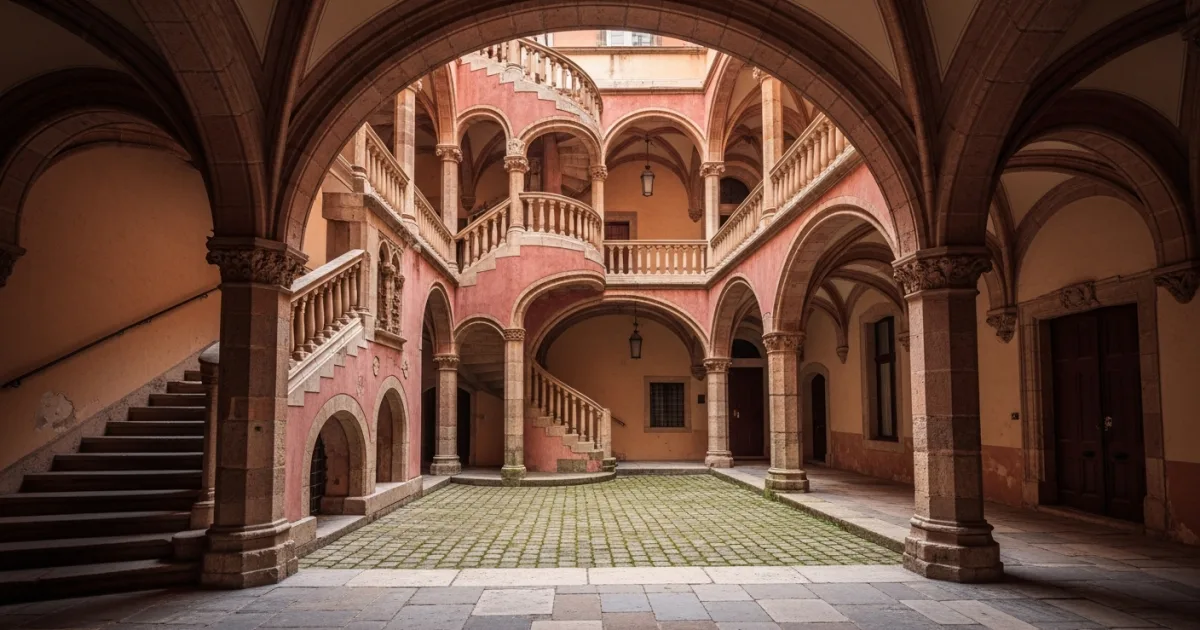
The traboules are an architectural phenomenon unique to Lyon, primarily found in the Vieux Lyon (Old Lyon) and Croix-Rousse neighborhoods. The word 'traboule' comes from the Latin 'transambulare', meaning 'to cross'. Originally built in the 4th century, they gained prominence during the 19th century silk trade. Silk workers, or 'canuts', used these covered passages to transport heavy loads of silk down the hill to the merchants without exposing the precious fabric to rain. Later, during World War II, the traboules provided the perfect cover for the French Resistance to hold secret meetings and evade Gestapo patrols. Today, while many are closed to the public, the city maintains agreements with residents to keep several dozen open during daytime hours, allowing visitors to marvel at the stunning Renaissance courtyards, spiral staircases, and vaulted galleries hidden behind ordinary wooden doors.
Reasons to Visit
- Experience a unique architectural feature that cannot be found anywhere else in the world.
- Step away from the bustling streets into quiet, hidden Renaissance courtyards.
- Learn about the fascinating history of the Lyon silk weavers and the French Resistance.
- Capture stunning, atmospheric photographs of spiral staircases and vaulted stone ceilings.
Things to Avoid
- Avoid making loud noises or shouting, as these passages are part of residential buildings.
- Do not try to force open locked doors; respect the privacy of the locals.
- Avoid visiting late at night, as public access to most traboules is restricted after evening hours.
- Don't rely solely on wandering; without a map or guide, you will likely miss the best entrances.
Local Transportation Tips
The traboules are best explored entirely on foot. To reach the main areas where they are located, you can take the funicular or the metro. The Vieux Lyon metro station (Line D) drops you right at the entrance to the Old Town, while the Croix-Rousse metro station (Line C) is perfect for starting a downhill walk through the silk weavers' district. Wear comfortable walking shoes, as the cobblestones and stairs can be demanding.
Travel Etiquette
- Silence is golden: Keep your voice down to respect the residents living in the apartments above.
- Leave no trace: Do not leave any trash behind in the courtyards or passages.
- Respect the hours: Only enter traboules during the designated public access times, usually mornings to early evenings.
- Close doors behind you: If you open a door to enter or exit a traboule, ensure it clicks shut behind you.
Recommended Age Group
The Traboules of Lyon offer a unique historical adventure, though the physical environment may dictate who enjoys it most.
- Babies (0-2 years): Neutral. Strollers can be difficult to navigate through narrow passages and staircases; a baby carrier is highly recommended.
- Kids (3-12 years): Recommended. Children often enjoy the maze-like, secret nature of the passageways, treating it like an urban treasure hunt.
- Teens (13-19 years): Recommended. The historical significance and unique photography opportunities appeal greatly to older youths.
- Adults (20-64 years): Recommended. Adults will appreciate the deep architectural and historical context of the silk trade and WWII.
- Seniors (65+ years): Neutral. Uneven cobblestones and numerous stairs may pose mobility challenges for some older visitors.
Accessibility Level: Medium
- Many traboules feature uneven cobblestones, narrow corridors, and steep spiral staircases, making them challenging for wheelchair users.
- Visitors with limited mobility should research specific traboules beforehand, as a few have flat, wider access points.
- Strollers can be difficult to maneuver; baby carriers are highly recommended for families with infants.
- Guided tours specifically tailored for accessibility can be arranged through the Lyon Tourist Office.
Did You Know?
There are estimated to be over 400 traboules in Lyon, but only about 40 are officially open to the public. The longest traboule in the city connects 54 Rue Saint-Jean to 27 Rue du Bœuf and crosses through four different courtyards!
Cool Statistics
- Total estimated traboules in Lyon: Over 400.
- Number of traboules open to the public: Approximately 40.
- Longest traboule: Connects 54 Rue Saint-Jean to 27 Rue du Bœuf.
- Historical origin: The first traboules date back to the 4th century.







Buy a compatible power adapter for your trip