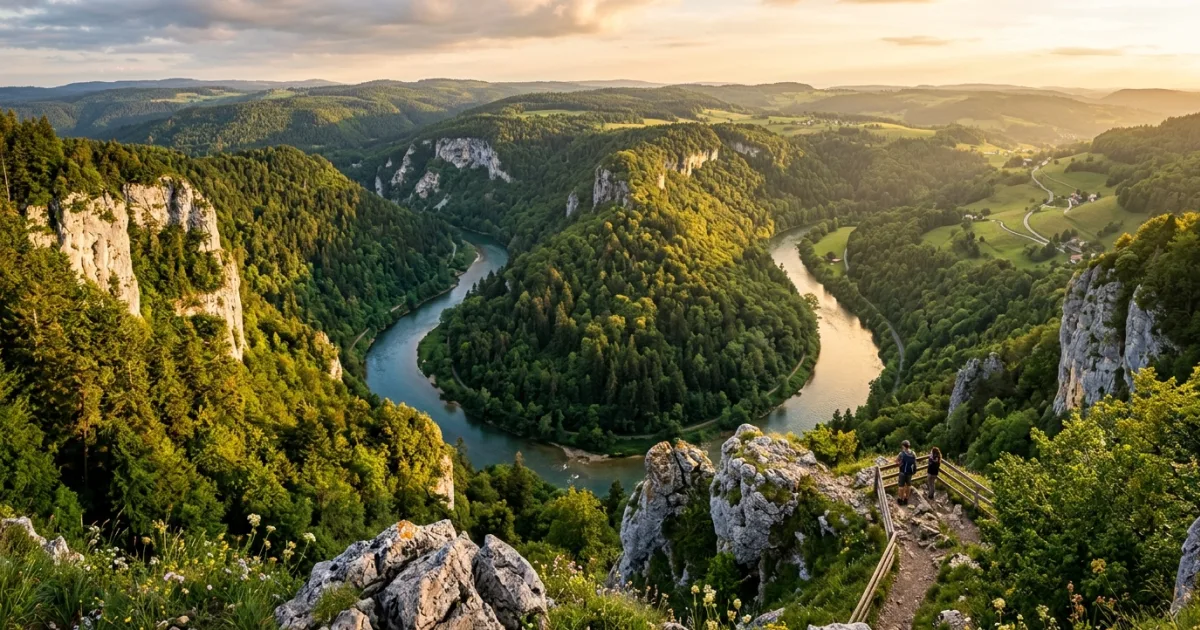
Doubs forms the geographic and historical spine of the Franche-Comté territory in eastern France, bordered by Switzerland along the crest of the Jura range. The landscape unfolds across three stepped limestone plateaus, cut by the roaring Doubs, Loue, and Dessoubre rivers. Besançon, the department's cultural capital, is famously cradled in an oxbow loop of the Doubs River and dominated by Vauban's 17th-century Citadel, an architectural masterpiece recognized on the UNESCO World Heritage list.
Beyond urban ramparts, Doubs transitions into a pristine wilderness of fir forests, crystal-clear karst springs, and dramatic waterfalls like the Saut du Doubs. The region’s deep craft heritage spans centuries of high-precision watchmaking, metalworking, and dairy farming. For independent travelers, Doubs offers a rewarding combination of unhurried scenic driving routes, deep historical fortresses like Château de Joux, and world-class regional gastronomy.
Reasons to Visit
- Explore the UNESCO World Heritage Citadelle de Besançon, offering expansive views, military history museums, and a zoological conservation center.
- Marvel at dramatic karst natural features, including the 27-meter Saut du Doubs waterfall and the subterranean Gouffre de Poudrey cave.
- Immerse yourself in authentic dairy heritage by touring working fruitières and massive Comté aging cellars at Fort de Saint-Antoine.
- Engage in year-round outdoor sports, from kayaking through deep river canyons in summer to cross-country skiing in Métabief during winter.
- Discover watchmaking and industrial heritage along the Franco-Swiss border, the historical heart of precision horology.
Things to Avoid
- Avoid attempting to rely exclusively on trains and buses if your goal is to explore natural gorges, lakes, and rural villages.
- Do not hike off designated trails near limestone bluffs; karst terrain features hidden sinkholes and sudden drops.
- Avoid planning shopping excursions on Sundays and Monday mornings, as most rural village shops, fruitières, and independent grocers are closed.
- Do not skip making advance restaurant reservations in smaller towns, as family-run establishments have limited seating and set cooking hours.
Local Transportation Tips
Besançon possesses a clean, efficient tram and bus network operated by Ginko, facilitating easy transit within the city. Regional TER trains connect major stations including Besançon-Viotte, Montbéliard, and Pontarlier, as well as providing cross-border links toward La Chaux-de-Fonds in Switzerland. However, to access national parks, remote river sources, and mountain lookouts, renting a private passenger vehicle from Besançon or Dole is essential.
Travel Etiquette
- Always greet shopkeepers, servers, and locals with a clear 'Bonjour' upon entering and 'Au revoir, bonne journée' when departing.
- When ordering cheese at a market or fruitière, ask the merchant for advice based on aging preferences (e.g., doux, fruité, or vieux) rather than touching the cheeses.
- Respect quiet hours in rural villages and campsite areas, particularly after 22:00.
- Follow 'Leave No Trace' principles along waterways and mountain reserves, packing out all rubbish.
Recommended Age Group
Doubs provides exceptional multi-generational travel opportunities, particularly tailored for active families, independent adults, and nature-focused seniors.
- Babies (0-2 years): Neutral. Cobblestone citadels, steep river gorge staircases, and gravel trails make stroller navigation difficult in remote scenic spots.
- Kids (3-12 years): Recommended. Children enjoy interactive natural attractions, prehistoric-themed parks like Dino-Zoo, river boat rides, and the zoo housed inside Besançon's Citadel.
- Teens (13-19 years): Recommended. Teenagers thrive on active outdoor opportunities including canyoning, mountain biking, via ferrata, lake paddleboarding, and winter snow sports.
- Adults (20-64 years): Recommended. Perfect demographic for wine and cheese touring, scenic mountain drives, historic castle exploration, and extended backcountry hiking.
- Seniors (65+ years): Recommended. Highly rewarding for mature travelers seeking leisurely lake cruises, accessible historical tours, calm scenic drives, and farm-to-table cuisine.
Accessibility Level: Medium
- Major cultural centers such as the Besançon Citadel and the Musée des Beaux-Arts et d'Archéologie offer designated accessible circuits and elevators, though historical ramps can be steep.
- Scenic river boats at Saut du Doubs provide boarding assistance, but access paths leading to wilderness viewing decks feature uneven gravel and stairs.
- Modern regional TER trains and central Besançon tramways offer level boarding and dedicated wheelchair zones.
- Rural attractions, cave entrances like Gouffre de Poudrey, and natural springs require negotiating significant staircases and natural rock paths that are not barrier-free.
Did You Know?
The Château de Joux, perched high on a rocky promontory in Doubs, served as a state prison that held prominent historical figures, including the leader of the Haitian Revolution, Toussaint Louverture, who died there in 1803.
Cool Statistics
- Over 40% of the Doubs department is covered in dense coniferous and deciduous forests.
- The Citadelle de Besançon welcomes over 250,000 visitors annually, standing 118 meters above the river.
- Over 60,000 wheels of Comté cheese can be aged simultaneously inside the underground stone galleries of Fort de Saint-Antoine.






Buy a compatible power adapter for your trip