Indre-et-Loire forms the core of the historic Touraine province, often referred to as the 'Garden of France' due to its lush river plains, gentle climate, and long-standing agricultural bounty. The department gained geopolitical importance during the Hundred Years' War and the French Renaissance, when kings and aristocrats transformed defensive medieval fortresses into lavish riverside pleasure palaces.
Today, the department seamlessly blends cultural heritage with accessible outdoor living. From the high Gothic vaulting of Saint-Gatien Cathedral in Tours to the troglodyte wine cellars cut into chalky tuffeau stone cliffs along the Loire and Vienne rivers, the region delivers an immersive French countryside experience well supported by modern rail and cycling infrastructure.
Reasons to Visit
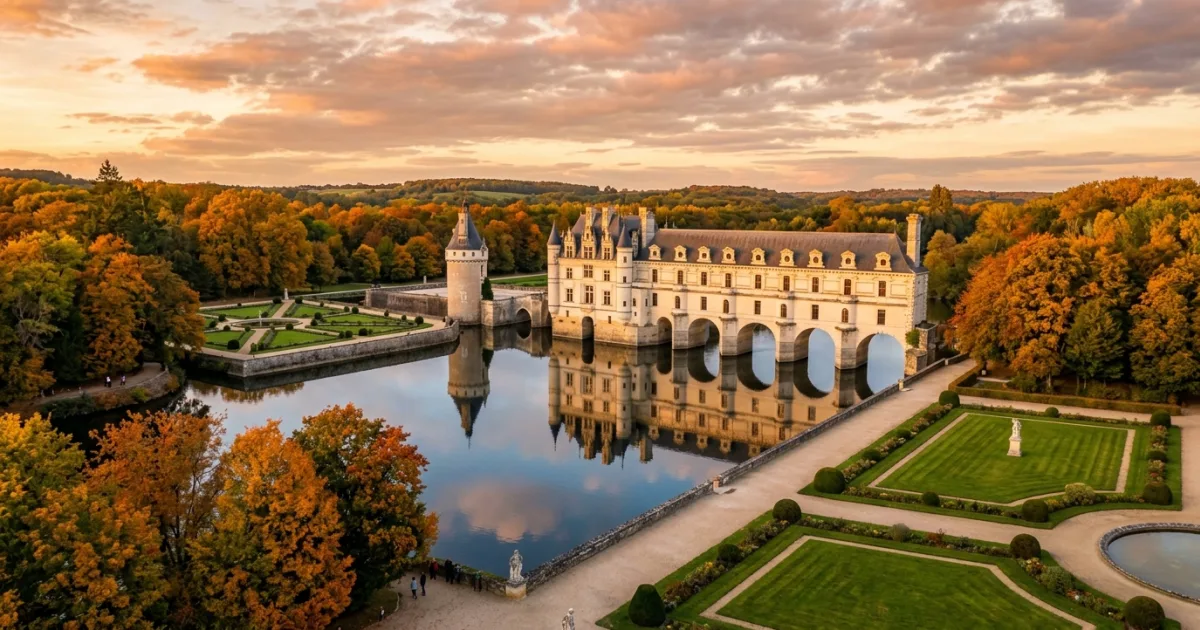
- World-class Renaissance architecture, including the river-spanning arches of Château de Chenonceau and Leonardo da Vinci's final residence at Clos Lucé.
- The Loire à Vélo cycling trail, offering hundreds of kilometers of secure, scenic riverside paths suitable for all skill levels.
- World-renowned viticulture, specializing in Chenin Blanc and Cabernet Franc across historic appellations like Chinon, Vouvray, and Bourgueil.
- Celebrated formal gardens, highlighted by the intricate geometric Renaissance vegetable and floral parterres at Château de Villandry.
- Rich medieval fortress towns such as Loches and Chinon, featuring preserved ramparts and cobblestone medieval quarters.
Things to Avoid
- Avoid attempting to visit more than two major châteaux in a single day, as extensive grounds and interiors require significant walking time.
- Avoid relying on rural taxis on Sundays without advance reservations, as availability outside of Tours is extremely limited.
- Avoid skipping restaurant reservations for weekend dinners in historic centers like Amboise and Chinon, where prime tables fill quickly.
- Avoid wearing thin-soled flat shoes or high heels when visiting historic estates, where paths consist primarily of gravel and rough stone.
Local Transportation Tips
Indre-et-Loire features an integrated regional transportation network centered in Tours. The city is served by SNCF TGV trains arriving from Paris Montparnasse in roughly one hour. Regional TER Centre-Val de Loire trains connect Tours to secondary stations including Amboise, Chenonceaux, Azay-le-Rideau, and Chinon.
Local mobility within Tours is managed by the Fil Bleu tram and bus system. For rural exploration, renting a car provides the easiest access to remote vineyards and smaller manor houses. Cycling is exceptionally popular, supported by extensive bike-rental operators offering one-way drop-offs along the Loire à Vélo route.
Travel Etiquette
- Always greet shopkeepers and servers with a clear 'Bonjour, Madame' or 'Bonjour, Monsieur' upon entering any establishment.
- Keep voices at a respectful level when touring active chapels, royal apartments, and quiet museum galleries.
- When tasting wine in local cellars, spitting into provided spittoons is considered standard professional practice, not an insult to the vintner.
- Tipping in restaurants is discretionary; rounding up the bill by 5% to 10% for attentive table service is customary and appreciated.
Recommended Age Group
Indre-et-Loire offers varied cultural and recreational activities suitable across multiple generations, though physical accessibility varies among historical monuments.
- Babies (0-2 years): Neutral. Many châteaux feature steep stone staircases where strollers are prohibited, requiring baby carriers, though outdoor grounds and public parks are accessible.
- Kids (3-12 years): Recommended. Children enjoy interactive treasure hunts at Château de Langeais, the hedge maze at Villandry, and open-air miniature castle parks.
- Teens (13-19 years): Recommended. Flat riverside cycling routes, canoe rentals along the Cher river, and Leonardo da Vinci's working machine models at Clos Lucé keep older children engaged.
- Adults (20-64 years): Recommended. Exceptional historical touring, fine dining, wine cellar tastings, and picturesque driving routes cater directly to adult travelers.
- Seniors (65+ years): Recommended. Gentle river cruises, high-quality hospitality, flat valley promenades, and compact historic city centers offer relaxed exploration.
Accessibility Level: Medium
- Major estates like Chenonceau and Villandry provide adapted access to lower grounds, ground-floor rooms, and accessible restrooms, though upper historic towers often remain staircase-only.
- Regional TER trains connecting Tours to Amboise and Chinon feature level-boarding carriages for wheelchair users with prior SNCF Accès Plus assistance booking.
- The Fil Bleu tramway in Tours is 100% low-floor and fully accessible for mobility devices.
- Cobblestones are prevalent across historic centers such as Loches and Amboise, which can present challenges for manual wheelchair users without assistance.
Did You Know?
Leonardo da Vinci spent the final three years of his life in Indre-et-Loire at the Château du Clos Lucé in Amboise, having been invited by King Francis I. An underground tunnel historically connected Clos Lucé to the Royal Château d'Amboise, allowing the monarch and the polymath to visit one another easily.
Cool Statistics
- Contains over 70 registered châteaux and historic manor houses open to the public.
- Features more than 800 kilometers of signposted cycling itineraries, centered on the Loire à Vélo network.
- Produces wine across 8 distinct AOC appellations spanning over 10,000 hectares of vineyards.






Buy a compatible power adapter for your trip