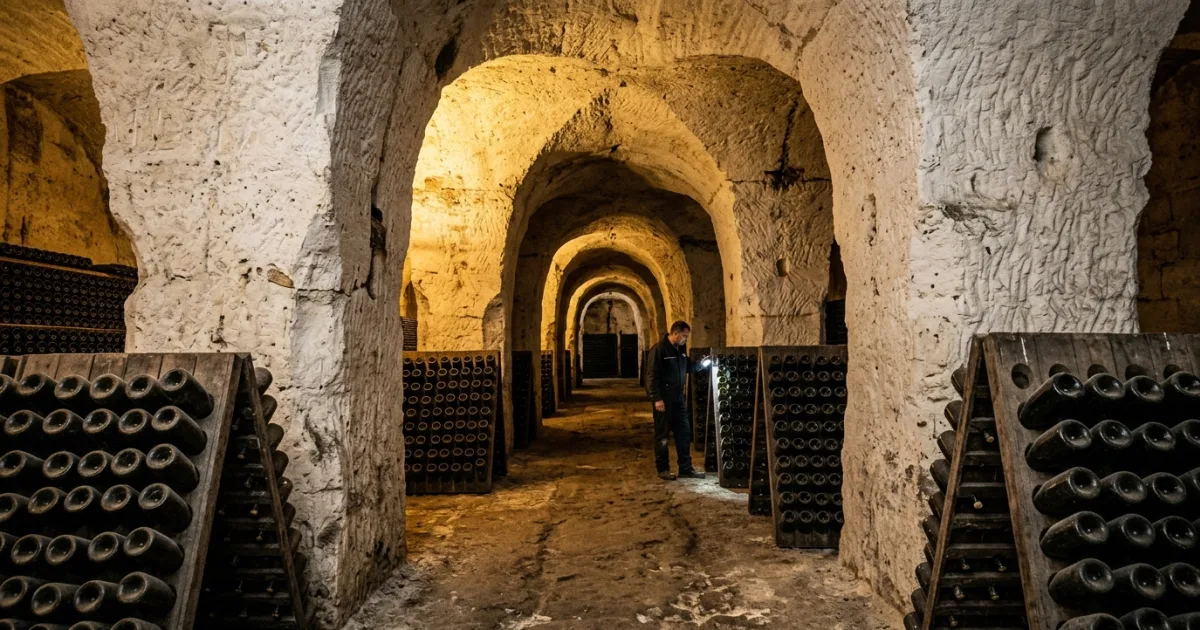
The Champagne Cellars of Reims are not merely storage facilities; they are vast, subterranean cathedrals of chalk known as crayères. Originally excavated by the Romans for building materials, these deep pits were later repurposed by champagne producers in the 18th and 19th centuries. The chalk walls provide the perfect natural conditions for aging champagne: complete darkness, optimal humidity, and a constant cool temperature. Walking through these dimly lit tunnels, visitors are surrounded by millions of bottles resting on wooden racks, undergoing the slow, magical process of secondary fermentation.
Beyond their viticultural importance, the cellars hold a poignant place in French history. During the relentless artillery bombardments of World War I, which devastated the city of Reims above, thousands of citizens sought refuge in these very tunnels. Entire communities functioned underground, complete with schools, hospitals, and religious services. Today, some cellars still bear the carvings and graffiti left by those sheltering civilians and soldiers, adding a profound layer of human resilience to the luxury wine experience.
Reasons to Visit
- UNESCO World Heritage Status: The hillsides, houses, and cellars of Champagne are recognized for their outstanding universal value and cultural landscape.
- Exclusive Tastings: Taste world-renowned champagnes directly at the source, often guided by expert sommeliers.
- Architectural Marvel: Experience the awe-inspiring scale of the Gallo-Roman crayères, some reaching depths of nearly 40 meters.
- Historical Depth: Learn about the region's survival during WWI and the evolution of the traditional champagne method (Méthode Champenoise).
Things to Avoid
- Arriving Without a Reservation: Walk-ins are rarely accommodated at major houses.
- Wearing Inappropriate Footwear: High heels or slick-soled shoes are dangerous on the damp, uneven chalk stairs.
- Touching the Bottles: The aging bottles are carefully positioned; touching them can disrupt the riddling process or cause a bottle to burst under pressure.
- Overpacking Your Itinerary: Limit yourself to two cellar tours per day to avoid palate fatigue and rushing between appointments.
Local Transportation Tips
Reims is a highly walkable city, and several major Champagne houses (like Mumm and Roederer) are located within a short walk from the city center and the main train station. For houses located slightly further out, such as Veuve Clicquot, Taittinger, and Pommery (situated around the Saint-Remi district), the city's efficient tramway and local bus network provide easy access. Taxis and ride-sharing apps like Uber are also readily available and are a convenient option if you are traveling between estates or carrying purchased bottles.
Travel Etiquette
- Punctuality: Tours run on strict schedules. Arrive at least 10-15 minutes before your booked time.
- Dress Code: Smart-casual attire is appreciated. While not overly formal, beachwear or overly casual athletic wear is out of place.
- Tasting Etiquette: It is perfectly acceptable to use the provided spittoons during tastings, especially if you are visiting multiple houses or driving.
- Respect the Guide: Listen attentively during the educational portions of the tour before the tasting begins.
Recommended Age Group
The Champagne Cellars offer a unique historical and sensory experience, though the environment and focus cater primarily to mature audiences.
- Babies (0-2 years): Not Recommended. The cellars are cold, dark, and often require navigating steep stairs that are not stroller-friendly.
- Kids (3-12 years): Neutral. While the underground caves might feel like an adventure, the lengthy historical explanations and focus on wine production may lead to boredom.
- Teens (13-19 years): Neutral. Teens can appreciate the WWI history and the impressive scale of the crayères, though they cannot participate in the tastings.
- Adults (20-64 years): Recommended. This is the prime demographic for the cellars, offering a perfect blend of history, culture, and world-class wine tasting.
- Seniors (65+ years): Recommended. The experience is highly engaging for seniors, though those with mobility issues should specifically seek out houses with elevator access (e.g., Mumm) rather than those with steep stairs.
Accessibility Level: Medium
- Mobility Access: Accessibility varies significantly between houses. G.H. Mumm and Martel offer elevator access to their cellars, making them suitable for wheelchair users.
- Staircases: Houses like Taittinger and Veuve Clicquot require descending and ascending long, sometimes steep flights of stairs.
- Lighting and Terrain: The cellars are dimly lit, and the chalk floors can be uneven and slightly damp, requiring careful navigation for those with visual or balance impairments.
- Restrooms: Accessible restrooms are generally available in the modern reception and tasting areas above ground.
Did You Know?
Did you know that the pressure inside a standard bottle of champagne is around 90 pounds per square inch? That is roughly three times the pressure inside a typical car tire. This immense pressure is why champagne bottles are made of thicker glass and secured with a wire cage (muselet) over the cork.
Cool Statistics
- There are over 200 kilometers (124 miles) of cellars and tunnels beneath the city of Reims.
- The deepest crayères, such as those at Ruinart, descend up to 38 meters (125 feet) below ground.
- An estimated 200 million bottles of champagne are currently aging in the cellars under Reims.
- The oldest Champagne house, Ruinart, was established in 1729 and was the first to use the ancient chalk pits for aging wine.






Buy a compatible power adapter for your trip