

Low – budget‑friendly basics
Medium – moderate mid‑range costs
High – pricey lodging, dining & transport
Disclosure: This site contains affiliate links. We may earn a commission if you make a purchase, at no extra cost to you.
Low – budget‑friendly basics
Medium – moderate mid‑range costs
High – pricey lodging, dining & transport
5 shields = Excellent – very low crime or conflict.
4 shields = Safe – low risk, routine care.
3 shields = Relatively safe – use normal street smarts.
2 shields = Use caution – higher crime or periodic unrest.
1 shields = Avoid – active conflict or extreme danger.
Scores are derived from multi-year peace, homicide and security indices blended into a single 1-to-5 scale.
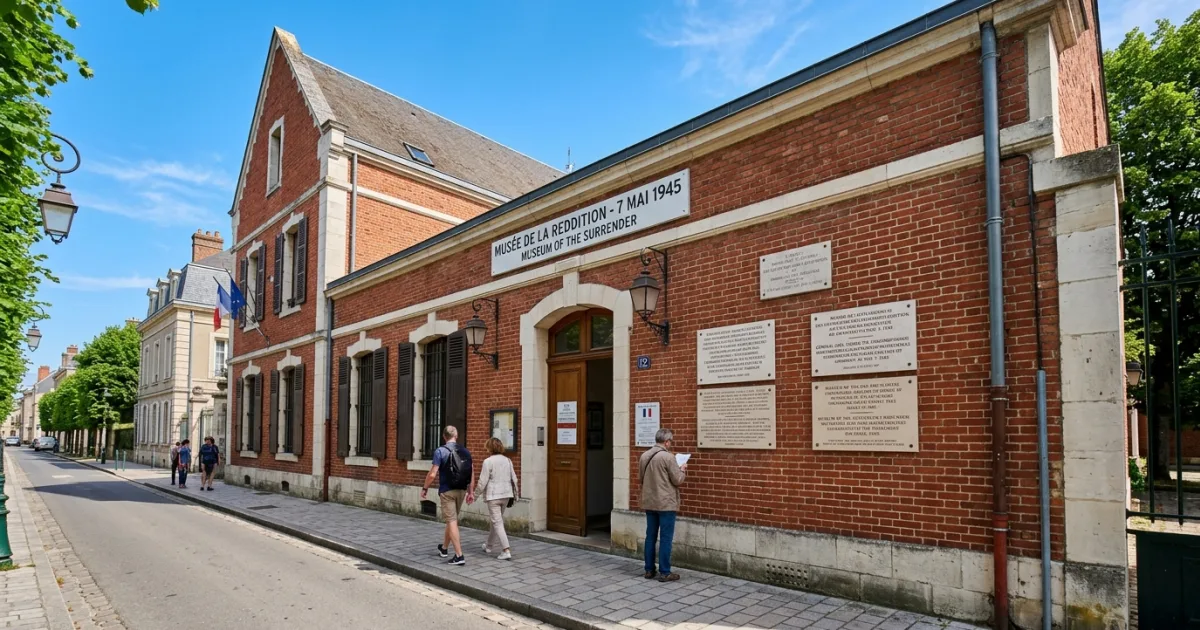
The Museum of the Surrender, located in Reims, France, stands as a monumental site in global history. It was within this very brick building, originally a technical college serving as General Dwight D. Eisenhower's supreme headquarters, that the unconditional surrender of the German armed forces was signed on May 7, 1945. Visitors can step into the meticulously preserved map room where the historic signing took place, remaining exactly as it was on that fateful morning. Beyond the iconic signing room, the museum offers a comprehensive look at the end of World War II in Europe through extensive exhibits, period artifacts, and detailed models. The surrounding city of Reims provides a beautiful backdrop, allowing travelers to combine profound historical exploration with the region's renowned Champagne heritage. This destination is an essential stop for history enthusiasts and anyone seeking to understand the closing chapters of the Second World War.
The Museum of the Surrender (Musée de la Reddition) is an essential pilgrimage for anyone interested in 20th-century history. Tucked away in a seemingly ordinary red-brick building that once functioned as a technical college, this site was chosen by General Dwight D. Eisenhower as the Supreme Headquarters Allied Expeditionary Force (SHAEF) in early 1945. The museum's centerpiece is the 'War Room' or 'Map Room,' which has been left exactly as it was on the morning of May 7, 1945. The walls are still covered with the original battle maps detailing the positions of Allied and Axis forces at the exact moment the war in Europe ended.
Beyond the signing room, the museum features a wealth of artifacts, uniforms, press clippings, and a compelling short documentary film that sets the context of the final days of the war. The exhibits detail the complex logistics of the Allied command, the role of the French Resistance, and the immediate global reaction to the surrender. Its location near the Reims train station makes it an easy and highly rewarding addition to any itinerary in the Champagne region.
The Museum of the Surrender is highly accessible. If arriving in Reims by TGV (high-speed train) at the central station (Gare de Reims), the museum is merely a 5 to 10-minute walk away. For those staying further out in the city, the local bus and tram network operated by Citura is efficient and affordable, with stops located just a few streets away from the museum entrance. Taxis and ride-sharing services are also readily available but generally unnecessary for reaching this centrally located site.
The Museum of the Surrender offers a deeply educational experience, though its appeal varies by age group due to the historical nature of the exhibits.
Did you know that the surrender signed in Reims on May 7, 1945, was actually the first of two signings? Soviet Premier Joseph Stalin insisted that a second, ratified signing take place in Berlin the following day, May 8, which is why Victory in Europe (V-E) Day is celebrated on different days in different countries.

The Museum of the Surrender can be visited year-round, but the best times to visit are during the spring (April to June) and early autumn (September to October). During these months, the weather in Reims is mild and pleasant, making it ideal for combining a museum visit with walking tours of the city.
| Month | °C | °F |
|---|---|---|
| Jan | 4 | 39 |
| Feb | 6 | 43 |
| Mar | 7 | 45 |
| Apr | 10 | 50 |
| May | 13 | 55 |
| Jun | 19 | 66 |
| Jul | 20 | 68 |
| Aug | 20 | 68 |
| Sep | 17 | 63 |
| Oct | 13 | 55 |
| Nov | 7 | 45 |
| Dec | 5 | 41 |
Remember to check the weather forecast a few days before the trip and before heading to the airport.
5 shields = Excellent – very low crime or conflict.
4 shields = Safe – low risk, routine care.
3 shields = Relatively safe – use normal street smarts.
2 shields = Use caution – higher crime or periodic unrest.
1 shields = Avoid – active conflict or extreme danger.
Scores are derived from multi-year peace, homicide and security indices blended into a single 1-to-5 scale.
The rating is based on multi-year peace, crime, and security indices. Before you go, always verify current conditions through official government travel advisories.
No internet needed • Includes local translations • Free for TravelingWiz readers

Low – budget‑friendly basics
Medium – moderate mid‑range costs
High – pricey lodging, dining & transport
Per person, per day – pocket cash for small purchases.
Full daily spend estimation (accommodation, food, transportation, attractions).
Travel Style | Euro (EUR) | ≈ USD ($) |
|---|---|---|
Budget | 90 | 103 |
Mid-range | 160 | 182 |
Comfort | 350 | 399 |
The Prices, Daily costs, and calculator results are estimates for planning purposes only. Actual costs may vary based on season, booking timing, personal spending habits, and currency fluctuations. TravelingWiz cannot be held responsible for discrepancies between these estimates and your final trip expenses.
Choose a ready-made itinerary, plan your own trip, and keep TravelingWiz by your side while you travel.
Get the TravelingWiz app →
Discover cooking classes, tastings and local food tours
Logistics shouldn’t be the focus of your trip—the experience should. I’ve hand-vetted these essential partners to ensure your arrival, stay, and exploration are as smooth as an Athenian breeze.

Compare accommodation options and choose a stay that suits your plans and budget.
Connect with local guides for personalized help planning and exploring.
The “Engineer’s” rule: always have a backup. Secure your trip with a plan that covers every “what if” and unexpected change.
Don’t let paperwork slow you down. Get expert assistance with your application to ensure all your entry documents are in order.
Check out our related articles and blog posts to learn even more about the destination.
Share with your friends and family
