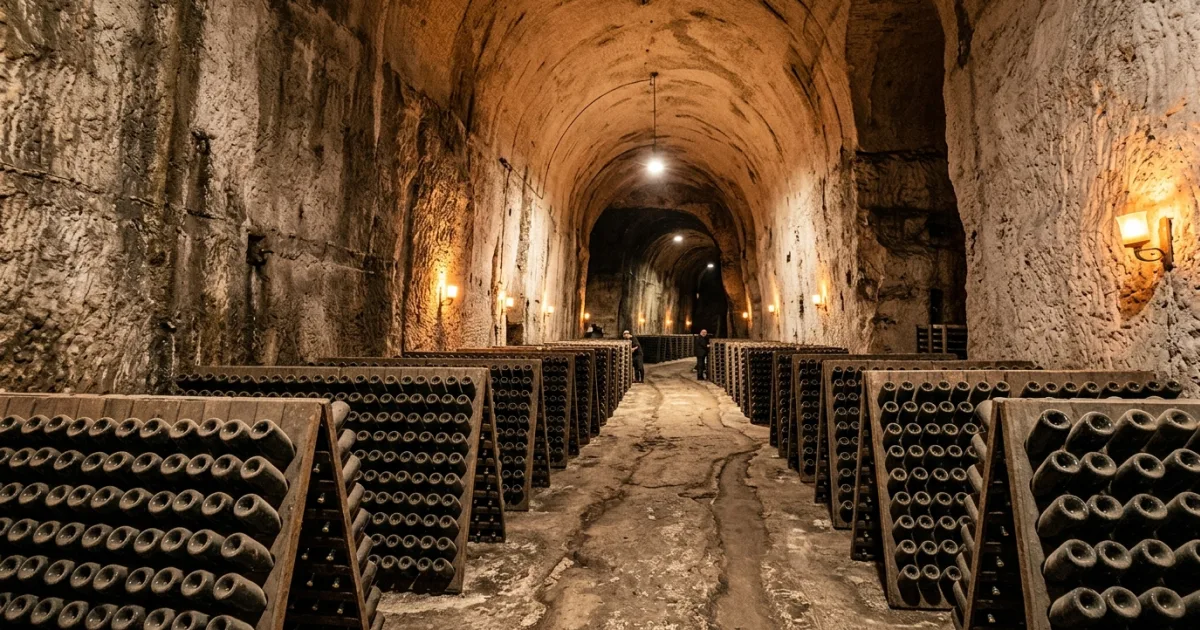
Stepping into the Veuve Clicquot Cellars is like stepping back in time. The network of crayères—ancient chalk pits dug by the Romans—stretches for 24 kilometers beneath the city of Reims. These subterranean cathedrals provide the ideal conditions for aging Champagne: a constant cool temperature, high humidity, and complete absence of vibrations and natural light. As you descend the grand staircase, the air cools and the scent of damp chalk and fermenting wine fills the air.
The guided tours are masterclasses in both history and viticulture. Expert guides share the inspiring story of Barbe-Nicole Clicquot Ponsardin, who was widowed at 27 and took over the business in 1805. She became one of the first international businesswomen, innovating the riddling process (remuage) to clarify the wine, a technique still used today. The tour culminates in a tasting room where the theory of Champagne making is put into delightful practice, allowing visitors to savor the distinct Pinot Noir-driven style that defines the Veuve Clicquot brand.
Reasons to Visit
- UNESCO World Heritage Site: Explore the historic Roman chalk quarries that are recognized globally for their cultural significance.
- Inspiring History: Learn about Madame Clicquot, the 'Grande Dame of Champagne,' and her pioneering innovations in the wine industry.
- Exceptional Tastings: Sample world-class Champagnes directly at the source, guided by knowledgeable sommeliers.
- Architectural Marvel: Witness the stunning subterranean architecture of the crayères, with their towering, cathedral-like chalk walls.
Things to Avoid
- Arriving Without a Reservation: Walk-ins are rarely accommodated due to strict tour capacities.
- Wearing Inappropriate Footwear: High heels or slippery soles are dangerous on the damp, uneven stairs and chalk floors.
- Forgetting a Jacket: Even on a hot summer day, the cellars are chilly; you will be uncomfortable without an extra layer.
- Driving After Tasting: France has strict drink-driving laws. Utilize public transport, taxis, or designate a driver.
Local Transportation Tips
Reims is easily accessible from Paris via the TGV high-speed train, taking about 45 minutes. Once in Reims, Veuve Clicquot Cellars is located slightly south of the city center. You can reach it by taking a local bus, a short taxi ride, or enjoying a pleasant 30-minute walk from the Reims Cathedral. Ride-sharing apps like Uber also operate in the city.
Travel Etiquette
- Punctuality: Arrive at least 15 minutes before your scheduled tour time; latecomers may not be allowed to join.
- Quiet Observation: Keep your voice down in the cellars to respect the guide and the tranquil aging environment.
- Tasting Etiquette: Hold your Champagne flute by the stem to prevent warming the wine with your hands.
- Photography: Flash photography is generally permitted, but always confirm with your guide and avoid disrupting the group.
Recommended Age Group
While Veuve Clicquot Cellars is a fascinating historical site, the experience is primarily tailored toward adults interested in wine and history.
- Babies (0-2 years): Not Recommended. The cellars are cold, dark, and require navigating many stairs, making strollers impractical.
- Kids (3-12 years): Not Recommended. The tour is lengthy and focused on the technical aspects of winemaking, which may bore young children.
- Teens (13-19 years): Neutral. Older teens might appreciate the history and the impressive underground architecture, though they cannot participate in the tasting.
- Adults (20-64 years): Recommended. This is the ideal demographic for the tour, offering a perfect blend of history, culture, and gastronomy.
- Seniors (65+ years): Recommended. Seniors will enjoy the rich history and tasting, but should ensure they book an accessible tour if mobility or stairs are a concern.
Accessibility Level: Medium
- Elevator Access: Veuve Clicquot offers specific accessible tours that utilize elevators instead of the grand staircase.
- Advance Notice Required: Visitors requiring wheelchair access or avoiding stairs must contact the reservation team well in advance to secure the appropriate tour.
- Terrain: The floors in the cellars are made of chalk and can be slightly uneven or damp, requiring sturdy footwear or robust mobility aids.
- Restrooms: Accessible restrooms are available in the modern visitor center above ground.
Did You Know?
Madame Clicquot is credited with creating the first known blended rosé Champagne in 1818 by adding still red wine to sparkling white wine, a method that is now the standard for producing rosé Champagne.
Cool Statistics
- 24 Kilometers: The total length of the Veuve Clicquot underground cellar network.
- 1772: The year the Champagne house was founded by Philippe Clicquot.
- 10-12°C: The constant year-round temperature inside the chalk cellars.
- 1816: The year Madame Clicquot invented the riddling table to clarify Champagne.






Buy a compatible power adapter for your trip