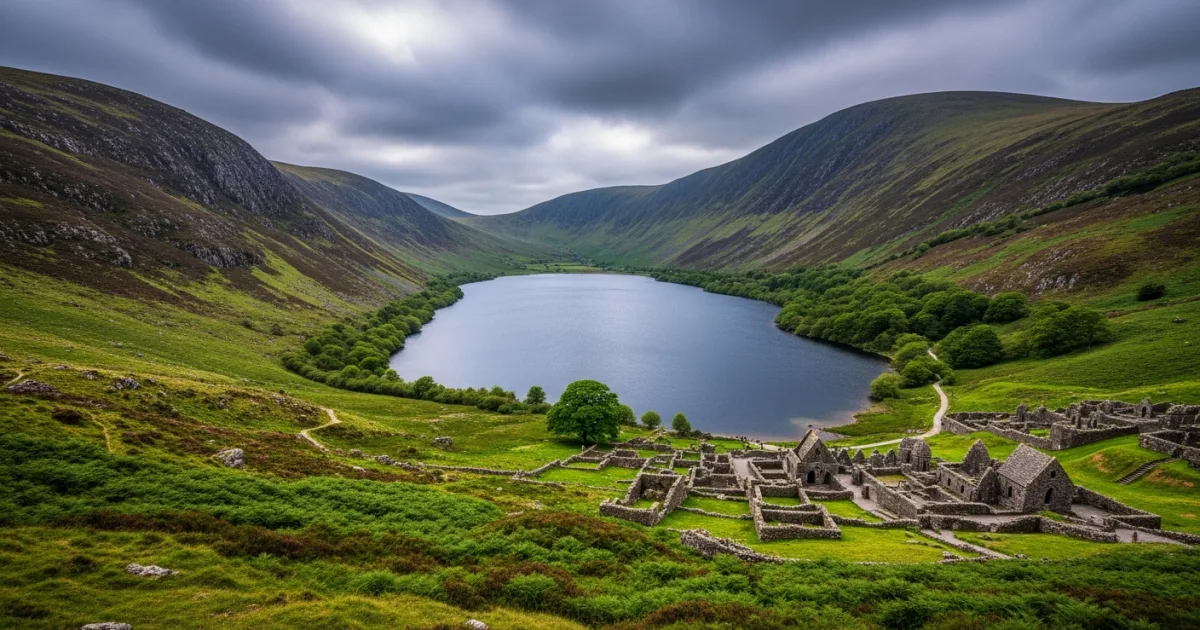
The Province of Leinster is a tapestry of lush green landscapes, dramatic coastlines, and deep-rooted history. As the gateway to Ireland for most international visitors, it offers an immediate immersion into the country's unique charm. Dublin, the capital, pulses with literary history, vibrant nightlife, and Georgian architecture. Yet, just a short drive from the city center, the scenery transforms dramatically into the rugged, heather-clad peaks of the Wicklow Mountains, often referred to as the 'Garden of Ireland'.
Further afield, the province is a treasure trove for history buffs. The Boyne Valley in County Meath is home to Brú na Bóinne, a UNESCO World Heritage site featuring passage tombs older than Stonehenge. To the south, the medieval city of Kilkenny enchants visitors with its imposing castle, narrow slipways, and thriving craft scene. Coastal towns like Howth and Bray offer stunning cliff walks and fresh seafood, ensuring that Leinster provides a comprehensive and unforgettable Irish experience.
Reasons to Visit
- Explore the vibrant streets, historic pubs, and world-class museums of Dublin.
- Step back in time at the 5,000-year-old Newgrange passage tomb in the Boyne Valley.
- Hike the scenic trails and visit the monastic settlement of Glendalough in the Wicklow Mountains.
- Wander the Medieval Mile in Kilkenny, culminating at the magnificent Kilkenny Castle.
- Enjoy breathtaking coastal views and fresh seafood in charming seaside villages like Howth.
Things to Avoid
- Avoid driving in central Dublin if possible; traffic can be heavy and parking is expensive. Rely on public transport instead.
- Don't limit your trip to just Dublin; the true charm of Leinster lies in its surrounding counties.
- Avoid visiting popular sites like Newgrange or the Book of Kells without booking tickets well in advance.
- Don't underestimate the weather; always carry a rain jacket, even on sunny days.
Local Transportation Tips
In Dublin, the public transport system includes Dublin Bus, the DART (suburban railway along the coast), and the Luas (tram system). Purchasing a Leap Card offers the most convenient and cost-effective way to use these services. For traveling outside Dublin to other parts of Leinster, Irish Rail provides train services to major towns like Kilkenny, Wexford, and Dundalk, while Bus Éireann operates an extensive coach network. However, to truly explore the hidden gems, rural ruins, and scenic routes of the Wicklow Mountains or the Boyne Valley, renting a car is highly recommended.
Travel Etiquette
- When ordering drinks at a pub, it is customary to pay immediately unless you have explicitly set up a tab.
- Tipping is generally 10-15% in restaurants if a service charge is not already included. Tipping in pubs for drinks is not expected, but leaving small change is appreciated.
- Queueing (lining up) is respected; do not cut in line for buses or at counters.
- When driving on rural roads, a friendly wave or nod to passing drivers is a common courtesy.
- Respect the natural environment and historical sites; stick to marked trails and do not climb on ancient ruins.
Recommended Age Group
Leinster is a highly versatile destination that caters to travelers of all ages, offering a mix of urban convenience, historical education, and accessible nature.
- Babies (0-2 years): Recommended. Dublin is stroller-friendly with plenty of parks, though some ancient sites and castles may have uneven terrain.
- Kids (3-12 years): Recommended. Attractions like Dublin Zoo, Emerald Park, and interactive Viking museums provide excellent entertainment for children.
- Teens (13-19 years): Recommended. Teens will enjoy the vibrant street art, shopping in Dublin, and outdoor activities like kayaking or hiking in Wicklow.
- Adults (20-64 years): Recommended. The mix of rich history, culinary scenes, pub culture, and scenic road trips makes it perfect for adult travelers.
- Seniors (65+ years): Recommended. With excellent infrastructure, accessible tours, and a wealth of cultural and historical sites, it is highly suitable for senior travelers.
Accessibility Level: Medium
- Major museums, galleries, and modern attractions in Dublin are fully wheelchair accessible.
- Public transport in Dublin, including the Luas and most buses, is equipped with ramps and designated spaces for wheelchair users.
- Many historical sites, such as Kilkenny Castle and the visitor center at Newgrange, have made significant accessibility improvements, though some ancient ruins remain challenging due to uneven ground.
- Accessible parking spaces are widely available in towns and at tourist attractions.
- It is advisable to check the specific accessibility features of rural accommodations and older heritage sites prior to booking.
Did You Know?
Did you know that the Phoenix Park in Dublin is one of the largest enclosed public parks in any capital city in Europe? It is over twice the size of Central Park in New York and is home to a large herd of wild fallow deer that have lived there since the 17th century.
Cool Statistics
- Leinster is the most populous of Ireland's four provinces, home to over 2.8 million people.
- The Newgrange tomb in County Meath was built around 3200 BC, making it older than the Egyptian pyramids.
- Dublin boasts over 1,000 pubs, some dating back hundreds of years.
- The province covers an area of 19,800 square kilometers, encompassing 12 of Ireland's 32 traditional counties.






Buy a compatible power adapter for your trip