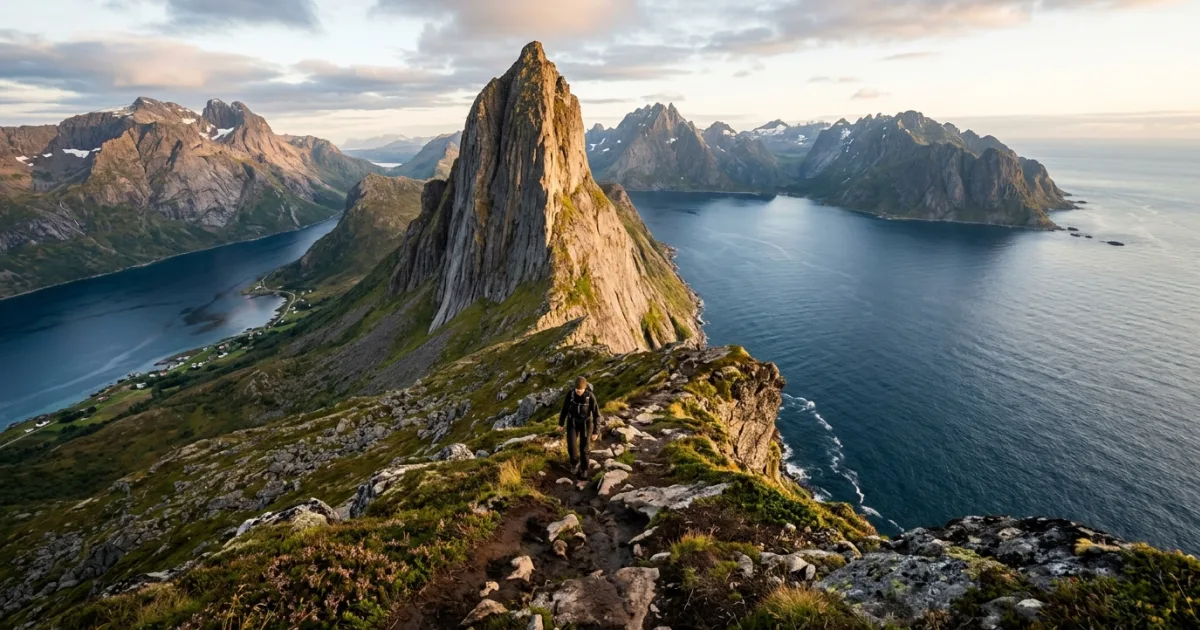
Senja is often described as Norway's best-kept secret, though its reputation as an untamed alternative to the Lofoten archipelago has surged in recent years. Situated in northern Norway between the city of Tromsø and the Vesterålen islands, Senja spans 1,586 square kilometers of dramatic, untamed coastal and mountainous terrain. The island's western fringe faces the relentless Norwegian Sea, producing towering sea cliffs, narrow fjords, and weathered fishing communities like Gryllefjord, Senjahopen, and Mefjordvær. In contrast, the southern and eastern sectors feature gentle birch woodlands, pristine salmon rivers, and the tranquil waters of Ånderdalen National Park, highlighting the ecological diversity of the sub-Arctic ecosystem.
Visiting Senja requires an appreciation for slow travel and outdoor self-reliance. While tourism infrastructure has modernized through architecturally striking installations along the Norwegian Scenic Route—such as the cantilevered platform at Bergsbotn and the golden restrooms at Ersfjord beach—the island remains pleasantly free of massive cruise ship crowds. Whether embarking on challenging ridge scrambles above deep blue fjords, tracking the aurora across light-free night skies, or touring the historic fishing hamlets, Senja offers a raw, authentic encounter with northern Norwegian wilderness.
Reasons to Visit
- Dramatic Alpine Peaks: Scale world-famous coastal ridges such as Segla, Husfjellet, and Hesten for panoramic views over deep fjords.
- National Scenic Route: Drive the 102-kilometer roadway connecting spectacular viewpoints, modernist architectural rest stops, and rugged coastlines.
- Aurora Borealis Viewing: Experience dark, unpolluted night skies between September and April, providing exceptional conditions for chasing the Northern Lights.
- Authentic Fishing Culture: Explore historic rorbuer (fisherman cabins) and active fish processing docks in working harbors like Husøy and Gryllefjord.
- Ånderdalen National Park: Trek through pristine ancient pine and birch forests that house native moose, red foxes, and diverse bird species.
Things to Avoid
- Do not underestimate mountain weather; clear skies can transition into zero-visibility storms within thirty minutes.
- Avoid relying on public buses to reach remote trailheads or photography viewpoints, as scheduling is severely limited.
- Do not camp on private farmland or closer than 150 meters to inhabited houses, adhering strictly to Norwegian outdoor access laws.
- Avoid driving without winter-rated tires or winter driving experience between late October and May.
Local Transportation Tips
Renting a vehicle is the most practical way to explore Senja. Rental cars are accessible at Tromsø Airport, Bardufoss Airport, or in the town of Finnsnes. During the summer months (typically late May to early September), a vehicle ferry connects Brensholmen (on Kvaløya near Tromsø) to Botnhamn on northern Senja, cutting hours off the drive. A southern ferry operates between Gryllefjord and Andenes on Andøya, linking Senja to the Vesterålen archipelago. Local buses (Troms Fylkestrafikk) run primarily to serve schools and core commuter corridors between Finnsnes and larger villages, making them poorly suited for independent sightseeing.
Travel Etiquette
- Respect the 'Right to Roam' (Allemannsretten) by packing out all trash and using designated toilet facilities at trailheads.
- Practice drone etiquette; refrain from flying near nesting seabird colonies or close to private residential properties in small fishing villages.
- Pull over into designated passing pockets on single-lane scenic roads to allow faster local traffic to overtake safely.
- Remove your outdoor boots at the entrance of private homes and select traditional accommodations or guesthouses.
Recommended Age Group
Senja is an outdoor-focused Arctic travel destination best enjoyed by active individuals capable of navigating uneven terrain and variable weather conditions.
- Babies (0-2 years): Not Recommended. Remote infrastructure, lack of specialized pediatric medical facilities, and extreme Arctic climate present notable travel challenges.
- Kids (3-12 years): Neutral. Children who enjoy outdoor activities and beachcombing will appreciate the scenery, though most marquee mountain hikes feature exposed, dangerous drops unsuitable for younger kids.
- Teens (13-19 years): Recommended. Excellent destination for teenagers who enjoy adventurous outdoor pursuits like hiking, sea kayaking, camping, and photography.
- Adults (20-64 years): Recommended. Perfect demographic for road trips, technical trekking, alpine trail running, and exploring remote landscapes independently.
- Seniors (65+ years): Recommended. Highly rewarding for active seniors who appreciate scenic driving, ferry travel, and gentle walks around historic coastal villages, provided mobility is sound.
Accessibility Level: Medium
- Major architectural viewing platforms along the National Tourist Route, such as Bergsbotn and Tungeneset, feature accessible wooden boardwalks and paved paths.
- Most hiking routes (including Segla and Husfjellet) are rugged backcountry trails with rocks, mud, and steep elevation gains, making them inaccessible to wheelchair users.
- Local ferries connecting Senja to Brensholmen and Andenes have accessible passenger lounges and vehicle decks, though assistance may be required during rough seas.
Did You Know?
Husøy, a tiny island village on the northern side of Senja, is completely connected to the main island by a narrow 300-meter causeway. Despite its isolated location and fierce winter gales, it remains one of Norway's most active and economically thriving fishing communities, exporting fresh fish directly to markets in Japan and southern Europe.
Cool Statistics
- 1,586 square kilometers: Total area of Senja, making it Norway's second-largest island outside Svalbard.
- 639 meters: The near-vertical drop from the summit of Mount Segla straight down into Mefjorden.
- 102 kilometers: Total driving length of the designated Senja National Tourist Route.
- 0 hours of darkness: Experienced between late May and late July during the peak of the Midnight Sun.






Buy a compatible power adapter for your trip