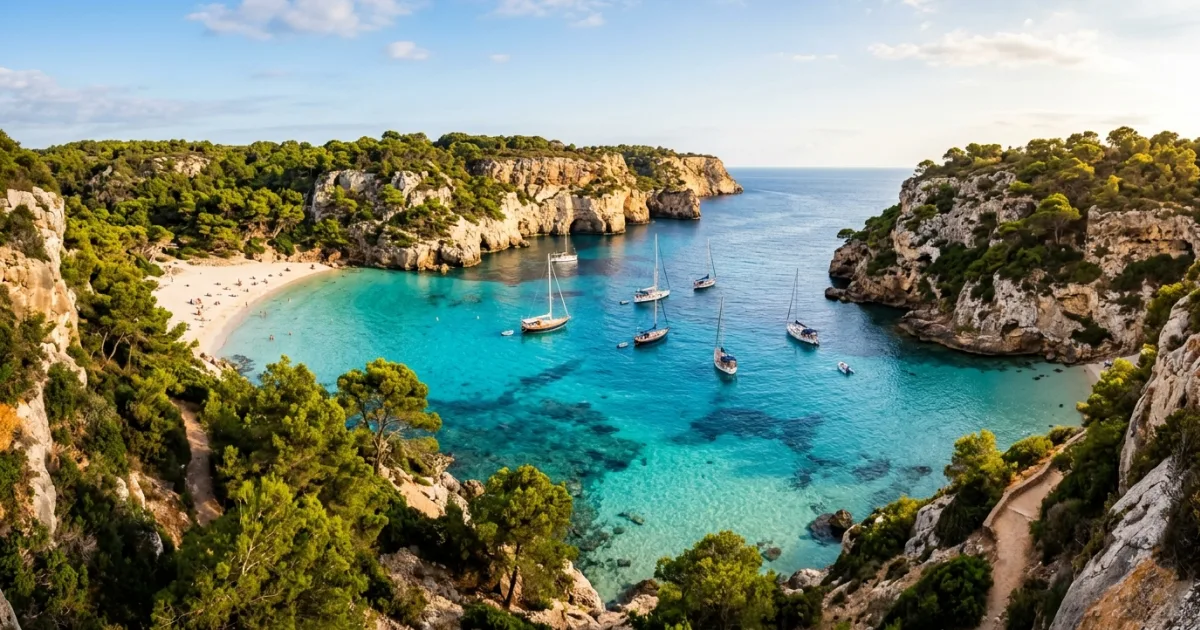
Menorca stands apart from the rest of the Mediterranean as a benchmark for ecological preservation and mindful travel. Spanning roughly 700 square kilometers, the island boasts more beaches and coves than Mallorca and Ibiza combined, yet vast stretches of its perimeter remain entirely undeveloped thanks to strict environmental zoning maintained since its 1993 UNESCO Biosphere Reserve designation. The landscape transitions effortlessly between rolling pastoral fields framed by ancient dry-stone walls (paret seca) and jagged coastal bluffs that drop steeply into crystalline turquoise waters.
Historically, Menorca's position in the western Mediterranean made it a prized naval strongpoint, leading to a vibrant architectural legacy. The capital, Maó, features one of the world's largest natural deep-water harbors, lined with elegant Georgian sash windows and fortress complexes inherited from 18th-century British rule. On the opposite western shore, Ciutadella preserves an aristocratic, distinctly Spanish atmosphere with golden limestone palaces, shaded medieval arcades, and a bustling picturesque canal harbor. Adding to its allure, Menorca's prehistoric Talayotic culture earned UNESCO World Heritage status in 2023, leaving behind cyclopean stone towers (talayots) and megalithic T-shaped shrines (taulas) that dot the peaceful countryside.
Reasons to Visit
- Virgin Turquoise Coves: Access world-renowned secluded calas like Macarelleta, Turqueta, and Pregonda, preserved in their natural state without high-rise concrete resorts.
- Camí de Cavalls: Hike, run, or mountain bike along this legendary 185-kilometer coastal path offering jaw-dropping sea views at every turn.
- UNESCO Talayotic Heritage: Explore prehistoric stone megaliths, navetas, and talayots dating back over 3,000 years in an exceptionally intact landscape.
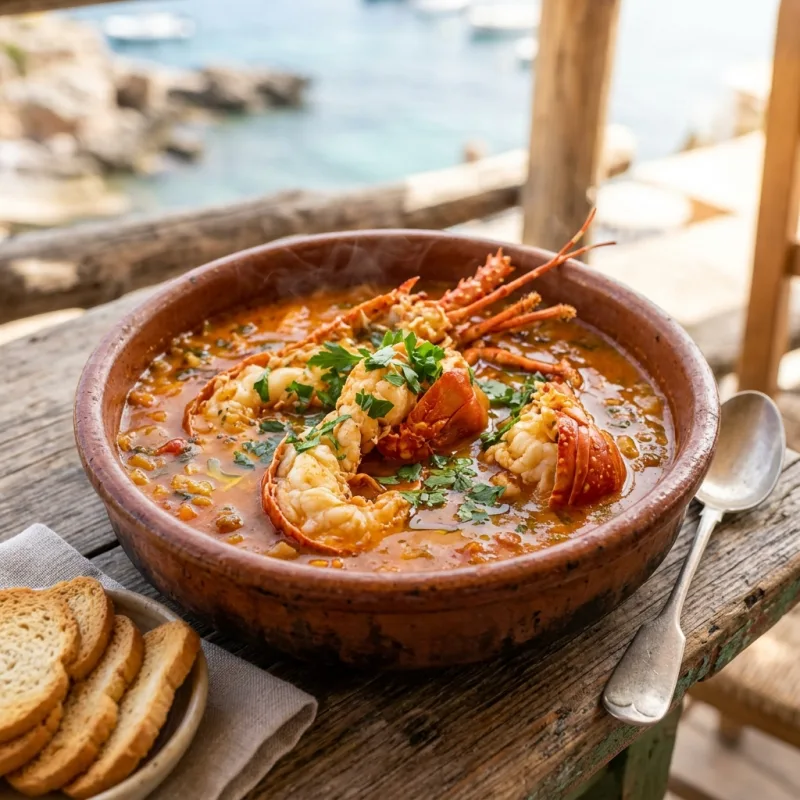
- World-Class Gastronomy: Savor authentic Mahón cheese, fresh spiny lobster caldereta, and handcrafted gin directly from heritage artisan producers.
- Starlight Reserve Skies: Experience certified dark sky stargazing opportunities free from intense light pollution across protected nature reserves.
Things to Avoid
- Do not arrive at popular southern cove parking lots after 9:00 AM during peak summer; lots fill up quickly and access roads are closed once full.
- Do not remove sand, seashells, or stones from protected beaches, as Menorca enforces severe ecological protection fines.
- Avoid walking the exposed northern coastal trails without adequate water, sun protection, and proper footwear, as shade and water sources are rare.
- Do not expect wild, multi-story clubbing scenes; Menorca values quiet evenings, calm waterfront dining, and acoustic gatherings.
- Avoid relying solely on credit cards for remote parking machines or tiny rural farm stands where mobile signal can be limited.
Local Transportation Tips
Renting a vehicle is the most flexible way to discover Menorca's remote corners, hidden beaches, and rural farmsteads. Rental agencies operate directly at Menorca Airport (MAH) and in the harbor towns of Maó and Ciutadella. If driving, be aware that the primary Me-1 highway bisects the island from east to west; to reach coastal coves, you must travel down spoke-like rural roads, meaning there is no single continuous coastal ring road for vehicles. For non-drivers, seasonal public buses operated by TMSA and Autocares Torres connect Maó and Ciutadella with popular family beach resorts like Cala Galdana, Son Bou, and Santo Tomás. Taxis operate on fixed or metered rates between main towns, while water taxis and guided catamaran excursions provide scenic waterborne transfers to secluded coves inaccessible by car.
Travel Etiquette
- Greet shopkeepers and restaurant staff politely with 'Bon dia' or 'Buenas' upon entering establishments.
- Dress respectfully when leaving the beach; walking shirtless or in swimwear through town centers, churches, or supermarkets is frowned upon and can incur municipal fines.
- Respect the 'posidonia oceanica' seagrass washed up on shorelines; it is a vital, protected marine plant that guards the coast against erosion and filters seawater to keep it pristine.
- Tipping is discretionary in Spain; rounding up to the nearest euro for casual drinks or leaving 5% to 10% for attentive table service is customary and appreciated.
Recommended Age Group
Menorca is an exceptionally versatile destination welcoming multi-generational travel, nature enthusiasts, and couples seeking calm Mediterranean escapes.
- Babies (0-2 years): Recommended. The island offers tranquil, safe shallow-water beaches like Cala en Porter and Son Bou, quiet pedestrianized town centers, and quality healthcare facilities.
- Kids (3-12 years): Recommended. Perfect for safe snorkeling in sheltered bays, exploring historic pirate watchtowers, discovering marine life on glass-bottom boats, and gentle pony trekking.
- Teens (13-19 years): Recommended. Older children and teenagers enjoy kayaking, stand-up paddleboarding, cliff jumps under supervision, mountain biking along coastal tracks, and exploring the sea caves of Cova d'en Xoroi.
- Adults (20-64 years): Recommended. An idyllic destination for romantic getaways, gastronomic tours, boutique agritourism stays, deep-sea diving, and scenic hiking along coastal cliffs.
- Seniors (65+ years): Recommended. High level of tourist comfort, peaceful harborside promenades, rich historical tours in Maó and Ciutadella, and accessible coastal resorts with level pathways.
Accessibility Level: Medium
- Major urban centers such as Maó and Ciutadella feature paved pedestrian avenues, though historical side streets can include steep cobblestone gradients.
- Accessible beach services operate during the summer months at prominent beaches including Son Bou, Cala Galdana, and Arenal d'en Castell, offering amphibian water chairs, wooden access boardwalks, and shaded rest pergolas.
- Public buses run by TMSA operating on primary interurban routes feature low-floor entry and dedicated wheelchair securement spaces.
- Prominent cultural attractions such as the Hauser & Wirth art center on Isla del Rey provide wheelchair-accessible boat boarding ramps and flat gallery circulation.
Did You Know?
Menorca was the first place in Spain to see the sunrise each morning due to its position as the easternmost territory of the country. Furthermore, the island is widely considered by culinary historians to be the birthplace of mayonnaise; the creamy emulsion known today worldwide was popularized by French forces under the Duke of Richelieu after capturing Port Mahon in 1756, who carried the recipe back to Paris under the name 'sauce mahonnaise'.
Cool Statistics
- Declared an entire island UNESCO Biosphere Reserve in 1993, encompassing all 702 square kilometers.
- Home to over 1,500 documented prehistoric Talayotic archaeological sites, making it an open-air museum.
- Features an unbroken 185-kilometer perimeter trail (GR 223 Camí de Cavalls) containing 20 distinct trekking stages.
- Boasts approximately 216 kilometers of coastline featuring over 100 individual beaches and hidden coves.









Buy a compatible power adapter for your trip