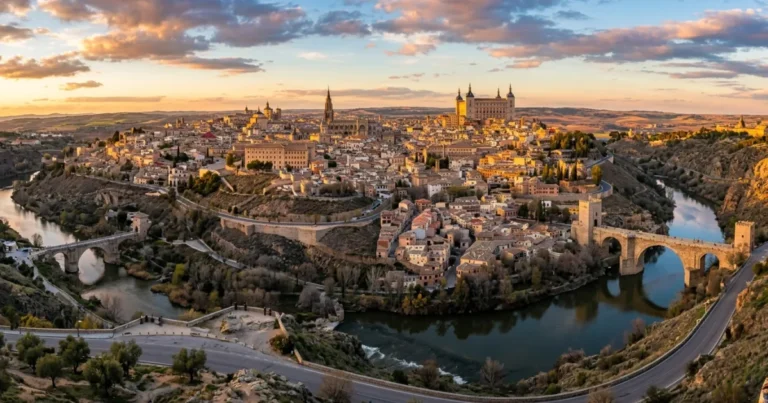
Castilla-La Mancha is the geographical and cultural heart of the Iberian Peninsula. Covering a massive central plateau, the region is characterized by its sweeping plains, rugged mountain ranges, and deep river gorges. It is a land where history feels alive, heavily influenced by centuries of Moorish, Jewish, and Christian coexistence, most visibly preserved in the architectural marvels of Toledo, often called the 'City of Three Cultures'.
For literature fans, the Route of Don Quixote offers a tangible connection to Cervantes' masterpiece, guiding travelers through the very landscapes that inspired the novel. Nature enthusiasts will find solace in the region's diverse ecosystems, from the wetlands of Tablas de Daimiel to the dramatic limestone formations of the Enchanted City (Ciudad Encantada) near Cuenca. Whether you are savoring a glass of local Tempranillo or marveling at a medieval fortress, Castilla-La Mancha provides an authentic, unhurried Spanish experience.
Reasons to Visit
- Literary History: Walk in the footsteps of Don Quixote and see the iconic windmills of Consuegra.
- UNESCO World Heritage Sites: Explore the stunning historical cities of Toledo and Cuenca.
- Gastronomy: Taste authentic Manchego cheese, marzipan from Toledo, and world-class regional wines.
- Natural Beauty: Discover diverse landscapes, including the Cabañeros National Park and the Lagunas de Ruidera.
- Authentic Culture: Experience traditional Spanish life away from the heavily touristed coastal areas.
Things to Avoid
- Midday Summer Heat: Avoid strenuous outdoor activities between 1 PM and 5 PM during July and August, as temperatures can soar.
- Rushing the Experience: Don't try to see the entire vast region in just a couple of days; focus on specific provinces or routes.
- Ignoring Siesta Hours: Be aware that many small shops and rural attractions close in the afternoon for siesta.
Local Transportation Tips
While major cities like Toledo and Cuenca are easily accessible from Madrid via the AVE high-speed train, the best way to truly experience Castilla-La Mancha is by car. Renting a vehicle provides the freedom to navigate the scenic countryside, stop at remote vineyards, and visit the scattered castles and windmills that define the region's landscape. Local buses connect smaller towns, but schedules can be sparse, especially on weekends.
Travel Etiquette
- Greet shopkeepers and restaurant staff with a polite 'Buenos días' or 'Buenas tardes' upon entering.
- Tipping is not strictly required, but leaving small change or rounding up the bill is appreciated for good service.
- Dress modestly when visiting churches and religious sites (cover shoulders and knees).
- Embrace the local dining schedule; lunch is typically around 2 PM to 3 PM, and dinner starts after 8:30 PM.
Recommended Age Group
Castilla-La Mancha offers a diverse range of experiences suitable for various age groups, though its historical and rural nature appeals most to those seeking culture and scenery.
- Babies (0-2 years): Neutral. While the region is peaceful, navigating the steep, cobblestone streets of historic towns like Toledo with a stroller can be quite challenging.
- Kids (3-12 years): Recommended. Children will love the fairy-tale castles, the giant windmills of Don Quixote, and the open spaces of the national parks.
- Teens (13-19 years): Recommended. Great opportunities for outdoor adventures, photography, and engaging history lessons in the medieval cities.
- Adults (20-64 years): Recommended. Perfect for wine tasting, culinary tours, scenic road trips, and deep cultural immersion.
- Seniors (65+ years): Recommended. The region offers rich history and gastronomy, though visitors should be prepared for some walking on uneven terrain in older city centers.
Accessibility Level: Medium
- Major museums and modern facilities in cities like Toledo and Cuenca offer wheelchair accessibility, including ramps and elevators.
- Historic city centers often feature steep inclines and uneven cobblestones, which can pose challenges for mobility-impaired travelers.
- Many rural accommodations and agritourism spots are ground-level but it is essential to confirm specific accessible features prior to booking.
- The high-speed AVE trains connecting Madrid to the region are fully accessible for wheelchair users.
Did You Know?
Castilla-La Mancha produces more than half of all the wine made in Spain, making it the largest continuous vine-growing area in the world. Additionally, the region is the world's largest producer of saffron, a highly prized spice essential for authentic Spanish paella.
Cool Statistics
- Over 400,000 hectares of vineyards are planted in Castilla-La Mancha.
- The region is home to two distinct National Parks: Cabañeros and Tablas de Daimiel.
- Toledo was the capital of the Spanish Empire until 1561, when the court moved to Madrid.
- There are 12 historic windmills standing on the Calderico ridge in Consuegra.










Buy a compatible power adapter for your trip