Disclosure: This site contains affiliate links. We may earn a commission if you make a purchase, at no extra cost to you.

>
>
>
Galicia
Panoramic view of a lighthouse on the dramatic cliffs of Costa da Morte in Galicia

Galicia Overview & Key Highlights

Galicia sits in the lush, green northwestern corner of Spain, offering a stark contrast to the arid landscapes of the south. Known for its dramatic coastline, deep coastal inlets called rías, and dense eucalyptus forests, this region is a haven for nature lovers and those seeking a cooler climate. The area is deeply rooted in Celtic heritage, which is evident in its traditional bagpipe music, ancient stone forts known as castros, and mystical folklore. Visitors are drawn to its authentic charm, where small fishing villages and historic towns maintain a slow, traditional pace of life. The region is globally renowned as the culmination of the Camino de Santiago, with pilgrims from around the world ending their journey at the magnificent Cathedral of Santiago de Compostela. Beyond its spiritual significance, Galicia is a premier culinary destination, boasting some of the best seafood in Europe, including the famous pulpo a la gallega (Galician-style octopus). The local gastronomy is perfectly paired with crisp Albariño wines produced in the Rías Baixas area. Whether exploring the rugged cliffs of the Costa da Morte or relaxing on the pristine white sands of the Cíes Islands, travelers will find a captivating blend of history, nature, and gastronomy.

Galicia Travel Guide: Logistics & In-Depth Tips

Galicia is a land of myths, legends, and profound natural beauty. Situated in the northwest corner of the Iberian Peninsula, it is bordered by the Atlantic Ocean to the west and the Cantabrian Sea to the north. The region's geography is defined by its 'rías'—drowned river valleys that mix fresh and salt water, creating incredibly fertile environments for marine life. These are divided into the Rías Altas in the north, known for their dramatic cliffs and wild seas, and the Rías Baixas in the south, famous for their gentler landscapes, white sandy beaches, and extensive vineyards.

Culturally, Galicia feels distinct from the rest of Spain. Its Celtic roots are celebrated through traditional music featuring the 'gaita' (Galician bagpipe) and ancient stone settlements called 'castros' that dot the landscape. The region's spiritual heart is Santiago de Compostela, a UNESCO World Heritage city whose magnificent cathedral has been the ultimate destination for pilgrims on the Camino de Santiago for over a thousand years. Whether you are seeking a spiritual journey, a culinary adventure, or a peaceful retreat in nature, Galicia offers a deeply authentic and enriching travel experience.

Reasons to Visit

  • The Camino de Santiago: Experience the camaraderie, spirituality, and physical challenge of walking one of the world's most famous pilgrimage routes.
  • World-Class Seafood: Taste the freshest octopus, scallops, and goose barnacles, harvested directly from the nutrient-rich Galician rías.
  • Stunning Coastlines: Explore the dramatic cliffs of the Costa da Morte, the serene beaches of the Rías Baixas, and the pristine, protected Cíes Islands.
  • Celtic Heritage: Discover ancient castros (Celtic settlements), listen to traditional bagpipe music, and immerse yourself in local folklore and legends.
  • Exceptional Wines: Tour the vineyards of the Rías Baixas and sample crisp, aromatic Albariño wines that pair perfectly with the local cuisine.

Things to Avoid

  • Underestimating the Weather: Do not assume Galicia will have the same hot, dry weather as southern Spain. Always pack layers and rain gear, even in summer.
  • Skipping the Free Tapas: Avoid ordering too much food at once in bars; wait to see if a generous free tapa arrives with your drink first.
  • Visiting the Cíes Islands Without a Permit: Do not show up at the ferry terminal without having secured your visitor authorization online beforehand, as daily numbers are strictly capped.
  • Rushing the Dining Experience: Avoid expecting quick meals. Dining in Galicia is a slow, social affair meant to be savored over several hours.

Local Transportation Tips

Galicia is well-connected by a network of modern highways, making it an ideal destination for a road trip. Renting a car is highly recommended if you wish to explore the rugged coastlines, hidden beaches, and remote rural villages at your own pace. For intercity travel, the Renfe train network connects major cities like A Coruña, Santiago de Compostela, Ourense, and Vigo efficiently. The ALSA bus network is also extensive and provides a reliable, budget-friendly option for reaching smaller towns and coastal areas not served by trains.

Travel Etiquette

  • Greetings: A handshake is common for initial meetings, while two light kisses on the cheeks are standard among friends and acquaintances.
  • Dining Times: Adapt to local schedules; lunch is typically served between 1:30 PM and 3:30 PM, and dinner rarely starts before 8:30 PM or 9:00 PM.
  • Tipping: Tipping is not obligatory but is appreciated for good service. Leaving small change or rounding up the bill in cafes and casual restaurants is customary; 5-10% is appropriate in finer dining establishments.
  • Respecting Pilgrims: When in Santiago de Compostela, be respectful of the pilgrims arriving at the cathedral, as this is a deeply emotional and spiritual moment for many.

Recommended Age Group

Galicia is a versatile destination that caters beautifully to travelers of all ages, offering a mix of nature, history, and relaxation.

  • Babies (0-2 years): Recommended. The region has a very family-centric culture. While some historic towns have cobbled streets, coastal promenades and parks are highly accessible.
  • Kids (3-12 years): Recommended. Children will love the safe, sandy beaches of the Rías Baixas, interactive science museums in A Coruña, and exploring ancient Celtic forts.
  • Teens (13-19 years): Recommended. Excellent opportunities for outdoor adventures, including surfing, kayaking, and hiking sections of the Camino.
  • Adults (20-64 years): Recommended. Perfect for culinary tourism, wine tasting, historical exploration, and scenic road trips along the coast.
  • Seniors (65+ years): Recommended. The slow pace of life, excellent gastronomy, and accessible coastal towns make it ideal, though care should be taken on the steep, cobbled streets of some medieval centers.

Accessibility Level: Medium

  • Public Transport: Major train stations and modern ALSA buses are generally equipped with ramps and designated spaces for wheelchair users.
  • Attractions: Many key sites, including the Cathedral of Santiago de Compostela (via specific entrances) and major museums, offer wheelchair accessibility. However, ancient ruins and some coastal paths may be challenging.
  • Accommodation: Modern hotels in larger cities comply with strict accessibility standards, offering roll-in showers and elevator access. Rural casas (country houses) may have limited accessibility due to their historic nature.
  • Beaches: Several beaches in the Rías Baixas offer accessible facilities during the summer, including wooden walkways, amphibious chairs, and assistance staff.

Did You Know?

Did you know that the Tower of Hercules in A Coruña is the oldest extant lighthouse known to be functioning in the world? Built by the Romans in the 1st century AD, this UNESCO World Heritage site still guides ships along the treacherous Galician coast today.

Cool Statistics

  • Coastline Length: Galicia boasts over 1,498 kilometers (930 miles) of coastline, accounting for nearly a third of Spain's total coastline.
  • Pilgrim Numbers: In record years, over 340,000 pilgrims receive their 'Compostela' certificate for completing the Camino de Santiago.
  • Lighthouse Heritage: The region is home to more than 40 lighthouses, guiding vessels through the notoriously dangerous waters of the Atlantic.
  • Wine Production: The Rías Baixas DO (Denominación de Origen) produces over 20 million liters of wine annually, with Albariño grapes making up 96% of the plantings.


Address:

Galicia, Spain

Find Nearby Accommodations

Basic Info

address icon

COUNTRY & Region

Spain,
Europe

ACCESSIBILITY LEVEL​

Medium
Currency icon

LOCAL CURRENCY​

Euro (EUR)
Price level icon
Medium
Safety Level icon

SAFETY LEVEL

Duration icon

Recommended Duration

• 1-7 days
• More than a week

Electricity

electricity icon

Electricity

220-240V, 
50Hz
Plug Socket icon

Plug Type

• Type C (Round pin)
• Type F (Two round pins with earth clips)
Plug types
Click To View Plug Types
Galicia is part of our
Accessible Travel collection

Activities To Do In Galicia

Best Time To Visit Galicia

The best time to visit Galicia is during the late spring, summer, and early autumn months, when the weather is warmest and rainfall is at its lowest.

  • Summer (June to August): This is the peak season, offering the best beach weather, vibrant local festivals, and lively outdoor dining. It is ideal for exploring the coastal rías and islands.
  • Shoulder Seasons (May and September): These months provide pleasant temperatures and fewer crowds, making them perfect for hiking the Camino de Santiago or enjoying a scenic road trip.
  • Winter (December to February): Winters are mild but wet. While not ideal for beachgoers, it is a quiet time for cultural exploration and enjoying hearty Galician stews by a fireplace.

Average Temperatures Per Month

Remember to check the weather forecast a few days before the trip and before heading to the airport.

Safety Level icon

Safety Level

Galicia is a very safe region for travelers, including solo female travelers and families. Violent crime is extremely rare. Standard precautions apply: keep an eye on your belongings in crowded tourist areas like the Cathedral square in Santiago de Compostela, and be cautious of strong ocean currents if swimming at unpatrolled beaches along the Costa da Morte.

The rating is based on multi-year peace, crime, and security indices. Before you go, always verify current conditions through official government travel advisories.

Emergency Numbers

Police: 091 (112 international)
Ambulance: 061 (112 international)

No internet needed • Includes local translations • Free for TravelingWiz readers

Spoken Languages

Spanish and Galician (Gallego) are the official languages. Galician is widely spoken, especially in rural areas, and is closely related to Portuguese. English is understood in major tourist areas and hotels, but less so in remote villages.

Learn The Language

  • Hola: Hello
  • Grazas: Thank you (Galician)
  • Por favor: Please
  • Canto custa?: How much is this? (Galician)
  • Onde está o baño?: Where is the bathroom? (Galician)
  • Unha cervexa, por favor: A beer, please (Galician)
  • Bo día: Good morning (Galician)
  • Adeus: Goodbye (Galician)
Travel Booking Partner - TravelingWiz

Trip Cost & Budgeting for Galicia, 2026

Everything you need to know about money while traveling
Is Galicia expensive for tourists in 2026? No, Galicia remains one of Spain's most budget-friendly regions. Based on our Human Verified prices, you can expect to pay around 1.70 EUR for a cappuccino, 2.90 EUR for a pint of domestic beer, and about 24.00 EUR for a standard main meal at a mid-range restaurant. Use the data table below to calculate your specific daily budget based on your travel style. With TravelingWiz's Human Verified data, a typical traveler should expect to spend around $131 USD per day for a mid-range trip in Galicia. Click the Trip Cost Calculator button below the table to work out your personal budget for this trip.
Currency icon

LOCAL CURRENCY​:

Euro (EUR)
Price level icon
Medium
Credit cards are widely accepted in Galicia, but carrying some cash is recommended for small taverns and rural villages.

Per person, per day – pocket cash for small purchases.

Local: 25
Euro (EUR)
≈ 29 USD

Full daily spend estimation (accommodation, food, transportation, attractions).

Travel Style
Euro (EUR)
≈ USD ($)
Budget
65
75
Mid-range
115
132
Comfort
250
288

The Prices, Daily costs, and calculator results are estimates for planning purposes only. Actual costs may vary based on season, booking timing, personal spending habits, and currency fluctuations. TravelingWiz cannot be held responsible for discrepancies between these estimates and your final trip expenses.

  • Look for the "menú del día" (menu of the day) at lunchtime, which offers a three-course meal with wine for a very low price.\n- Take advantage of free tapas served with drinks in many traditional Galician bars, especially in cities like Lugo and Santiago.\n- Travel during the shoulder seasons of spring or autumn to secure significantly cheaper accommodation and avoid the summer crowds.\n- Use local public buses or regional trains instead of taxis to travel between major towns like A Coruña, Vigo, and Santiago de Compostela.

Pre-Order Tickets

Avoid disappointment when tickets sell out — and skip the long lines by booking online in advance. You’ll often save up to 20% too.
Save up to 20%

Travel Discounts & Coupons

Save on hotels, attractions, transport, and gear — find verified discounts for smarter travel spending.
Verified Coupons

What To Pack

  • Rain Gear: A lightweight, waterproof jacket and umbrella are essential, as Galicia's green landscapes are the result of frequent, unpredictable showers.
  • Comfortable Walking Shoes: Sturdy footwear is a must for hiking sections of the Camino de Santiago or navigating the cobbled streets of historic towns.
  • Layered Clothing: Pack breathable layers to accommodate the fluctuating maritime temperatures, which can be cool in the mornings and warm in the afternoons.
  • Swimwear and Sunscreen: Essential for visiting the stunning beaches of the Rías Baixas and the Cíes Islands during the summer months.
  • Universal Power Adapter: Bring a Type C or Type F adapter to charge your electronic devices.
We couldn't find tips for Galicia.
If you got any, please share

Recommended Itineraries for Traveling to Galicia

We couldn't find itineraries for Galicia.
you can contact us for custom trip plan

Food & Drink Highlights

Local Food Overview

Galician cuisine is defined by its exceptional quality ingredients, particularly its world-class seafood harvested from the cold Atlantic waters. The region is famous for its octopus, mussels, scallops, and percebes (goose barnacles). Meat lovers will enjoy the hearty Galician blonde beef and traditional stews like Caldo Gallego. Meals are typically accompanied by local artisan breads, creamy Tetilla cheese, and crisp Albariño or Godello white wines.
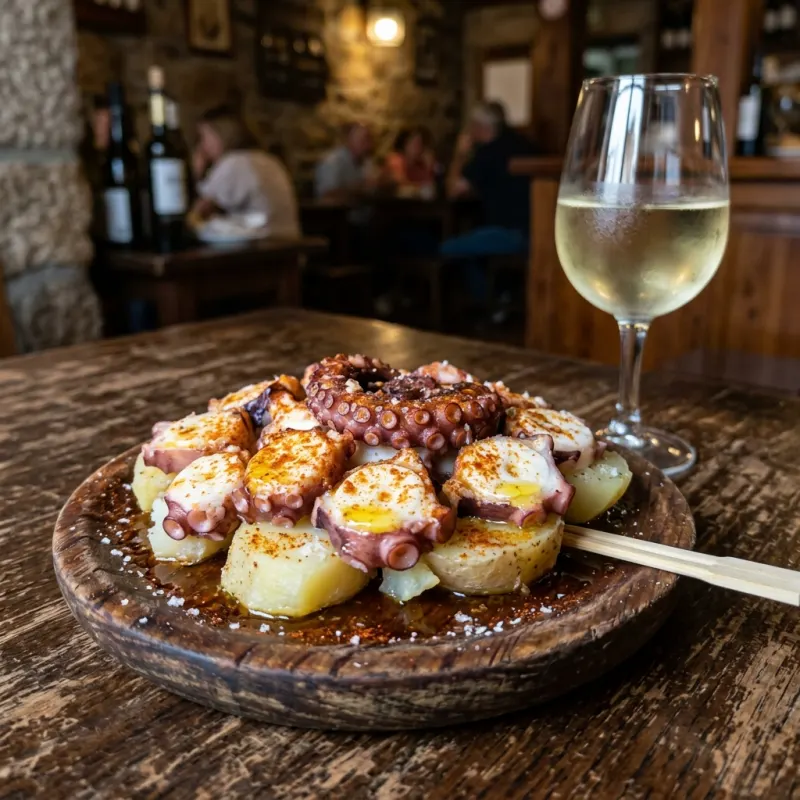
A traditional wooden plate of Pulpo a la Gallega with olive oil and paprika

Must Try Dish

This iconic Galician dish features tenderly boiled octopus served on a wooden platter over a bed of sliced potatoes. It is generously drizzled with extra virgin olive oil, sprinkled with coarse sea salt, and dusted with sweet and spicy paprika.
Food Experiences Title Icon

Food
Experiences

Discover cooking classes, tastings and local food tours

No food experience found

Related Tour Guides

Mateo Ferri -tour guide
Mateo Ferri
Spain Expert
Ana Maria Galera Lopez - tour guide
Ana Maria Galera López
Spain Expert
Anabel Arco Sola - tour guide
Anabel Arco Sola
Spain Expert
Ana Maria Soler Machirant - tour guide
Ana Maria Soler Machirant
Spain Expert
Maya, the human travel expert at TravelingWiz, offering curated, non-AI expertise

Maya’s Final Checklist for Galicia

Logistics shouldn’t be the focus of your trip—the experience should. I’ve hand-vetted these essential partners to ensure your arrival, stay, and exploration are as smooth as an Athenian breeze.

Where to Stay

From boutique hotels to local apartments—compare thousands of options and find the perfect stay in the best neighborhood.

Air Travel

Getting there should be seamless. Compare the best routes and prices across top airlines to start your journey on the right note.

Local Guides

Connect with experts who know the destination best. Get personalized advice and insider tips to help you plan your perfect trip.

Travel Protection

The “Engineer’s” rule: always have a backup. Secure your trip with a plan that covers every “what if” and unexpected change.

Car Rentals

Explore at your own pace with total freedom. Compare reliable rental options and find the right vehicle for your adventure.

Visa Services

Don’t let paperwork slow you down. Get expert assistance with your application to ensure all your entry documents are in order.

FAQs

No, Spanish is spoken by everyone, and English is commonly understood in tourist areas, hotels, and larger cities.
It is a network of ancient pilgrim routes stretching across Europe and coming together at the tomb of St. James in Santiago de Compostela, Galicia.
You must take a ferry from Vigo, Baiona, or Cangas. Access is strictly limited to protect the environment, so you must request authorization online from the Xunta de Galicia before purchasing your ferry ticket.
While winters are mild compared to northern Europe, they are quite rainy. It is a great time for cultural tourism, enjoying local gastronomy, and experiencing the region without crowds, but not suitable for beach holidays.
The ‘Coast of Death’ is a rugged, beautiful stretch of coastline in northwestern Galicia, named for the numerous shipwrecks that have occurred along its treacherous rocky shores.
No, Galicia is generally considered one of the most budget-friendly regions in Spain. You will find that accommodation, public transit, and local dining offer exceptional value compared to major hubs like Madrid or Barcelona. For exact pricing breakdowns and current expense estimates, please check the Budget section on this page.
The best time for you to visit Galicia is between May and September, when temperatures are warmest and rainfall is lowest. Summer is ideal if you want to enjoy pristine beaches and vibrant coastal festivals, while late spring and early autumn offer pleasant weather and fewer crowds for hiking the Camino de Santiago.
Yes, renting a car is recommended if you want to explore remote coastal cliffs, hidden beaches, and traditional fishing villages at your own pace. However, if you plan to stick strictly to major cities like Santiago de Compostela, Vigo, and A Coruña, you can easily travel between them using the efficient regional train network.

Your Insights Matter

TravelingWiz grows through the stories of our community. If you’ve recently explored ,Galicia share your tips and stories to help us perfect our guides for the next traveler.

Related Articles

Check out our related articles and blog posts to learn even more about the destination.

No related articles found

Don’t Travel Alone

Share with your friends and family

Where should we send your offline card?

We hate spam just as much as you do

newsletter_consent *