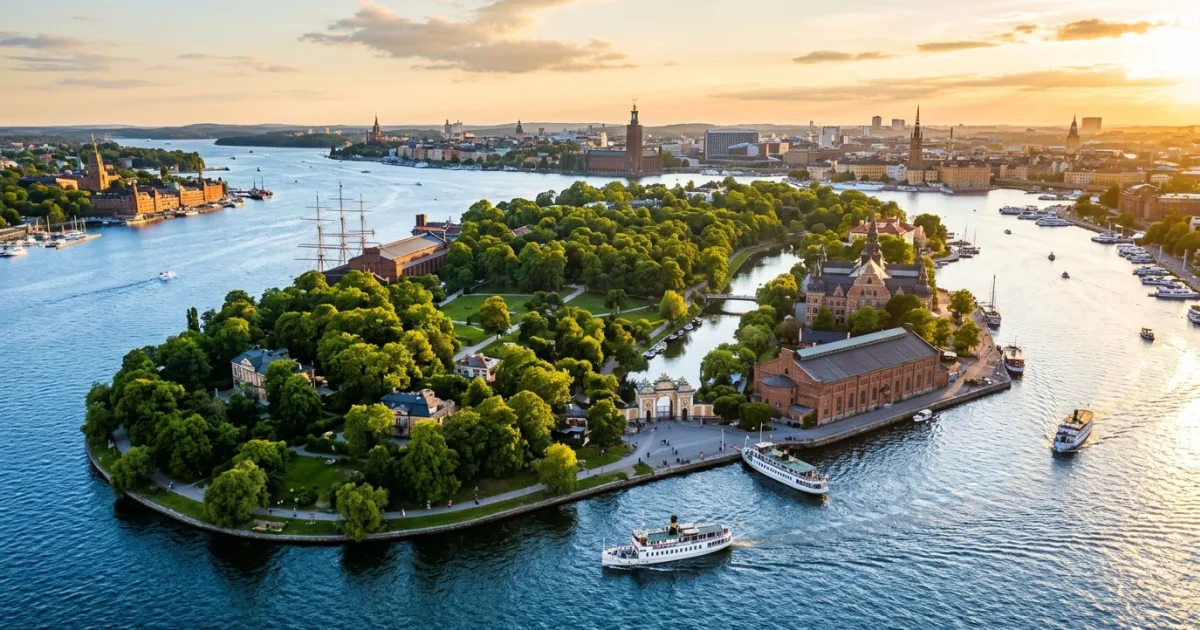
Djurgården serves as the green soul of Stockholm, an island park that seamlessly combines royal botanical legacy with modern Scandinavian culture. Spanning more than 270 hectares, it is an integral portion of the Royal National City Park, the world's first national city park designated in 1995. The island's geography features gentle hills, ancient English-style parkland, centuries-old royal oaks, and sheltered waterways along Djurgårdsbrunnskanalen that connect Lake Mälaren with the outer Stockholm archipelago.
Beyond its natural beauty, Djurgården holds the highest concentration of major museums and historic landmarks in Scandinavia. Visitors can inspect the world's only preserved 17th-century warship at the Vasa Museum, experience traditional Nordic cottages and native fauna at Skansen, or immerse themselves in pop music at ABBA The Museum. Interspersed between these grand institutions are secluded waterside paths, peaceful glasshouse nurseries, and historic harbors where classic timber vessels bob along the quay, making it equally appealing for culture enthusiasts and outdoor wanderers.
Reasons to Visit
- Vasa Museum: Marvel at the breathtakingly intact 1628 warship salvaged from the seabed after 333 years submerged.
- Skansen Open-Air Museum: Wander through historical farmsteads, folk craft workshops, and view Nordic wildlife like moose, brown bears, and seals.
- Rosendals Trädgård: Enjoy biodynamic gardens, heritage fruit orchards, and artisanal sourdough pastries in a peaceful greenhouse cafe.
- Gröna Lund Amusement Park: Experience exhilarating rollercoasters and waterfront concert stages overlooking Stockholm harbor.
- Canal & Parkland Trails: Bike or walk under ancient royal oak trees along the scenic Djurgårdsbrunn canal away from urban traffic.
Things to Avoid
- Avoid attempting to pay with cash, as tickets, transit, and island eateries operate entirely cashless.
- Avoid driving a personal vehicle onto the island on summer weekends, as vehicular access over Djurgårdsbron is restricted and parking is severely limited.
- Avoid visiting the Vasa Museum at peak midday without pre-booking tickets during the busy summer months from June to August.
- Avoid staying strictly within the western museum cluster; walk eastward to Isbladskärret and Blockhusudden for secluded shoreline vistas.
Local Transportation Tips
Djurgården is exceptionally well-connected to central Stockholm via public transit operated by SL. Tram Line 7 runs directly from T-Centralen across the scenic Djurgårdsbron bridge, stopping outside all major museum complexes. Commuter ferry Line 82 departs every 15 minutes between Slussen, Skeppsholmen, and Allmänna Gränd on Djurgården, offering stunning skyline views included with a standard transit pass. For self-guided movement, walking remains the most popular option, while bike rental stands near the bridge provide city bikes and cruiser cycles to traverse the eastern natural reserves.
Travel Etiquette
- Keep to the right when walking or jogging along designated pedestrian paths, allowing bicycles and rollerbladers to pass smoothly.
- Respect the Swedish custom of 'Allemansrätten' (the right of public access) by leaving no trash behind and avoiding disturbance to nesting birds around wetland reserves.
- Always join queues orderly at museum entrances, ferry gates, and bakery counters without pushing forward.
- Recycle your beverage cans and bottles at designated 'Pant' disposal stations across the park.
Recommended Age Group
Djurgården is universally accommodating, offering engaging experiences tailored for every stage of life.
- Babies (0-2 years): Recommended. Wide, paved paths easily accommodate strollers, and all major museums provide nursing lounges, elevators, and diaper-changing facilities.
- Kids (3-12 years): Recommended. Junibacken offers immersive Astrid Lindgren storybook trains, Skansen features native Swedish animals, and open park lawns provide plenty of running space.
- Teens (13-19 years): Recommended. Gröna Lund's thrill rides, the interactive ABBA museum exhibits, and water rental kayaks keep teenagers fully entertained.
- Adults (20-64 years): Recommended. Sophisticated art galleries like Waldemarsudde and the Thiel Gallery pair perfectly with canal walking routes, craft bakeries, and historic architecture.
- Seniors (65+ years): Recommended. Gentle, flat trails, historic tram connections that minimize walking distances, and numerous shaded bench locations offer effortless sightseeing.
Accessibility Level: Accessible Travel
- Public transit tramcars (Line 7) and commuter ferries feature roll-on, level access for wheelchairs and strollers.
- Major museums, including the Vasa Museum, ABBA The Museum, and the Nordic Museum, offer wide barrier-free doorways, tactile guidance, and elevator access to all display levels.
- Paved pathways border Djurgårdsvägen and the main waterfront, though some eastern trails in nature preserves feature packed gravel suitable for rugged mobility chairs.
- Accessible restrooms are readily located in all cultural pavilions, visitor centers, and museum restaurants.
Did You Know?
The Vasa warship sank on its maiden voyage in 1628 after sailing barely 1,300 meters into Stockholm's harbor. Because the Baltic Sea lacks wood-eating shipworms due to its cold, brackish water, more than 98% of the original timber survived perfectly preserved until its salvage in 1961.
Cool Statistics
- Home to over 22 distinct museums and cultural attractions packed into one island.
- More than 15 million local and international visitors explore the island annually.
- Features ancient oak trees dating back more than 400 years to the reign of King Gustav Vasa.
- Part of the world's very first Royal National City Park, protected by Swedish law since 1995.






Buy a compatible power adapter for your trip