Liepaja occupies a unique geographical position between the open Baltic Sea and Lake Liepaja, linked by the Trade Canal. Established historically as a fishing settlement, it expanded during the 19th century into a premier commercial port and Russian naval strongpoint. Today, the city balances an edgy alternative spirit with traditional seaside relaxation, attracting architecture lovers, kiteboarders, and history enthusiasts alike.
The urban fabric displays an impressive diversity of styles, from elaborate Art Nouveau facades on Bāriņu and Graudu streets to 19th-century wooden summer cottages lining Seaside Park. The Holy Trinity Cathedral holds one of the world's largest unreconstructed mechanical pipe organs, while the concert hall 'Lielais Dzintars' (Great Amber) serves as a modern architectural marvel honoring the town's vibrant musical scene.
Reasons to Visit
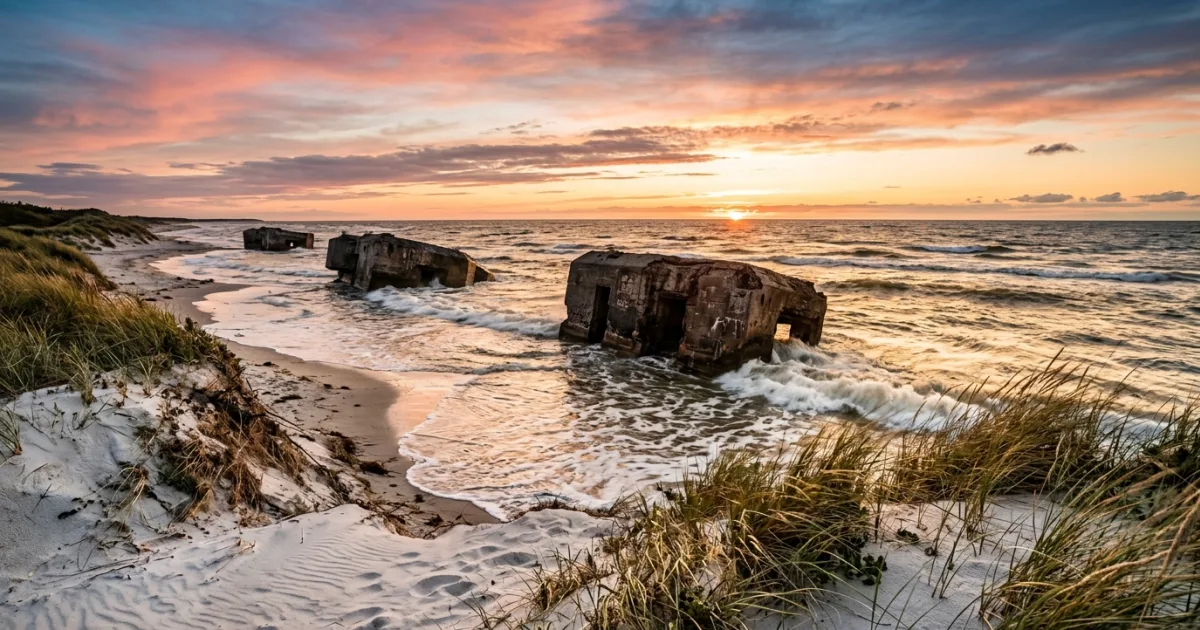
- Explore the stark, photogenic concrete ruins of the Northern Forts battered by Baltic waves.
- Wander through Karosta, an intriguing open-air museum of Imperial Russian and Soviet military history.
- Relax on wide, soft-sand Blue Flag beaches adorned with natural coastal pine forests.
- Admire exceptional collections of Art Nouveau and historic wooden architecture.
- Listen to classical and contemporary performances at the amber-colored Great Amber Concert Hall.
Things to Avoid
- Do not climb onto cracked, unsupported concrete slabs at the Northern Forts due to collapse risks.
- Avoid walking alone in isolated, unlit areas of remote Karosta forests after dark.
- Do not swim in rough sea conditions when yellow or red warning flags are flying on the beach.
- Avoid expecting tropical water temperatures; the Baltic Sea rarely exceeds 19°C (66°F).
Local Transportation Tips
Liepaja possesses an efficient and clean public transport network consisting of trams and buses. The city boasts the oldest electric tramway in the Baltics, which runs on a single line connecting residential districts to the city center and beach. Tickets can be purchased at kiosks or via mobile transit apps. Walking and cycling are also highly practical methods to discover the compact downtown area.
Travel Etiquette
- Punctuality is valued in public services and reservations.
- Keep voices moderate on public transport and inside historic religious monuments.
- Remove hats when entering churches and places of worship.
- Address locals with a polite 'Labdien' before asking questions in English.
Recommended Age Group
Liepaja offers attractions that appeal broadly across generations, though its rugged military ruins and long walking routes require basic mobility.
- Babies (0-2 years): Neutral. Seaside Park features paved paths suitable for strollers, but historic cobblestones and military sites are challenging.
- Kids (3-12 years): Recommended. Expansive sandy beaches, seaside playgrounds, and interactive military history tours in Karosta provide engaging outdoor activities.
- Teens (13-19 years): Recommended. Urban exploration through abandoned coastal bunkers, wind sports, and the escape-room experiences in Karosta Prison appeal strongly to teenagers.
- Adults (20-64 years): Recommended. Excellent coastal dining, architectural heritage, coastal biking, and live music offerings make it ideal for adult travelers.
- Seniors (65+ years): Recommended. Gentle strolls through Seaside Park, spa facilities, classical organ concerts, and Art Nouveau walking routes offer comfortable, slow-paced exploration.
Accessibility Level: Medium
- Seaside Park features flat, paved promenades and beach wheelchair ramps near the central rescue station.
- Modern public tram carriages have low-floor sections facilitating wheelchair access.
- Historic sites such as Karosta Prison and the Northern Forts are unpaved, uneven, and largely inaccessible to wheelchair users.
- Downtown sidewalks generally include curb cuts, though historic cobblestone sections can be bumpy.
Did You Know?
Liepaja briefly served as the capital of Latvia for six months in 1919 during the Latvian War of Independence, when the provisional government operated from an anchored steamship off its coast.
Cool Statistics
- Liepaja Beach features sand so fine it was historically collected to make hourglasses.
- The Holy Trinity Cathedral organ contains over 7,000 pipes and 131 stops.
- Karosta covers approximately one-third of the city's total geographical area.







Buy a compatible power adapter for your trip