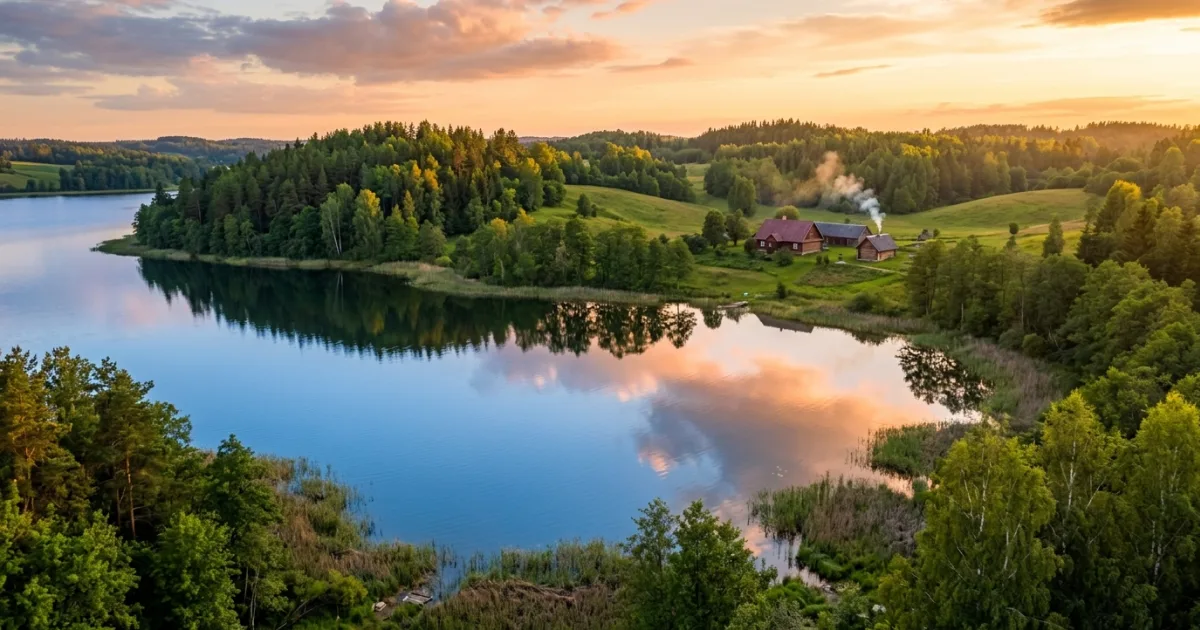
Latgale is the easternmost cultural and historical region of Latvia, distinguished by its unique dialect, deep spiritual heritage, and vast network of pristine waterways. Frequently referred to as the 'Land of Blue Lakes', the region contains over 1,200 freshwater bodies of water, including Lake Rāzna—Latvia's second-largest lake by surface area—and Lake Drīdzis, the deepest lake in the Baltic region. The natural landscape is an undulating mix of moraine hills, dense pine forests, and agricultural lands that feel secluded and timeless.
Beyond its natural scenery, Latgale is defined by centuries of cross-cultural influences. The region's historical ties to the Polish-Lithuanian Commonwealth fostered a devout Roman Catholic culture that sets it apart from the traditionally Lutheran regions of Vidzeme and Kurzeme. This religious devotion culminates in Aglona, home to the internationally recognized Minor Basilica of the Assumption. Meanwhile, urban centers like Daugavpils provide striking architectural contrasts, from Tsarist-era red brick fortifications to the birthplace legacy of abstract expressionist painter Mark Rothko, whose works are showcased in the restored arsenal of Daugavpils Fortress.
Reasons to Visit
- Lake Rāzna National Park: Paddle, sail, or camp along the shores of Latvia's 'Sea of Latgale', framed by sandy beaches and forested slopes.
- Daugavpils Fortress & Mark Rothko Centre: Explore one of Northern Europe's best-preserved 19th-century military fortifications housing original masterpieces by Mark Rothko.
- The Basilica of the Assumption in Aglona: Experience the spiritual epicenter of Baltic Catholicism, celebrated for its neoclassical architecture and sacred holy icon.
- Authentic Black Ceramics: Meet master potters continuing ancient wood-fired kiln techniques in workshops across Preiļi, Rēzekne, and Ludza.
- Culinary Heritage & Šmakovka: Taste authentic Latgalian breads, smoked meats, cheeses, and distilled spirits preserved by the regional Culinary Heritage network.
Things to Avoid
- Avoid planning a rural trip relying strictly on public buses, as schedules between small villages and lake areas are sparse.
- Do not wear casual beachwear or revealing clothing when visiting active Catholic shrines, monasteries, and churches in the region.
- Avoid walking off designated boardwalk paths in protected nature bogs like Teiči or Pelečāre to preserve fragile ecosystems.
- Do not underestimate driving distances on unpaved gravel roads; allow extra journey time during wet weather.
Local Transportation Tips
Main transit corridors connect Riga to Latgale's primary cities, Daugavpils and Rēzekne, via comfortable diesel passenger trains operated by Vivi (Pasažieru vilciens) and intercity buses taking roughly 3 to 4 hours. Within the region, local bus routes connect smaller district centers such as Krāslava, Ludza, and Preiļi. However, renting a personal car from Riga or Daugavpils is strongly advised for visitors wanting to explore hidden lake beaches, secluded ceramicists' homesteads, and national park viewpoints at an unhurried pace.
Travel Etiquette
- Greet guesthouse hosts and shopkeepers with a respectful nod or friendly 'Labdien' (or 'Labdīn' in Latgalian).
- When visiting Aglona Basilica or local wooden churches, turn off mobile phones, maintain a quiet demeanor, and avoid walking near altars during active liturgical services.
- If invited into a rural family homestead or sauna (pirts), it is customary to remove outside shoes at the door and offer a modest host gift, such as pastries or sweets.
Recommended Age Group
Latgale welcomes visitors of all generations, offering calm country landscapes, family farms, and historical attractions.
- Babies (0-2 years): Neutral. While rural environments are peaceful and clean, navigating historic cobblestones, unpaved gravel paths, and rural farm tracks with standard strollers can be challenging.
- Kids (3-12 years): Recommended. Children love swimming in clear freshwater lakes, interacting with farm animals at agritourism stays, and taking hands-on clay pottery workshops.
- Teens (13-19 years): Recommended. Excellent opportunities for canoeing, stand-up paddleboarding, exploring military fortress tunnels, and participating in outdoor adventure parks.
- Adults (20-64 years): Recommended. Perfect for cultural exploration, culinary trails, world-class art at the Mark Rothko Centre, wellness sauna retreats, and road tripping.
- Seniors (65+ years): Recommended. Gentle nature walks, accessible pilgrimage sites, peaceful countryside hospitality, and uncrowded cultural heritage attractions appeal greatly to mature travelers.
Accessibility Level: Medium
- Urban museums such as the Mark Rothko Art Centre and the modern GORS concert hall in Rēzekne feature step-free access, elevators, and accessible restrooms.
- Major religious sites, including Aglona Basilica, offer ramped entrances into the main sanctuary, though surrounding historic courtyards feature uneven paving stones.
- Many rural nature trails and national park trails consist of crushed gravel or unpaved forest paths, though Lake Rāzna provides select accessible viewing platforms and picnic zones.
- Regional trains between Riga, Rēzekne, and Daugavpils offer dedicated wheelchair boarding lifts when requested 24 to 48 hours in advance.
Did You Know?
Latgalian (latgaļu volūda) is officially protected under Latvian law as a historical sub-form of the Latvian language. It possesses its own distinct orthography, grammar, and literature, and street signs in several Latgalian municipalities are proudly displayed bilingually in both standard Latvian and Latgalian.
Cool Statistics
- Home to over 1,200 lakes, making Latgale the densest lake district in the Baltic States.
- Lake Drīdzis reaches a maximum depth of 65.1 meters (214 feet), making it the deepest lake in the Baltics.
- Daugavpils Fortress covers more than 150 hectares and represents the only virtually intact early 19th-century bastion fortress in Northern Europe.







Buy a compatible power adapter for your trip