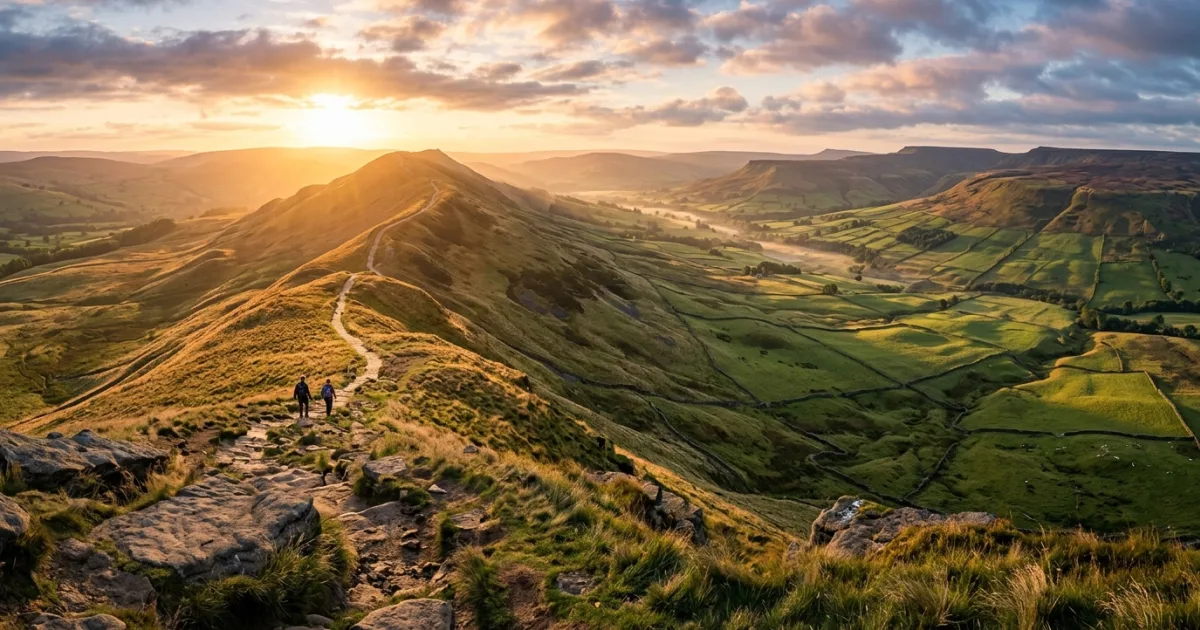
Derbyshire offers a quintessential English landscape characterized by dramatic geological divides, pastoral dales, and immense cultural heritage. Situated in the East Midlands, the county splits geologically into the gritstone plateaus of the Dark Peak to the north and the gentle, limestone river canyons of the White Peak to the south. This diverse geography has attracted explorers, poets, and mountaineers for centuries, serving as the cradle of English mass trespass movements that secured public walking rights across Britain.
Beyond its wild nature, Derbyshire is renowned for aristocratic architecture and early industrial innovation. Chatsworth House, seat of the Duke of Devonshire, displays masterworks of art within Capability Brown-designed parklands, while Haddon Hall preserves authentic medieval and Tudor structures. In the Derwent Valley, early cotton spinning mills along the river chronicle the dawn of the Industrial Revolution, providing a profound historic counterpoint to the quiet solitude of the surrounding hills.
Reasons to Visit
- Peak District National Park: Access thousands of miles of public rights-of-way, moorlands, and limestone gorges suited for all hiking abilities.
- World-Class Stately Homes: Explore Chatsworth House, Haddon Hall, Kedleston Hall, and Hardwick Hall.
- Castleton Show Caves: Discover the world's only known deposits of rare Blue John fluorite stone inside ancient limestone subterranean caverns.
- Picturesque Market Towns: Wander through historic stone market towns including Bakewell, Ashbourne, and the spa resort of Buxton.
- Industrial Heritage: Tour the Derwent Valley Mills UNESCO World Heritage Site and Sir Richard Arkwright's Cromford Mill.
Things to Avoid
- Avoid walking on the High Peak moors without physical topographic maps and a compass, as mobile phone service drops frequently in valleys and sudden fogs occur.
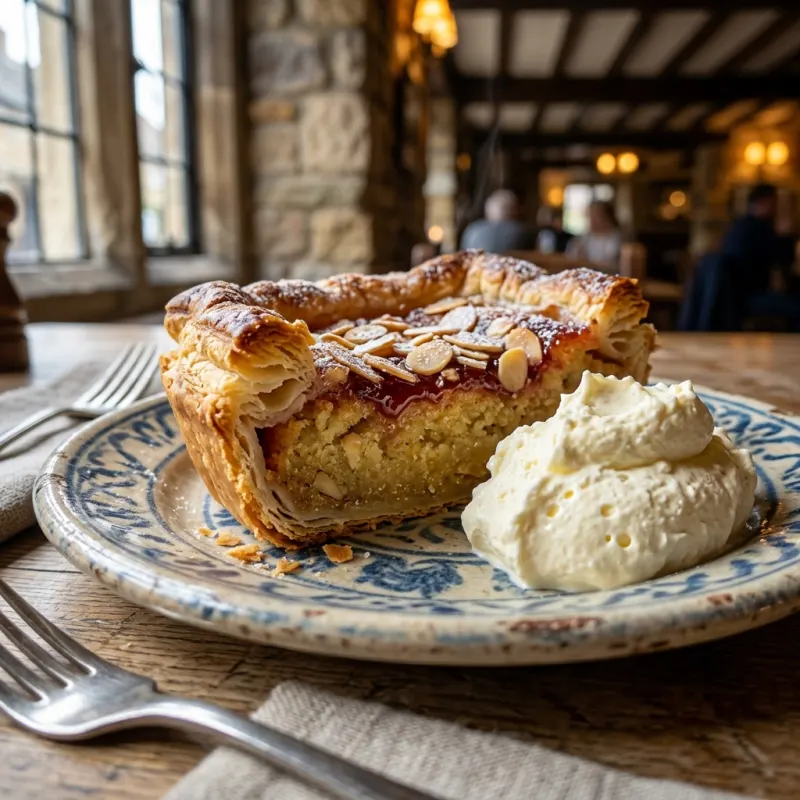
- Do not confuse Bakewell Tart with authentic Bakewell Pudding when ordering in traditional local bakeries.
- Avoid parking on narrow verges along country lanes; traffic wardens strictly ticket rural bottlenecks near popular trailheads like Mam Tor.
- Do not forget warm and waterproof layers even when setting out on clear summer mornings, as high-elevation ridges experience rapid microclimate shifts.
Local Transportation Tips
Derbyshire is connected by the Midland Mainline railway to Derby and Chesterfield, and via Northern Rail to Buxton and the Hope Valley line. The Derwent Valley Line provides regular passenger trains between Derby, Belper, and Matlock. Extensive regional bus operators including High Peak Buses and Trentbarton connect regional hubs to smaller villages, including the popular Transpeak bus service. Renting a vehicle offers optimal convenience for accessing remote fells and trailheads.
Travel Etiquette
- Adhere strictly to the Countryside Code: close all farm gates behind you, keep dogs on short leads around sheep, and carry all litter home.
- Yield to oncoming uphill vehicles when navigating narrow country roads with single-track passing places.
- Wait patiently in queues at bus stops, bakery counters, and ticket desks in accordance with standard British custom.
- A modest tip of 10% is customary for attentive table service in sit-down restaurants, while tipping at pub bars is not required.
Recommended Age Group
Derbyshire provides diverse attractions that accommodate a broad spectrum of travelers, from outdoor adventure seekers to cultural historians.
- Babies (0-2 years): Neutral. Rugged terrain and stone-flagged steps in historic houses can be awkward with strollers; all-terrain carriers are strongly recommended for country paths.
- Kids (3-12 years): Recommended. Children enjoy exploring subterranean caves in Castleton, riding the Heights of Abraham cable cars, and roaming farm parks.
- Teens (13-19 years): Recommended. Teenagers can participate in outdoor adventures including rock climbing, mountain biking along the Monsal Trail, and wild moorland hiking.
- Adults (20-64 years): Recommended. Ideal for fell running, historic estate tours, microbrewery sampling, and landscape photography.
- Seniors (65+ years): Recommended. Excellent accessibility across paved paths like the Monsal Trail, flat grounds at Chatsworth House, and thermal spa experiences in Buxton.
Accessibility Level: Medium
- The Monsal Trail and Tissington Trail offer miles of level, paved former railway lines ideal for wheelchairs, mobility scooters, and hand-cycles.
- Chatsworth House provides dedicated accessible parking, lift access throughout principal state rooms, and loaner manual wheelchairs.
- Major caverns such as Treak Cliff Cavern offer sensory experiences, though narrow stairways underground restrict full wheelchair mobility in natural cave corridors.
- Accessible toilet facilities are positioned throughout major national park visitor hubs via the standard UK RADAR key scheme.
Did You Know?
The 1932 Mass Trespass on Derbyshire's Kinder Scout was a pivotal act of civil disobedience that directly catalyzed the creation of National Parks across the United Kingdom and established open-access walking laws for the British public.
Cool Statistics
- Derbyshire contains 555 square miles of varied topography across the East Midlands.
- The Peak District was designated as the United Kingdom's very first national park on April 17, 1951.
- Kinder Scout forms the highest point in Derbyshire at 636 meters (2,087 feet) above sea level.
- Over 20 million people live within a one-hour drive of the Derbyshire Peak District border.






Buy a compatible power adapter for your trip