Low – budget‑friendly basics
Medium – moderate mid‑range costs
High – pricey lodging, dining & transport
Disclosure: This site contains affiliate links. We may earn a commission if you make a purchase, at no extra cost to you.
Low – budget‑friendly basics
Medium – moderate mid‑range costs
High – pricey lodging, dining & transport
5 shields = Excellent – very low crime or conflict.
4 shields = Safe – low risk, routine care.
3 shields = Relatively safe – use normal street smarts.
2 shields = Use caution – higher crime or periodic unrest.
1 shields = Avoid – active conflict or extreme danger.
Scores are derived from multi-year peace, homicide and security indices blended into a single 1-to-5 scale.
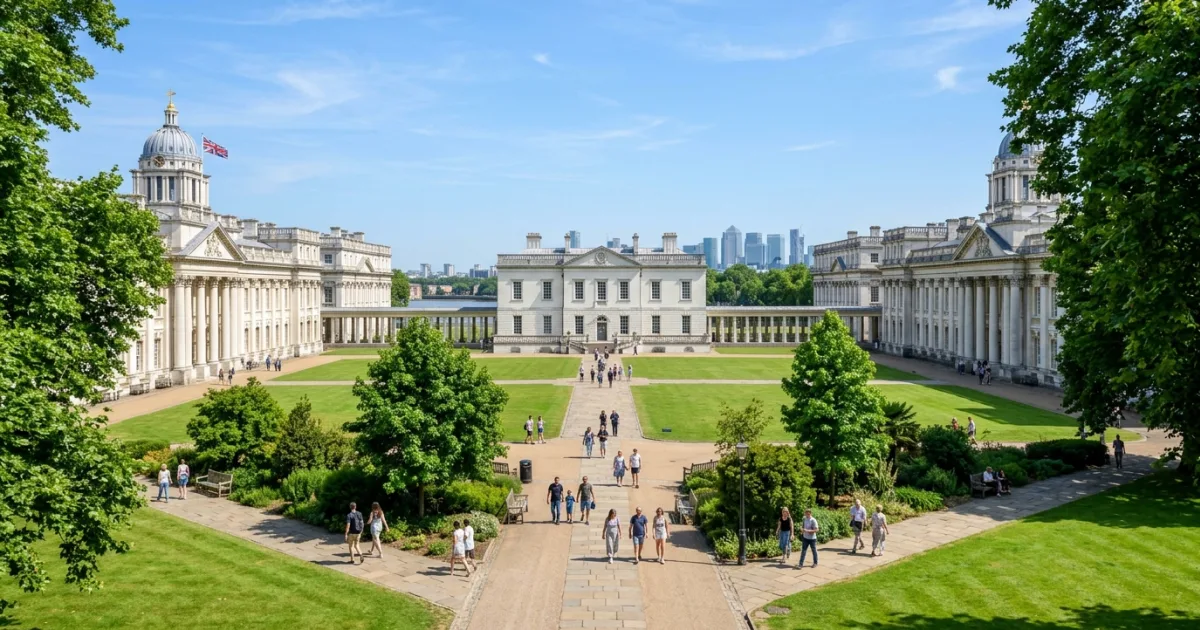
The National Maritime Museum in Greenwich stands as the largest maritime museum in the world, chronicling Britain's seafaring heritage, naval warfare, and global oceanic exploration. Located within the Maritime Greenwich UNESCO World Heritage Site, the museum houses over two million artifacts spanning centuries of cartography, naval architecture, and exploratory voyages. Key highlights include the uniform Admiral Lord Nelson wore during his fatal triumph at the Battle of Trafalgar, J.M.W. Turner's monumental oil painting of the same conflict, and Miss Britain III, a record-breaking 1930s racing powerboat. Visitors enter a bright, classical complex featuring modern glass-roofed courtyards that seamlessly link historic galleries with interactive learning zones. Children and families frequently gather at the Great Map on the first floor to chart maritime routes across an expansive floor compass, while history enthusiasts can delve into the complex realities of the transatlantic slave trade and polar expeditions. Its position adjacent to Greenwich Park, the Queen's House, and the Royal Observatory makes the museum an essential anchor for any cultural exploration of south-east London.
The National Maritime Museum in London forms the cultural core of Royal Museums Greenwich, sitting alongside the Queen's House, the Cutty Sark, and the Royal Observatory. First opened to the public in 1937 by King George VI, its architecture combines austere neoclassical colonnades with expansive 21st-century glass atriums. The museum tells the dramatic story of how an island nation shaped global trade, cartography, conflict, and scientific discovery.
Galleries within the museum navigate both celebrated triumphs and contentious chapters of Britain's naval past. Key thematic exhibits examine the Atlantic worlds, Asian trade networks, polar frontiers, and the grueling daily lives of ordinary sailors across centuries. Modern interactive spaces, such as ship-simulator experiences and children's exploration spaces, ensure the collection remains dynamic and engaging for visitors of all generations.
Reaching the National Maritime Museum is straightforward via London's extensive transit network. The quickest rail options include the Docklands Light Railway (DLR) to Cutty Sark for Maritime Greenwich, followed by a 5-minute flat walk through Greenwich town center. Southeastern train services run frequently from London Bridge to Greenwich or Maze Hill station. For a quintessential London journey, board the river bus (Uber Boat by Thames Clippers) from Westminster, Embankment, or London Bridge piers directly to Greenwich Pier, located just a 7-minute stroll from the museum's Romney Road entrance.
The National Maritime Museum caters remarkably well to travelers across every stage of life thanks to diverse gallery themes and exceptional barrier-free accessibility.
Nelson's Trafalgar coat on display still bears the hole through the left shoulder where a French sniper's musket ball struck the Admiral during the 1805 battle, complete with faint bloodstains preserved on the fabric.

The National Maritime Museum is an all-weather indoor attraction open daily year-round from 10:00 to 17:00, making it an excellent destination during any season.
| Month | °C | °F |
|---|---|---|
| Jan | 5 | 41 |
| Feb | 6 | 43 |
| Mar | 8 | 46 |
| Apr | 9 | 48 |
| May | 13 | 55 |
| Jun | 17 | 63 |
| Jul | 18 | 64 |
| Aug | 18 | 64 |
| Sep | 16 | 61 |
| Oct | 12 | 54 |
| Nov | 8 | 46 |
| Dec | 6 | 43 |
Remember to check the weather forecast a few days before the trip and before heading to the airport.
5 shields = Excellent – very low crime or conflict.
4 shields = Safe – low risk, routine care.
3 shields = Relatively safe – use normal street smarts.
2 shields = Use caution – higher crime or periodic unrest.
1 shields = Avoid – active conflict or extreme danger.
Scores are derived from multi-year peace, homicide and security indices blended into a single 1-to-5 scale.
The rating is based on multi-year peace, crime, and security indices. Before you go, always verify current conditions through official government travel advisories.
No internet needed • Includes local translations • Free for TravelingWiz readers

Low – budget‑friendly basics
Medium – moderate mid‑range costs
High – pricey lodging, dining & transport
Per person, per day – pocket cash for small purchases.
Full daily spend estimation (accommodation, food, transportation, attractions).
Travel Style | British Pound (GBP) | ≈ USD ($) |
|---|---|---|
Budget | 115 | 152 |
Mid-range | 210 | 278 |
Comfort | 460 | 608 |
The Prices, Daily costs, and calculator results are estimates for planning purposes only. Actual costs may vary based on season, booking timing, personal spending habits, and currency fluctuations. TravelingWiz cannot be held responsible for discrepancies between these estimates and your final trip expenses.
Choose a ready-made itinerary, plan your own trip, and keep TravelingWiz by your side while you travel.
Get the TravelingWiz app →
Discover cooking classes, tastings and local food tours
Logistics shouldn’t be the focus of your trip—the experience should. I’ve hand-vetted these essential partners to ensure your arrival, stay, and exploration are as smooth as an Athenian breeze.

Compare accommodation options and choose a stay that suits your plans and budget.
Connect with local guides for personalized help planning and exploring.
The “Engineer’s” rule: always have a backup. Secure your trip with a plan that covers every “what if” and unexpected change.
Don’t let paperwork slow you down. Get expert assistance with your application to ensure all your entry documents are in order.
Check out our related articles and blog posts to learn even more about the destination.
Share with your friends and family