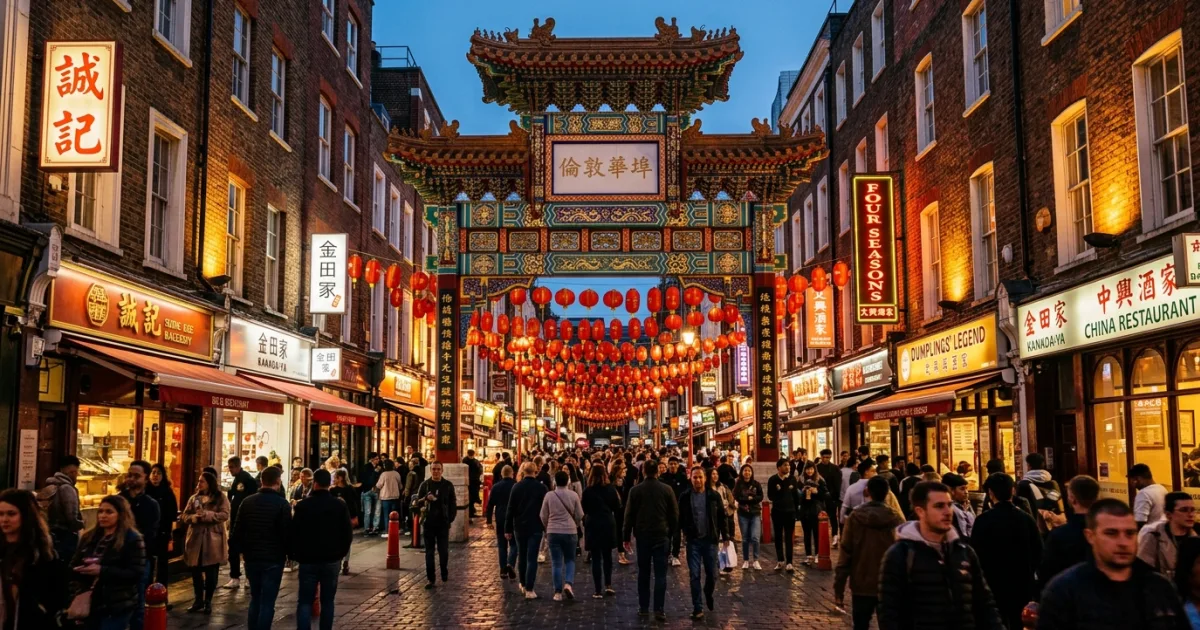
London's Chinatown is a sensory delight that transports visitors straight to East Asia while remaining firmly rooted in the historic architecture of the West End. Originally located in Limehouse in the East End during the 18th century, the community relocated to its current spot off Shaftesbury Avenue in the 1950s. Today, it is marked by four magnificent gates, the most famous being the Fourth Gate on Wardour Street, completed in 2016 and built in the traditional Qing Dynasty style.
Walking through the neighborhood, you will encounter over 80 restaurants, alongside traditional herbal medicine shops, reflexology centers, and bustling Asian supermarkets like Loon Fung and See Woo. The area is not just a tourist attraction but a vital community hub for London's Chinese population. Whether you are grabbing a quick Taiyaki ice cream, sitting down for a lavish seafood banquet, or photographing the hundreds of red lanterns swaying above Gerrard Street, Chinatown offers an unforgettable urban experience.
Reasons to Visit
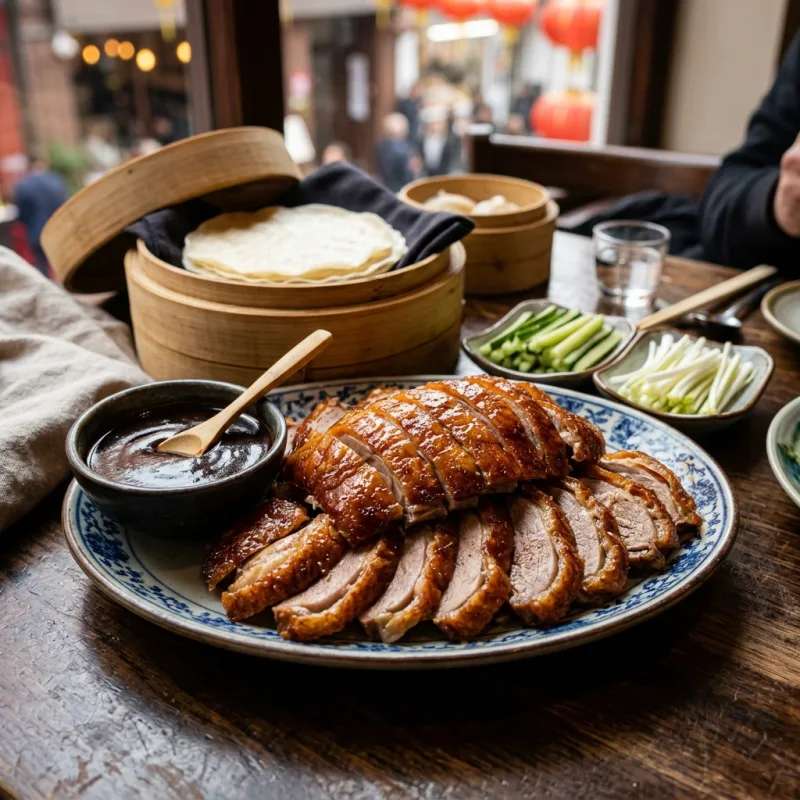
- Unrivaled selection of authentic East Asian cuisine, from dim sum to hot pot.
- Stunning photo opportunities with traditional Chinese gates and red lanterns.
- Vibrant cultural festivals, particularly the massive Lunar New Year parade.
- Proximity to major West End theaters, making it perfect for pre- or post-show dining.
- Unique shopping experiences at specialized Asian supermarkets and bakeries.
Things to Avoid
- Avoid driving; the area is heavily pedestrianized and parking is extremely expensive and limited.
- Try not to visit large restaurants without a reservation on Friday or Saturday nights, as wait times can be long.
- Be cautious of tourist-trap souvenir stalls; opt for authentic goods in the supermarkets instead.
Local Transportation Tips
Chinatown is exceptionally well-connected by public transport. The London Underground is the best way to arrive, with Leicester Square (Northern and Piccadilly lines) and Piccadilly Circus (Bakerloo and Piccadilly lines) being the closest stations. Numerous red double-decker buses also run along the adjacent Shaftesbury Avenue and Charing Cross Road. The area itself is best explored entirely on foot due to its pedestrianized layout.
Travel Etiquette
- When dining, it is polite to pour tea for others before pouring your own.
- Do not leave chopsticks sticking vertically upright in a bowl of rice, as this resembles incense used at funerals.
- Tipping is generally expected in restaurants; a 10-12.5% service charge is often automatically added to the bill.
- Stand on the right when using escalators in the nearby Tube stations.
Recommended Age Group
Chinatown offers a vibrant and engaging atmosphere suitable for a wide range of visitors, though the dense crowds can dictate the pace.
- Babies (0-2 years): Neutral. The pedestrianized streets are safe, but navigating thick crowds and small, tightly-packed restaurants with a stroller can be challenging.
- Kids (3-12 years): Recommended. Children are often captivated by the colorful gates, hanging lanterns, and the fun, sweet treats available at local bakeries.
- Teens (13-19 years): Recommended. The area is highly photogenic for social media and packed with trendy bubble tea shops and dessert parlors.
- Adults (20-64 years): Recommended. Adults will appreciate the incredible culinary diversity, cultural history, and proximity to West End nightlife.
- Seniors (65+ years): Recommended. The terrain is flat and pedestrian-friendly, making walking easy, though patience is required during peak crowded hours.
Accessibility Level: Medium
- The main streets of Chinatown (Gerrard Street, Newport Place) are flat, paved, and fully pedestrianized, making wheelchair navigation relatively straightforward.
- Many modern or recently renovated restaurants offer step-free access, but some older, traditional establishments may have steps at the entrance or lack accessible toilets.
- Leicester Square Tube station does not have step-free access; wheelchair users should use Tottenham Court Road or Green Park stations for step-free access to the general area.
- Tactile paving is present at most major road crossings surrounding the pedestrian zones.
Did You Know?
Did you know that London's original Chinatown was not in the West End? It was actually located in Limehouse in the East End, established by Chinese sailors in the 18th century. It only moved to its current location around Gerrard Street in the 1950s due to a combination of Blitz damage in the East End and the availability of cheap commercial leases in Soho.
Cool Statistics
- Chinatown features over 80 restaurants within just a few interconnected streets.
- The Fourth Gate on Wardour Street is the largest Chinese gate in the UK.
- London's Lunar New Year celebration, centered around Chinatown, is the largest outside of Asia.
- The neighborhood is decorated with hundreds of red lanterns that are changed annually.






Buy a compatible power adapter for your trip