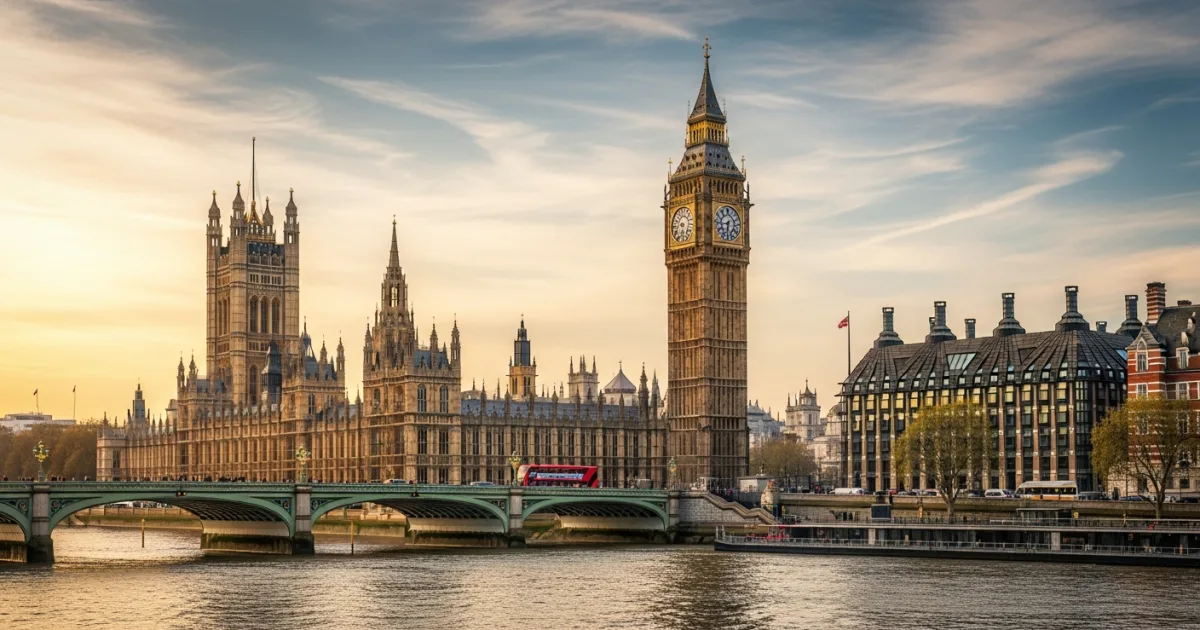
Westminster is the beating heart of British politics and royalty, a district where centuries of history are etched into the grand stone facades lining its streets. Situated on the north bank of the River Thames, this borough has been the seat of the national government for nearly a thousand years. The architectural landscape is dominated by the Gothic Revival splendor of the Palace of Westminster, home to the UK Parliament, and the iconic Elizabeth Tower, universally known by the name of its massive bell, Big Ben. Just steps away lies Westminster Abbey, a masterpiece of medieval architecture that has hosted every English and British coronation since William the Conqueror in 1066, as well as numerous royal weddings and burials of notable historical figures.
Beyond the monumental buildings, Westminster is a neighborhood of profound historical resonance and surprising tranquility. Whitehall, the wide thoroughfare connecting Parliament Square to Trafalgar Square, is lined with key government ministries and the Cenotaph, the nation's primary war memorial. Tucked beneath the streets here are the Churchill War Rooms, the secret underground bunker where Winston Churchill directed the Second World War. For those seeking a respite from the urban energy, St. James's Park offers a lush, green oasis with its serene lake and resident pelicans, providing a picturesque walking route toward Buckingham Palace. Westminster seamlessly blends the weight of its imperial past with the vibrant, fast-paced reality of modern London.
Reasons to Visit
- Iconic Landmarks: Stand in the shadow of Big Ben, the Houses of Parliament, and the London Eye (just across the river).
- Royal History: Explore Westminster Abbey, the site of royal coronations, weddings, and the resting place of monarchs and legends.
- World War II Heritage: Step back in time at the Churchill War Rooms, preserved exactly as they were left in 1945.
- Green Spaces: Relax in St. James's Park, one of London's oldest and most beautiful Royal Parks.
- Political Hub: Walk down Whitehall, see 10 Downing Street (from the gates), and witness the center of UK government.
Things to Avoid
- Rush Hour Travel: Avoid using Westminster Tube station between 8:00 AM - 9:30 AM and 5:00 PM - 6:30 PM on weekdays, as it becomes overwhelmingly crowded with commuters.
- Tourist Trap Dining: Avoid eating at the immediate restaurants and food stands around Parliament Square and Westminster Bridge; they are often overpriced and lower quality.
- Blocking the Pavement: Londoners walk fast. Avoid stopping abruptly in the middle of the sidewalk to take photos; step to the side to let foot traffic pass.
- Unlicensed Vendors: Ignore the illegal street gambling games (like the cup-and-ball trick) on Westminster Bridge, as they are organized scams designed to pickpocket onlookers.
Local Transportation Tips
Westminster is exceptionally well-connected by London's public transport network. The primary gateway is Westminster Underground Station, served by the Jubilee, District, and Circle lines, offering step-free access and dropping you right at the foot of Big Ben. Nearby, St. James's Park and Victoria stations provide additional access points. The iconic red double-decker buses run numerous routes through Whitehall and Victoria Street, offering scenic views of the landmarks. For a different perspective, the Thames Clippers (Uber Boat) operate from Westminster Pier, providing fast and picturesque river transport to areas like the Tower of London and Greenwich. Walking remains one of the best ways to navigate the area, as the major sites are clustered closely together.
Travel Etiquette
- Escalator Rules: Always stand on the right and walk on the left on all Tube escalators. This is a strict unwritten rule in London.
- Queueing: British people take queueing (lining up) very seriously. Never cut in line, whether waiting for a bus, an attraction, or a pub till.
- Transport Payments: Have your contactless card or Oyster card ready before you reach the ticket barriers to avoid holding up the line.
- Pub Culture: Order your drinks and food at the bar; table service is rare in traditional pubs. It is also customary to take your empty glasses back to the bar when you leave.
Recommended Age Group
Westminster offers a diverse range of attractions that cater to various age groups, though the historical focus may appeal more to older children and adults.
- Babies (0-2 years): Neutral. While the parks are great for strollers, the crowded streets and quiet, historical interiors of places like Westminster Abbey can be challenging to navigate with infants.
- Kids (3-12 years): Recommended. Children will enjoy the open spaces of St. James's Park, the pelicans, and the visual spectacle of the Changing of the Guard, though long historical tours might bore younger ones.
- Teens (13-19 years): Recommended. The rich history, iconic photo opportunities for social media, and proximity to the West End theaters make it an engaging area for teenagers.
- Adults (20-64 years): Recommended. Adults will fully appreciate the deep historical context, architectural grandeur, and the excellent traditional pubs and dining options in the vicinity.
- Seniors (65+ years): Recommended. The area features flat terrain, excellent public transport with step-free access at key stations, and highly accessible major landmarks, making it ideal for mature travelers.
Accessibility Level: Medium
- Westminster Tube station is fully accessible, offering step-free access from the street to all platforms via elevators.
- Major attractions like Westminster Abbey, the Churchill War Rooms, and the Houses of Parliament have dedicated wheelchair access, ramps, and accessible restrooms.
- The pavements throughout Westminster are generally wide, flat, and equipped with dropped kerbs at pedestrian crossings.
- All iconic black cabs in London are wheelchair accessible by law, featuring built-in ramps.
- St. James's Park features smooth, paved paths that are easily navigable for wheelchair users and those with limited mobility.
Did You Know?
Many visitors are surprised to learn that 'Big Ben' is not the name of the famous clock tower itself, but rather the nickname for the Great Bell housed inside it. The tower was officially known as the Clock Tower until 2012, when it was renamed the Elizabeth Tower to mark the Diamond Jubilee of Queen Elizabeth II. Additionally, Westminster Abbey contains the oldest door in Britain, dating back to the 1050s, and St. James's Park has been home to a colony of pelicans since 1664, when they were gifted to King Charles II by the Russian Ambassador.
Cool Statistics
- Westminster Abbey has been the setting for 39 royal coronations since 1066.
- The Great Bell, Big Ben, weighs a massive 13.7 tons.
- The Palace of Westminster contains over 1,000 rooms, 100 staircases, and 3 miles of passageways.
- Over 3,300 people are buried or commemorated in Westminster Abbey, including Charles Darwin, Isaac Newton, and Stephen Hawking.
- The London Eye, visible from Westminster, has 32 capsules representing the 32 boroughs of London, but they are numbered 1 to 33 (skipping number 13 for good luck).






Buy a compatible power adapter for your trip