County Donegal occupies the rugged northwestern corner of Ireland, isolated geographically from much of the Republic by the border with Northern Ireland. This relative seclusion has preserved its stark, wild topography, where barren quartzite mountains rise abruptly over dramatic maritime cliffs and sheltered sea inlets. Encompassing Glenveagh National Park, ancient stone forts like Grianán of Aileach, and vast Gaeltacht districts, Donegal offers a raw immersion into authentic Gaelic culture and windswept Atlantic wilderness.
Reasons to Visit
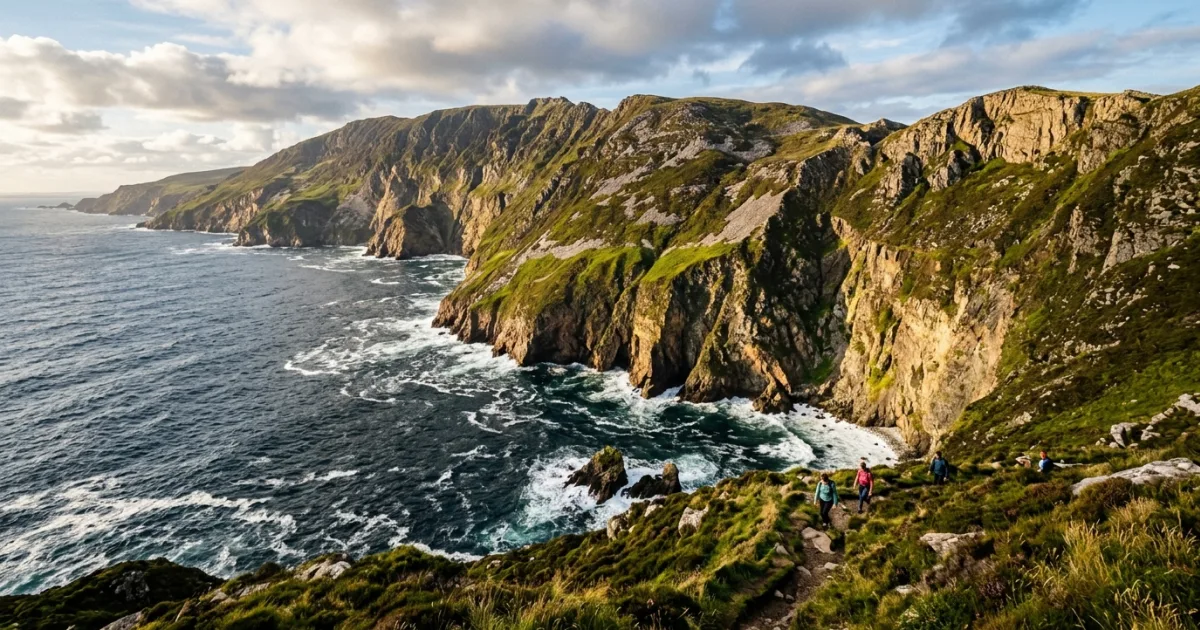
- Slieve League Cliffs: Experience some of Europe’s highest accessible sea cliffs with panoramic views across Donegal Bay.
- Glenveagh National Park: Explore rugged deer-inhabited glens, serene loughs, and the Victorian Glenveagh Castle estate.
- World-Class Surfing: Ride Atlantic swells at Bundoran and Rossnowlagh, internationally celebrated cold-water surf havens.
- Malin Head: Stand at Ireland’s northernmost point to witness ferocious Atlantic tides and cinematic rocky coastal vistas.
- Vibrant Traditional Music: Hear authentic fiddling and accordion sessions nightly in heritage pubs across Ardara and Kilcar.
Things to Avoid
- Avoid attempting to climb Mount Errigal or Slieve League in thick fog or high winds without proper navigational gear.
- Avoid assuming all roads are two-lane highways; exercise caution on single-track rural boreens with blind crests.
- Avoid parking on sensitive machair sand dune systems, which are protected and fragile ecological zones.
- Avoid swimming at unmonitored beaches where powerful rip tides and sudden shelf drops occur regularly.
Local Transportation Tips
Public transportation in Donegal consists primarily of regional bus networks operated by Bus Éireann and private carriers such as McGinley Coach and Local Link. However, routes primarily serve central transit corridors connecting Letterkenny, Donegal Town, and Derry. To properly explore coastal scenic routes, hidden bays, and national park trailheads, renting a private passenger vehicle from Dublin, Belfast, or Derry Airport is essential. Roads range from wide national primary routes (N-roads) to very narrow, winding local paths (R- and L-roads) requiring cautious driving.
Travel Etiquette
- Acknowledge oncoming motorists on narrow country roads with the traditional raised index finger wave from the steering wheel.
- Keep quiet and listen respectfully during live traditional music sessions in village pubs when singing or acoustic sets commence.
- Close all agricultural gates immediately behind you when traversing designated rural public footpaths across farmland.
- Leave No Trace principles are strictly expected across peat bogs, mountain summits, and Atlantic beaches.
Recommended Age Group
County Donegal caters exceptionally well to outdoor enthusiasts, cultural travelers, and multi-generational family groups seeking scenic road journeys.
- Babies (0-2 years): Neutral. Remote rural infrastructure, narrow walking trails, and changeable maritime weather make stroller logistics difficult outside central towns.
- Kids (3-12 years): Recommended. Expansive sandy beaches, castle tours at Glenveagh, and boat excursions offer memorable outdoor adventures.
- Teens (13-19 years): Recommended. Surfing camps in Bundoran, sea kayaking, and rugged hiking routes provide excellent engagement.
- Adults (20-64 years): Recommended. Perfect for hiking, photography, craft tweed shopping, scenic coastal drives, and rich pub culture.
- Seniors (65+ years): Recommended. Excellent coastal driving routes, comfortable heritage hotels, and accessible scenic viewpoints suit a relaxed travel pace.
Accessibility Level: Medium
- Major visitor attractions like the Glenveagh National Park Visitor Centre and Donegal Castle provide ramped access and paved main paths.
- Slieve League offers an accessible lower viewing platform, though upper pilgrim trails remain steep and unpaved.
- Public rural transportation rarely features low-floor or fully accessible boarding, necessitating specialized private hire vehicles for wheelchair users.
- Historic country hotels and traditional bed-and-breakfasts may have narrow doorways and stair-only access; verify ground-floor availability in advance.
Did You Know?
Malin Head in County Donegal is geographically further north than any point in Northern Ireland, making the southernmost political jurisdiction on the island home to its most northerly physical territory.
Cool Statistics
- 601 meters: Maximum elevation of the Slieve League sea cliffs above the Atlantic Ocean.
- 1,100+ kilometers: Total length of Donegal's intricate, indented marine coastline.
- 16,000 hectares: Protected highland wilderness preserved inside Glenveagh National Park.






Buy a compatible power adapter for your trip