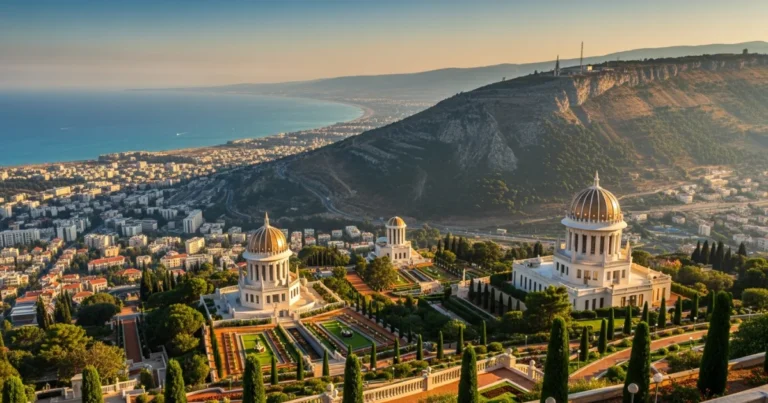
The Haifa District, a jewel on Israel's northern coast, offers a compelling blend of natural beauty, historical depth, and vibrant multiculturalism. Dominated by the majestic Mount Carmel, the city of Haifa itself is a testament to coexistence, where Jewish, Arab, Druze, and Baháʼí communities live side-by-side. The iconic Baháʼí Gardens, a UNESCO World Heritage site, are a spiritual and architectural marvel, drawing visitors from across the globe. Beyond the gardens, the district boasts a rich maritime history, beautiful beaches, and a thriving arts and culinary scene. From ancient caves to modern museums, and from bustling markets to serene nature reserves, Haifa District provides a diverse array of experiences for every traveler, promising an unforgettable journey through one of Israel's most picturesque regions.
Reasons to Visit
- Baháʼí Gardens: A stunning UNESCO World Heritage site and a symbol of peace and beauty.
- Cultural Diversity: Experience a unique blend of Jewish, Arab, Druze, and Baháʼí cultures.
- Panoramic Views: Enjoy breathtaking vistas of the Mediterranean Sea and the city from Mount Carmel.
- Historical Sites: Explore ancient caves, monasteries, and the charming German Colony.
- Beautiful Beaches: Relax on the sandy shores of the Mediterranean coast.
- Vibrant Culinary Scene: Savor diverse Middle Eastern and international flavors.
- Nature & Outdoors: Hike in Carmel National Park or enjoy coastal walks.
Things to Avoid
- Visiting Baháʼí Gardens without checking hours: Ensure you check the specific visiting hours for the terraces and interior shrine, as they are limited.
- Underestimating the hills: Haifa is built on a mountain; wear comfortable shoes and be prepared for steep inclines or utilize public transport.
- Disrespecting religious sites: Dress modestly when visiting holy places and be mindful of local customs.
- Ignoring sun protection: The Israeli sun can be intense, especially in summer; always use sunscreen, hats, and sunglasses.
- Not carrying water: Stay hydrated, particularly when exploring outdoors.
Local Transportation Tips
Haifa boasts a comprehensive public transportation network, making it easy to navigate the city without a car. Buses are the most common mode of transport, connecting all major neighborhoods and attractions. The Carmelit, Israel's only subway, runs along Mount Carmel, providing a quick link between the lower city and the Carmel Center. Taxis are readily available, and ride-sharing apps also operate in the area. For those who enjoy walking, many central areas are pedestrian-friendly, though be prepared for hills.
Travel Etiquette
- Dress Modestly: When visiting religious sites, both men and women should dress modestly, covering shoulders and knees.
- Shabbat Observance: From Friday sunset to Saturday sunset, many businesses close, and public transport is limited. Plan accordingly.
- Greetings: A simple 'Shalom' (hello/peace) is a polite greeting.
- Tipping: Tipping 10-15% in restaurants is customary if service isn't included. For taxi drivers, rounding up is common.
- Bargaining: While not common in modern shops, bargaining might be expected in traditional markets (souks).
Recommended Age Group
The Haifa District offers a wide array of attractions and activities suitable for all age groups, making it an excellent destination for multi-generational travel.
- Babies (0-2 years): Recommended. Haifa is generally stroller-friendly in many areas, with parks and accessible attractions. The beaches offer a relaxing environment.
- Kids (3-12 years): Recommended. Children will enjoy the beaches, the Haifa Educational Zoo, the National Museum of Science, Technology & Space, and the novelty of the Carmelit subway.
- Teens (13-19 years): Recommended. Teens will appreciate the stunning views from the Baháʼí Gardens, exploring the German Colony, water sports at the beach, and the vibrant atmosphere of the city.
- Adults (20-64 years): Recommended. Adults will find a rich blend of cultural, historical, and natural attractions, including museums, art galleries, diverse dining, and hiking opportunities on Mount Carmel.
- Seniors (65+ years): Recommended. Many attractions are accessible, and guided tours are available. The serene beauty of the Baháʼí Gardens and the historical sites offer a fulfilling experience, with options for less strenuous activities.
Accessibility Level: Medium
- Public Transportation: Buses are generally accessible, and the Carmelit subway has elevators at most stations.
- Baháʼí Gardens: The upper terrace offers accessible viewpoints, but the lower terraces involve many stairs.
- German Colony: The main street is flat and walkable, with accessible shops and restaurants.
- Museums: Many museums in Haifa are equipped with ramps and elevators for wheelchair access.
- Beaches: Some beaches may offer accessible pathways and facilities, but it's best to check in advance.
- Accommodation: A growing number of hotels and guesthouses offer accessible rooms and facilities.
Did You Know?
Haifa is home to the only underground funicular system in Israel, known as the Carmelit, which connects the city's three main levels. It is also renowned for its unique coexistence, with a significant Arab population living alongside Jewish residents, fostering a vibrant multicultural atmosphere. The Baháʼí World Centre, with its stunning gardens and golden-domed Shrine of the Báb, is the spiritual and administrative heart of the Baháʼí Faith, attracting pilgrims and visitors from around the globe.
Cool Statistics
- Haifa is Israel's third-largest city by population.
- The Baháʼí Gardens feature 19 terraces extending up Mount Carmel.
- Haifa Port is one of the largest and busiest ports in the Eastern Mediterranean.
- The Carmelit subway system has six stations and is approximately 1.8 km (1.1 miles) long.
- Haifa is home to two world-renowned academic institutions: the University of Haifa and the Technion – Israel Institute of Technology.






Buy a compatible power adapter for your trip