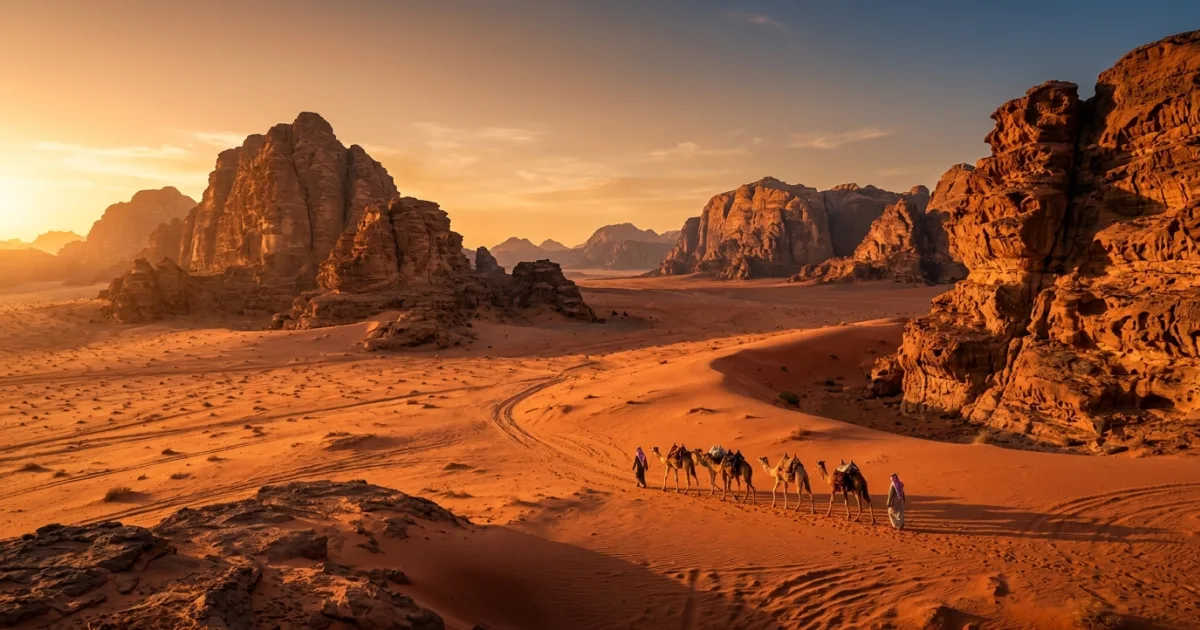
Wadi Rum Protected Area covers 74,000 hectares of desert terrain in Southern Jordan, adjacent to the Saudi Arabian border. Famous worldwide for its dramatic topography of soaring sandstone inselbergs rising out of sheer sand valleys, the region has served as the filming backdrop for legendary cinema including Lawrence of Arabia, The Martian, and Dune. The landscape is not simply geological; over 25,000 petroglyphs, inscriptions, and archaeological remains document uninterrupted human habitation dating back to the Paleolithic era.
Today, the reserve is managed under a sustainable conservation framework that empowers the indigenous Bedouin tribes. Visitors arrive at the modern Visitor Centre before transferring into open-top four-wheel-drive pick-up trucks driven by local guides who navigate iconic landmarks including Lawrence's Spring, the red sand dunes of Um Ishrin, and the narrow Khazali Siq. Nights spent out in the silence of the desert offer unmatched views of the Milky Way, accompanied by legendary Bedouin hospitality around an open fire.
Reasons to Visit
- Witness monumental sandstone inselbergs and towering natural rock arches sculpted by wind erosion over millions of years.
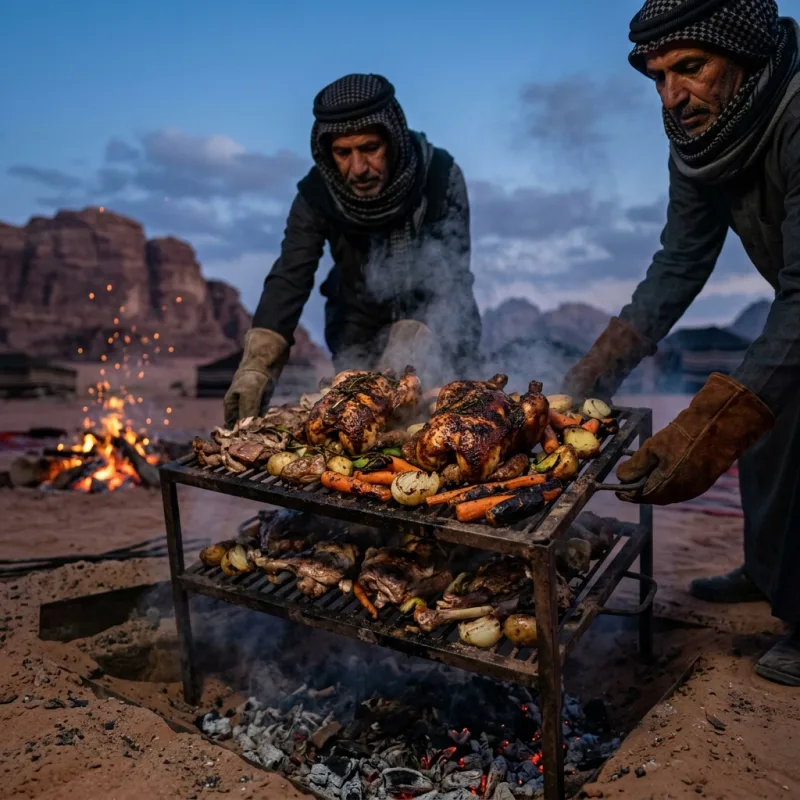
- Experience authentic Bedouin heritage, from underground zarb cooking to fireside storytelling and mint-infused tea.
- Gaze into pristine, light-pollution-free skies offering world-class astrotourism and naked-eye views of the Milky Way.
- Trek through narrow, canyon-like siqs containing thousands of years of ancient Thamudic and Kufic rock inscriptions.
- Walk the actual filming grounds used for blockbuster sci-fi classics like The Martian and Dune.
Things to Avoid
- Do not attempt to drive a standard passenger rental car or private 2WD into the protected sand tracks; vehicles quickly get hopelessly bogged down in soft silt.
- Do not wander off from your desert camp alone after dark without a guide and high-powered lighting, as identical red sand topography creates rapid spatial disorientation.
- Avoid booking random street touts outside Aqaba or Petra; always book tours via recognized local Bedouin operators with official Protected Area credentials.
- Do not touch, scratch, or write on ancient rock inscriptions and petroglyphs found throughout the canyons.
- Avoid wearing non-breathable synthetic footwear, which traps abrasive desert sand and causes severe blisters.
Local Transportation Tips
Transportation within the protected area is strictly restricted to authorized four-wheel-drive vehicles operated by licensed Bedouin guides, camel caravans, or guided hiking on foot. Standard private cars and non-permitted rental vehicles must be parked in the secured lot at the Wadi Rum Visitor Centre or in Rum Village. Transfers between the village and individual desert camps are coordinated directly by your booked camp host via 4x4 pickup trucks.
Travel Etiquette
- Accept offered tea with your right hand; Bedouin hospitality considers sharing sweet sage tea an essential welcoming ritual.
- Dress respectfully by avoiding overly revealing beachwear outside your private camp accommodation, keeping shoulders and knees covered in Rum Village.
- Ask permission before photographing local Bedouin residents, particularly women and elders.
- Remove your shoes when stepping onto carpets inside traditional goat-hair Bedouin communal tents (beit al-sha'ar).
- Carry all non-organic waste, plastic bottles, and cigarette butts back to your camp for proper disposal; never bury trash in sand dunes.
Recommended Age Group
Wadi Rum offers diverse desert experiences, but physical realities dictate variable suitability across different generations.
- Babies (0-2 years): Not Recommended. Extreme temperature shifts, severe dry heat, windborne sand particles, and bumpy rides in open-bed trucks make the remote desert environment hazardous for infants.
- Kids (3-12 years): Recommended. School-age children thrive on scrambling up rolling red dunes, riding camels, and experiencing open campfires, provided strict sun and hydration measures are enforced.
- Teens (13-19 years): Recommended. Highly engaging landscape for teenagers interested in rock scrambling, sandboarding, 4x4 safaris, night photography, and film-location scouting.
- Adults (20-64 years): Recommended. The destination caters exceptionally well to active adults seeking trekking, climbing, off-grid glamping, astrotourism, and cultural Bedouin exchanges.
- Seniors (65+ years): Neutral. Older travelers who book comfort-oriented luxury camps with private en-suite bathrooms and arrange gentle, enclosed 4WD sightseeing will enjoy the area, though rough vehicle rides and uneven terrain require careful trip planning.
Accessibility Level: Medium
- Physical accessibility across Wadi Rum is severely limited due to shifting loose sands, uneven sandstone bedrock, and rocky desert tracks.
- The modern Wadi Rum Visitor Centre features step-free pathways and accessible restrooms, but wilderness areas require specialized transfer equipment.
- Several luxury glamping camps offer flat wooden boardwalks connecting dining pavilions to accessible ground-level dome suites with roll-in showers.
- Standard open-bed 4x4 safari trucks require climbing up metal tailgates and steps, requiring personal mobility or physical assistance from guides.
Did You Know?
Wadi Rum's striking red color is caused by iron oxide coating the quartz grains of sandstone, creating landscapes so geologically analogous to Mars that NASA scientists frequently study its terrain to simulate robotic rover exploration and astronaut surface operations.
Cool Statistics
- 720 square kilometers: Total surface area of the Wadi Rum Protected Area.
- 1,734 meters: Peak elevation of Jebel Um Adaami, the highest mountain summit in Jordan located near the Saudi border.
- 25,000+: Ancient petroglyphs and inscriptions cataloged across the rock faces of the reserve.
- Zero: Number of permanent commercial utility power lines inside the central protected wilderness zone.






Buy a compatible power adapter for your trip