Disclosure: This site contains affiliate links. We may earn a commission if you make a purchase, at no extra cost to you.

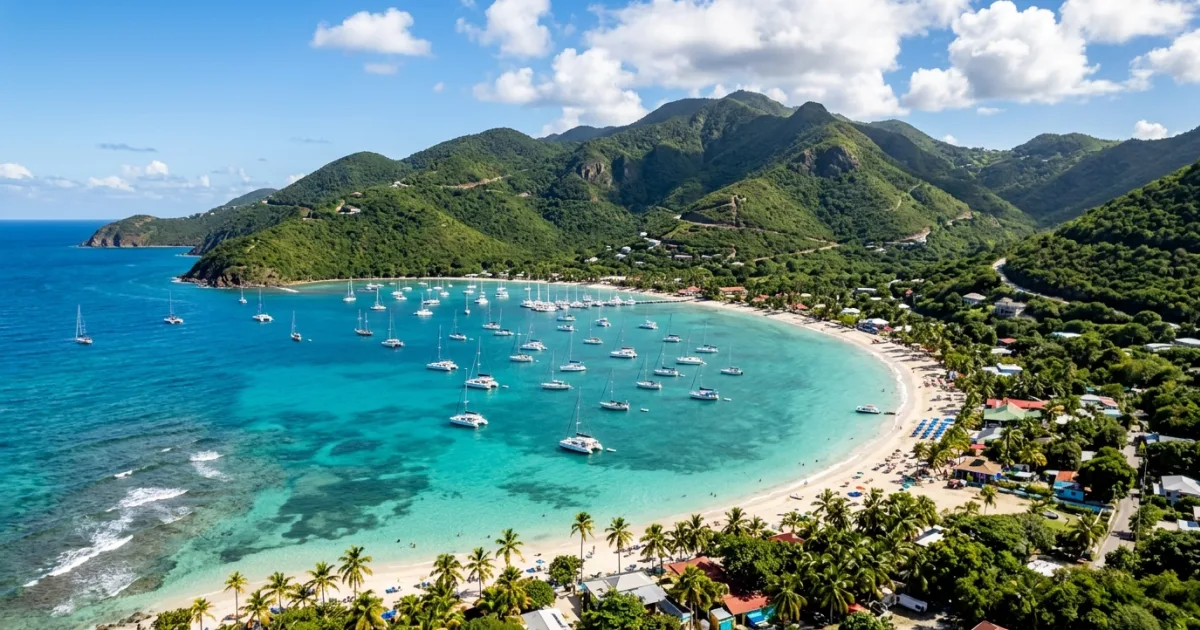
Aerial panoramic view of Cane Garden Bay and tropical mountains in Tortola, British Virgin Islands

Tortola Overview & Key Highlights

Tortola is the largest and most populated island of the British Virgin Islands, characterized by dramatic volcanic topography that cascades directly into the deep azure waters of Sir Francis Drake Channel. Road Town, the territory's capital, bustles with colorful colonial architecture, harborfront bistros, and international yachting companies that serve as the launchpad for seafaring journeys across the surrounding archipelago. Beyond the port hub, the island unfolds into peaceful, palm-shaded shores such as Cane Garden Bay and Smuggler's Cove, where calm surf and lively beach bars set a quintessential West Indian pace. Outdoor exploration dominates any Tortola itinerary, from traversing the shaded mahogany and giant fern trails of Mount Sage National Park to surfing northern breaks at Apple Bay. Maritime adventures anchor daily life here, with effortless day charters departing toward the dramatic granite boulders of Virgin Gorda or the secluded anchorages of Jost Van Dyke. Whether touring historic rum distilleries like Callwood Rum or relaxing on powdery white sand, travelers discover a balanced mix of luxury, colonial heritage, and untamed tropical nature.

Tortola Travel Guide: Logistics & In-Depth Tips

Tortola is the vibrant commercial and cultural capital of the British Virgin Islands, spanning roughly 21 square miles of steep emerald hills surrounded by sheltered coves. Formed by ancient volcanic activity, the island rises sharply to its apex at Mount Sage, reaching 1,716 feet above sea level. This unique topography rewards adventurous visitors with sweeping views across Sir Francis Drake Channel toward St. John, Norman Island, and Peter Island.

For centuries, the island's strategic bays served as clandestine hideouts for historic privateers and buccaneers like Blackbeard. Today, that nautical legacy lives on in modern marinas like Nanny Cay and Village Cay, where hundreds of sailing catamarans and mega-yachts dock year-round. Beyond maritime tourism, Tortola maintains a warm community spirit, vibrant pastel-hued villages, historic sugar works, and pristine shores that make it both a dynamic jumping-off point and a rewarding standalone destination.

Reasons to Visit

  • World-Class Sailing: Uncontested status as the sailing capital of the Caribbean, offering unmatched bareboat and crewed yacht charters with calm island-hopping conditions.
  • Picturesque Beaches: Relax on serene sands at Smuggler's Cove or savor lively reggae beats and beachside dining at Cane Garden Bay.
  • Mount Sage National Park: Trek shaded trails through high-elevation semi-rainforest filled with giant philodendrons and rare tropical birdlife.
  • Living History: Visit the Callwood Rum Distillery in Cane Garden Bay, operating in a centuries-old stone building with vintage copper stills.
  • Island Hopping Proximity: Direct ferry connections and rapid day sails to Virgin Gorda's Baths, Jost Van Dyke's White Bay, and Norman Island's snorkeling caves.

Things to Avoid

  • Avoid walking around towns in swimwear alone; island etiquette requires shirts and shorts or modest cover-ups when away from the sand.
  • Do not drive without a four-wheel-drive or high-clearance vehicle on secondary roads, as mountain inclines are exceptionally steep with sharp switchbacks.
  • Avoid touching or standing on living coral reefs while snorkeling at bays like Brewer's or Smuggler's Cove.
  • Do not forget to confirm taxi fares before entering the vehicle, as meters are not used and fares are standardized by zone and passenger count.
  • Avoid planning your trip without cash reserves, as card readers occasionally experience power or internet outages during tropical storms.

Local Transportation Tips

Navigating Tortola requires motorized transit due to its rugged mountainous geography. Rental cars—predominantly 4WD SUVs—are the most flexible way to explore remote northern beaches and ridge lookouts; remember to keep left when driving. For short trips, open-air shared safari trucks operate frequent hops between Road Town and Cane Garden Bay. Traditional licensed taxis are abundant at ferry terminals and the cruise pier, operating on regulated zone rates. Beef Island, where the primary international airport (EIS) is located, connects seamlessly to Tortola's mainland via the Queen Elizabeth II Bridge.

Travel Etiquette

  • Always greet people warmly with 'Good morning' or 'Good afternoon' before asking a question or requesting service; entering transactions without a greeting is considered rude.
  • Wear appropriate clothing in shops, banks, and Road Town streets; beachwear is strictly reserved for the beach.
  • Ask for permission before taking photographs of local residents, market vendors, or private residential yards.
  • Tipping between 15% and 20% is customary in restaurants and for boat crews, provided service charges have not already been factored into the final bill.

Recommended Age Group

Tortola offers a diverse mix of calm beaches, maritime excursions, and cultural spots suitable for a broad spectrum of travelers, though steep terrain demands careful planning for very young children.

  • Babies (0-2 years): Neutral. Tropical heat, steep terrain, and boat transitions can be taxing, although tranquil bays like Cane Garden Bay offer calm, shallow waters.
  • Kids (3-12 years): Recommended. Children thrive on catamaran snorkeling trips, searching for hermit crabs, and swimming in placid coastal coves.
  • Teens (13-19 years): Recommended. Perfect for surfing at Apple Bay, stand-up paddleboarding, sea kayaking, and exploring historical pirate lore.
  • Adults (20-64 years): Recommended. An absolute paradise for sailing, scuba diving, beach bars, secluded luxury villas, and tropical hiking.
  • Seniors (65+ years): Recommended. Excellent for scenic coastal drives, private catamaran day sails, harborfront dining, and relaxing resort retreats.

Accessibility Level: Medium

  • Public transit on Tortola consists of high-step safari trucks and standard minivans with limited wheelchair accessibility.
  • Road Town's waterfront and marina boardwalks offer level, paved pathways, but residential and hillside roads are steep and frequently lack sidewalks.
  • Most beach access points involve unpaved sand or rocky trails, though Cane Garden Bay provides flat paved access close to restaurants and loungers.
  • Modern catamaran charters frequently feature wide swim platforms, but boarding tenders or dinghies requires physical coordination.

Did You Know?

Tortola was originally named 'Santa Ana' by Christopher Columbus in 1493, but Dutch settlers later dubbed it 'Ter Tholen' after an island in the Netherlands. Over time under British administration, the moniker transformed into Tortola, which also resembles the Spanish word for 'turtledove'.

Cool Statistics

  • Mount Sage is the highest point in both the British and U.S. Virgin Islands at 1,716 feet (523 meters).
  • Tortola measures approximately 12 miles (19 km) long and 3 miles (5 km) wide, covering 21.5 square miles.
  • Sir Francis Drake Channel, flanking Tortola's southern shore, is widely ranked among the world's finest sheltered cruising grounds.
  • The Callwood Rum Distillery on Tortola has produced rum almost continuously for over 400 years.

Address:

Tortola, British Virgin Islands

Find Nearby Accommodations

Basic Info

address icon

COUNTRY & Region

British Virgin Islands,
Caribbean

ACCESSIBILITY LEVEL​

Medium
Currency icon

LOCAL CURRENCY​

United States Dollar (USD)
Price level icon
High
Safety Level icon

SAFETY LEVEL

Duration icon

Recommended Duration

• 1-7 days
• More than a week

Electricity

electricity icon

Electricity

110-120V, 
60Hz
Plug Socket icon

Plug Type

• Type A (Flat blade)
• Type B (Flat blade with grounding pin)
Plug types
Click To View Plug Types
Tortola is part of our
Solo Female Friendly collection

Activities To Do In Tortola

Best Time To Visit Tortola

The ideal period to visit Tortola is between December and April, when clear skies, pleasant trade winds, and low rainfall provide optimal sailing and beach weather.

  • Peak Season (December to April): Balmy temperatures averaging 26°C to 29°C with steady sailing breezes, making this the prime window for regattas, charters, and beach life.
  • Shoulder Season (May to June): Quieter anchorages, warm seas, and slightly reduced lodging rates just ahead of the late-summer storm season.
  • Low/Storm Season (July to November): Warmest waters and the highest chance of tropical showers or hurricanes; many sailing charter operations and boutique hotels pause operations in September and October.

Average Temperatures Per Month

Remember to check the weather forecast a few days before the trip and before heading to the airport.

Safety Level icon

Safety Level

Tortola ranks among the safest islands in the Caribbean with negligible violent crime against visitors. Exercise standard situational awareness in Road Town after dark, lock rental cars, and ensure dinghies and outboard motors are padlocked securely to marina docks overnight. When swimming or snorkeling, monitor ocean swells and stay aware of channel boat traffic.

The rating is based on multi-year peace, crime, and security indices. Before you go, always verify current conditions through official government travel advisories.

Emergency Numbers

Police: 999 or 911
Ambulance: 999 or 911

No internet needed • Includes local translations • Free for TravelingWiz readers

Spoken Languages

English is the official language. Virgin Islands Creole English is widely spoken among locals in casual settings.

Learn The Language

  • Good morning – Standard greeting, essential for respectful local interactions.
  • Good afternoon – Standard polite afternoon greeting.
  • Good night – Used both as an evening greeting upon arrival and when departing.
  • How you doin’? – Common friendly check-in among locals.
  • Liming – Hanging out, relaxing, or socializing casually.
  • Aright – Understood, acknowledged, or doing well.
  • Mash up – Broken or severely damaged.
  • Tings – Things or items.
Travel Booking Partner - TravelingWiz

Trip Cost & Budgeting for Tortola, 2026

Everything you need to know about money while traveling
Is Tortola expensive for tourists in 2026? Yes, as a premium island destination with mostly imported goods, Tortola sits on the higher end of Caribbean travel costs. Expect to pay around $6 for a cappuccino, $5 for a domestic beer, and $35 for a mid-range restaurant main dish. Based on our Human Verified prices, budgeting for daily accommodation, food, and local transport adds up quickly. Use the data table below to calculate your specific daily budget based on your travel style.
Currency icon

LOCAL CURRENCY​:

United States Dollar (USD)
Price level icon
High
Major credit cards are widely accepted at resorts and restaurants, but cash is essential for taxis and beach bars.

Per person, per day – pocket cash for small purchases.

Local: 35
United States Dollar (USD)
≈ 35 USD

Full daily spend estimation (accommodation, food, transportation, attractions).

Travel Style
United States Dollar (USD)
≈ USD ($)
Budget
195
195
Mid-range
350
350
Comfort
770
770

The Prices, Daily costs, and calculator results are estimates for planning purposes only. Actual costs may vary based on season, booking timing, personal spending habits, and currency fluctuations. TravelingWiz cannot be held responsible for discrepancies between these estimates and your final trip expenses.

  • • Eat at local cook shops and roadside shacks in Road Town or East End for affordable roti, stew chicken, and conch fritters.
  • • Confirm taxi fares in advance or share safari buses, as island cabs operate on fixed, unmetered zone rates.
  • • Take public ferries for island hopping to Virgin Gorda or Jost Van Dyke rather than hiring private boat charters.
  • • Travel during the May to June shoulder season to secure lower hotel rates while enjoying warm, dry weather.

Pre-Order Tickets

Avoid disappointment when tickets sell out — and skip the long lines by booking online in advance. You’ll often save up to 20% too.
Save up to 20%

Travel Discounts & Coupons

Save on hotels, attractions, transport, and gear — find verified discounts for smarter travel spending.
Verified Coupons

What To Pack

  • Reef-safe sunscreen and UV-protective rash guards to protect fragile marine ecosystems while snorkeling.
  • Sturdy water shoes or strap sandals for rocky beach entries and slippery boat docks.
  • Lightweight, breathable hiking shoes for trekking the tropical trails of Mount Sage National Park.
  • Waterproof dry bag to safeguard camera gear, phones, and documents during dinghy rides and catamaran excursions.
  • Smart-casual resort wear and light evening cover-ups for dining in open-air marinas and upscale waterfront restaurants.
  • Motion sickness medication or acupressure bands for boat trips across open channels.
  • Insect repellent containing DEET or picaridin for lush forest hikes and tropical evenings.
We couldn't find tips for Tortola.
If you got any, please share

Recommended Itineraries for Traveling to Tortola

We couldn't find itineraries for Tortola.
you can contact us for custom trip plan

Food & Drink Highlights

Local Food Overview

Tortola's culinary landscape blends West Indian Creole traditions with maritime bounty and international yachting tastes. Seafood reigns supreme, showcasing pan-fried red snapper, spiny Caribbean lobster, conch fritters, and garlic butter mahi-mahi caught fresh in local channels. Traditional island fare features 'fungi'—a comforting cornmeal and okra polenta dish—frequently served alongside boiled fish in rich, spiced tomato broth. West Indian curries and rotis, introduced via southern Caribbean migration, remain essential fast-casual lunch staples. For dessert, coconut tarts and guava turnovers offer sweet finales, regularly paired with locally distilled spiced rum or the territory's famous nutmeg-topped Painkiller cocktail.
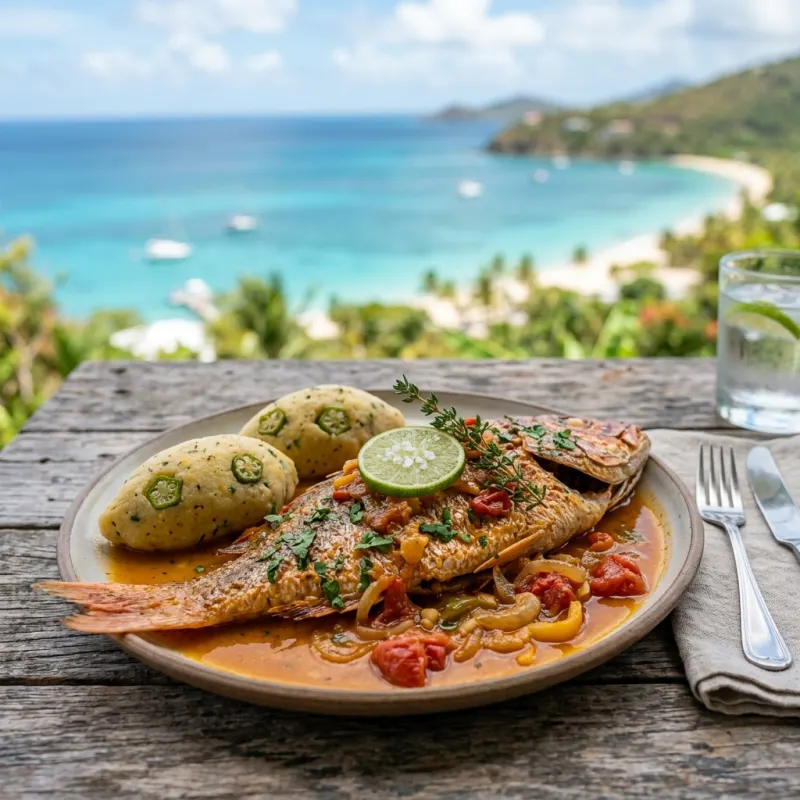
Traditional British Virgin Islands Fish and Fungi served on a waterfront table in Tortola

Must Try Dish

Fish and Fungi - The national dish of the British Virgin Islands, uniting tender pan-poached or fried whole red snapper served in a savory tomato, onion, and butter broth with seasoned cornmeal and okra fungi dumplings. This hearty heritage meal encapsulates island comfort and traditional maritime flavors.
Food Experiences Title Icon

Food
Experiences

Discover cooking classes, tastings and local food tours

No food experience found
Maya, the human travel expert at TravelingWiz, offering curated, non-AI expertise

Maya’s Final Checklist for Tortola

Logistics shouldn’t be the focus of your trip—the experience should. I’ve hand-vetted these essential partners to ensure your arrival, stay, and exploration are as smooth as an Athenian breeze.

Where to Stay

From boutique hotels to local apartments—compare thousands of options and find the perfect stay in the best neighborhood.

Air Travel

Getting there should be seamless. Compare the best routes and prices across top airlines to start your journey on the right note.

Local Guides

Connect with experts who know the destination best. Get personalized advice and insider tips to help you plan your perfect trip.

Travel Protection

The “Engineer’s” rule: always have a backup. Secure your trip with a plan that covers every “what if” and unexpected change.

Car Rentals

Explore at your own pace with total freedom. Compare reliable rental options and find the right vehicle for your adventure.

Visa Services

Don’t let paperwork slow you down. Get expert assistance with your application to ensure all your entry documents are in order.

FAQs

Tortola and the British Virgin Islands officially use the United States Dollar (USD) as their legal tender.
Yes, all international travelers, including US and UK citizens, require a valid passport with at least six months of remaining validity to enter the British Virgin Islands.
Traffic drives on the left-hand side of the road, though most rental vehicles on the island are left-hand drive American-spec cars.
Frequent public passenger ferries operate daily between Road Town or Beef Island and neighboring islands like Virgin Gorda and Jost Van Dyke, alongside private day charters and water taxis.
Road Town’s central waterfront is walkable, but the rest of Tortola is extremely mountainous with steep, winding roads, making rental 4WD vehicles or safari taxis necessary for exploring.

Your Insights Matter

TravelingWiz grows through the stories of our community. If you’ve recently explored ,Tortola share your tips and stories to help us perfect our guides for the next traveler.

Related Articles

Check out our related articles and blog posts to learn even more about the destination.

No related articles found

Don’t Travel Alone

Share with your friends and family

Where should we send your offline card?

We hate spam just as much as you do

newsletter_consent *