St John encompasses twenty square miles of rugged volcanic topography, pristine white-sand crescent beaches, and thriving coral reefs in the northeastern Caribbean Sea. Unlike its neighboring island of St. Thomas, which buzzes with mega cruise ship docks and duty-free shopping centers, St John retains an unhurried, preserved atmosphere rooted in conservation and sustainable development. Over half of the island remains untouched wilderness under the stewardship of the Virgin Islands National Park.
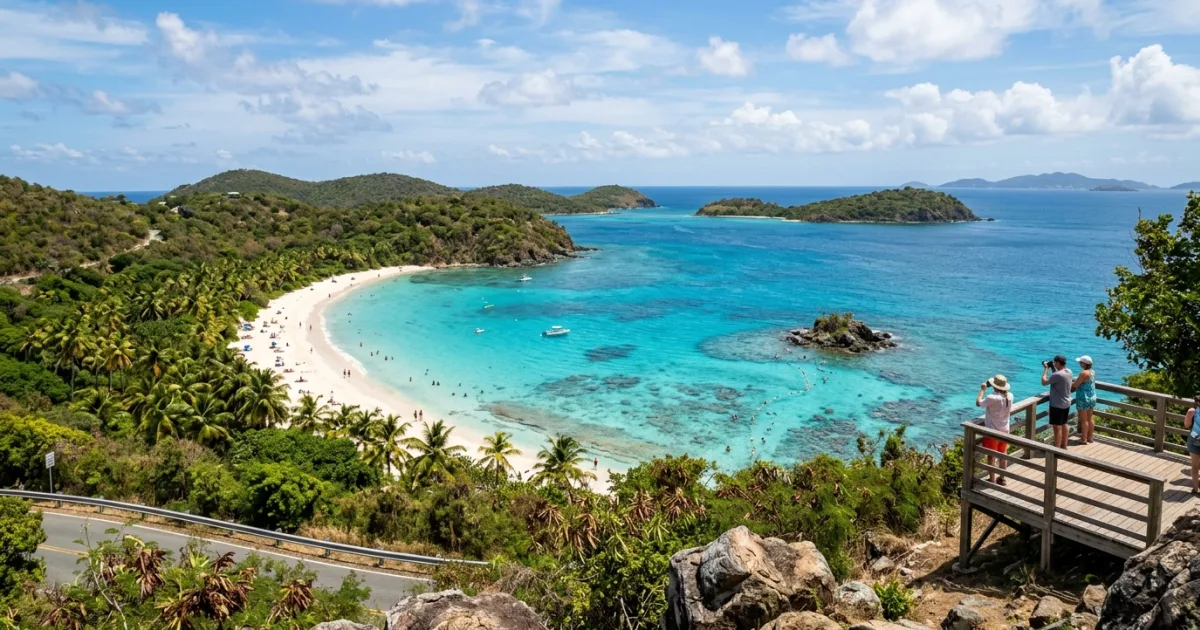
The island divides into two primary settlements: Cruz Bay on the western coast and Coral Bay on the southeastern shore. Cruz Bay functions as the maritime gateway, boasting charming pastel cottages, breezy outdoor dining patios, craft cocktail bars, and car rental agencies. Coral Bay presents a bohemian, tranquil counterpoint characterized by anchored sailboats, roaming donkeys, and open-air harborside grills. In between, the preserved North Shore Road winds past globally celebrated coastal gems like Trunk Bay, Cinnamon Bay, and Francis Bay, framed by emerald hillsides and turquoise water.
Reasons to Visit
- Virgin Islands National Park: Over 7,000 protected acres on land and 5,000 acres underwater offer world-class hiking, historic sugar mill ruins, and protected bays without hotel developments.
- Unsurpassed Snorkeling: Crystal-clear waters provide accessible encounters with green sea turtles, stingrays, nurse sharks, and vibrant coral heads straight from the shore.
- Iconic Beaches: Trunk Bay features a legendary self-guided underwater snorkeling trail, while Cinnamon Bay and Maho Bay provide calm turquoise swimming conditions.
- Hiking Trails: Over twenty scenic trails weave across the island, including the historic Reef Bay Trail, which features ancient Taino petroglyphs and waterfall pools.
- Laid-Back Island Ambiance: Strict building codes prevent massive all-inclusive mega-resorts, preserving authentic Caribbean tranquility and intimate boutique hillside villas.
Things to Avoid
- Avoid wearing standard chemical sunscreens containing oxybenzone, octinoxate, or octocrylene; they destroy coral reefs and violate Virgin Islands environmental law.
- Avoid touching, chasing, or standing on coral reefs and feeding wild marine animals like sea turtles or rays.
- Avoid leaving valuables visible in your rental vehicle, especially at remote trailheads like Salt Pond or Reef Bay.
- Avoid driving without paying close attention to road sides; traffic moves on the left and wandering goats and donkeys frequently cross blind corners.
- Avoid forgetting cash when heading out for the day, as many beach taxi shuttles and remote concession stands do not accept cards.
Local Transportation Tips
Open-air safari buses operate as shared taxis, departing consistently from the Cruz Bay ferry dock and transporting travelers along North Shore Road to Trunk Bay, Cinnamon Bay, and Maho Bay for set cash fares ranging from $7 to $12 USD per person. However, for complete independence, renting a 4-wheel drive Jeep is strongly advised. Roads on St John are narrow, steep, and winding, requiring careful navigation on the left side of the road. Because vehicle rental fleets on St John are limited, book your 4WD several months in advance or arrange a rental on St. Thomas and cross on the car barge at Red Hook.
Travel Etiquette
- Always begin conversations with a greeting: Saying 'Good morning', 'Good afternoon', or 'Good night' before asking a question or requesting service is standard island courtesy; diving straight into a business question is considered rude.
- Cover up away from the sand: Swimwear and bare chests are strictly reserved for the beach; throw on a shirt or cover-up when entering shops, grocery stores, and restaurants in Cruz Bay.
- Respect wildlife boundaries: Do not feed or attempt to pet the island's wild donkeys, deer, or sea turtles.
- Drive courteously: Give a gentle tap of the horn to thank drivers who yield on narrow mountain hairpin curves.
Recommended Age Group
St John is a tranquil paradise ideal for adventurous nature lovers, beach enthusiasts, and multi-generational groups who enjoy outdoor discovery.
- Babies (0-2 years): Neutral. While calm shallow bays like Maho are delightful for splashing, steep mountainous terrain, limited stroller accessibility, and rugged vehicle transit require careful parental planning.
- Kids (3-12 years): Recommended. Calm turquoise bays, abundant opportunities to snorkel with wild sea turtles in shallow water, and interactive Junior Ranger programs make it an unforgettable outdoor classroom.
- Teens (13-19 years): Recommended. Teenagers will love dynamic water activities including stand-up paddleboarding, kayaking, scuba diving, and discovering historic coastal ruins.
- Adults (20-64 years): Recommended. Ideal for romantic getaways, hiking expeditions, beach bar liming, and serene private villa stays surrounded by wild tropical scenery.
- Seniors (65+ years): Recommended. Gentle drives along national park overlooks, scenic catamaran cruises, relaxed dining in Cruz Bay, and easy water access at flat bays suit mature travelers well, though steep villa staircases require consideration.
Accessibility Level: Medium
- Trunk Bay features accessible boardwalks, beach wheelchairs available upon request from the National Park Service, and paved pathways leading to dining facilities.
- Cruz Bay ferry terminal provides level ramp access connecting passenger ferries to the main arrival pavilion.
- Public open-air safari taxis generally lack wheelchair lift mechanisms, making pre-booked private accessible transport essential for wheelchair users.
- Due to the dramatic mountainous topography, many private hillside rental villas feature steep exterior stairs and tiered decks that lack zero-entry access.
- Paved pathways exist at the Annaberg Historic Sugar Plantation, although several secondary ruin spurs feature uneven, rocky, and unpaved ground.
Did You Know?
In 1956, philanthropist Laurance Rockefeller purchased over 5,000 acres of land on St John and donated it directly to the United States federal government, creating the Virgin Islands National Park to protect the island's fragile ecosystems from commercial mass-tourism development forever.
Cool Statistics
- Over 60% of St John's land area is preserved permanently as protected National Park land.
- The island has zero traffic lights and no commercial airport runway.
- More than 800 species of subtropical plants and over 140 species of birds inhabit the island's diverse ecological zones.
- Trunk Bay's protected marine trail was one of the world's very first underwater marked snorkeling parks.






Buy a compatible power adapter for your trip