Torreón is an authentic, dynamic northern Mexican city situated in the Chihuahuan desert basin of Coahuila. Originally settled around a fortified watchtower (torreón) built along the Nazas River to monitor river crossings, the town blossomed exponentially in the late 1880s upon the arrival of the Mexican Central Railway. The strategic connection fostered a flourishing cotton trade, earning Torreón the title 'La Perla de la Laguna'.
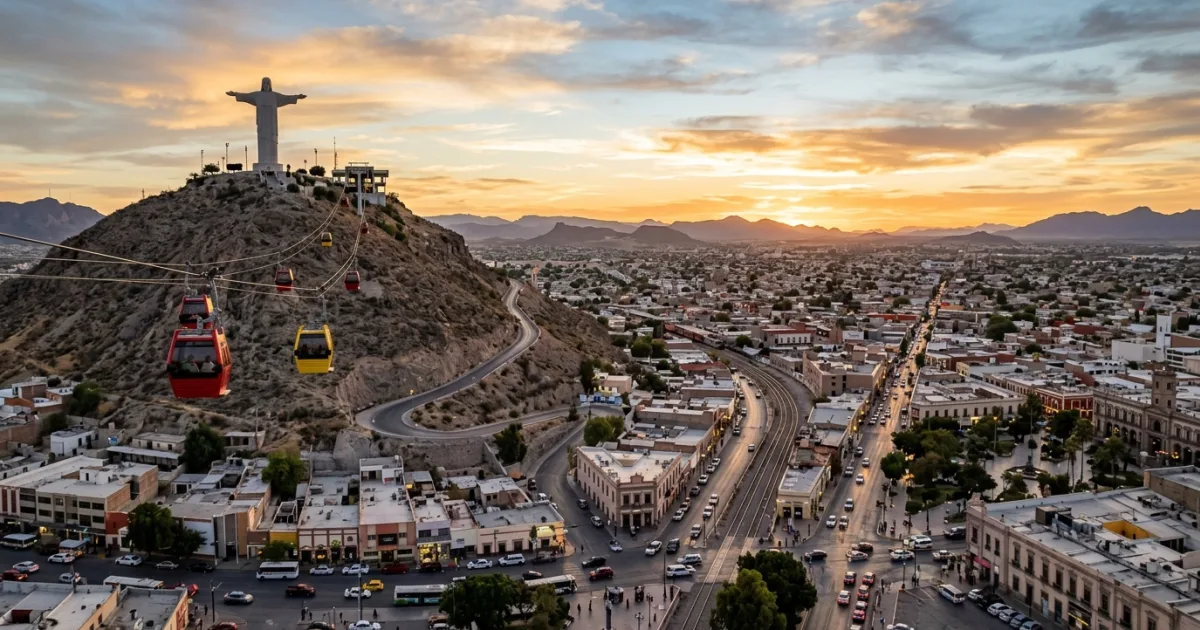
Today, Torreón combines an industrial powerhouse reputation with a surprisingly rich cultural undercurrent. Visitors can stroll along the pedestrianized Paseo Morelos, admire Italian marble collections in the neoclassical Museo Arocena, ride the modern urban cable car to the landmark Cristo de las Noas, and explore the unique underground passageways of the Canal de la Perla. Its proud sporting culture centers around the beloved Club Santos Laguna football team, making it a compelling destination for travelers seeking genuine northern Mexican hospitality.
Reasons to Visit
- Cristo de las Noas & Teleférico: Experience sweeping valley panoramas after riding the modern aerial tramway up to the monumental 21-meter Christ statue and serene sanctuary.
- Museo Arocena: Explore one of northern Mexico's premier art museums, displaying Spanish viceregal paintings, European masters, and pre-Columbian artifacts inside an ornate former bank.
- Canal de la Perla: Walk through lit underground brick vaults dating back to the late nineteenth century that reveal the historic engineering feats of the desert basin.
- Lagunero Culinary Heritage: Savor regional specialties, from legendary stuffed corn gorditas to mesquite-smoked carne asada and locally produced artisanal dairy cheeses.
- Vibrant Football & Sports Culture: Attend a home match of Club Santos Laguna at the world-class Territorio Santos Modelo complex for an electric local sporting spectacle.
Things to Avoid
- Avoid walking around outdoors unprotected between 1:00 PM and 4:00 PM during summer months, when desert heat waves can easily exceed 40°C (104°F).
- Do not hail unmetered street cabs randomly at night; utilize mobile dispatch apps like Uber or DiDi for verified routing.
- Avoid planning an itinerary without checking museum schedules, as many municipal cultural spaces close on Mondays.
- Do not travel down deserted rural backroads outside the metropolitan area after nightfall.
Local Transportation Tips
Navigating Torreón is straightforward thanks to its grid-like urban layout in the central zone. The Centro Histórico and Paseo Morelos corridor are pedestrian-friendly, lined with shade trees and benches. For cross-town journeys between downtown, modern shopping districts, and the Territorio Santos Modelo stadium, app-based rideshares such as Uber and DiDi provide the safest, most transparent, and air-conditioned transit. Local buses run frequently along primary avenues like Boulevard Independencia and Boulevard Revolución, but routes can be confusing for first-time visitors.
Travel Etiquette
- Polite Greetings: Always begin interactions with service staff or shopkeepers with a friendly 'Buenos días' (good morning) or 'Buenas tardes' (good afternoon).
- Tipping Practices: Tip 10% to 15% at sit-down restaurants and cafes; leave small change for street vendors and grocery baggers.
- Modesty at Sacred Sites: Maintain respectful volume and dress conservatively when visiting the chapel and sanctuary grounds at Cristo de las Noas.
- Pace of Life: Meal times occur slightly later in northern Mexico; lunch is commonly eaten between 2:00 PM and 4:00 PM, while dinner starts after 8:00 PM.
Recommended Age Group
Torreón offers an engaging blend of cultural, educational, and culinary sights suitable for varied generations, though desert weather conditions require smart pacing.
- Babies (0-2 years): Neutral. Paved plazas and modern shopping malls accommodate strollers well, but intense desert daytime temperatures require careful sun and hydration management.
- Kids (3-12 years): Recommended. Children will love riding the cable car up the mountain, exploring the underground tunnel passages at Canal de la Perla, and playing in the shaded greenery of Bosque Venustiano Carranza.
- Teens (13-19 years): Recommended. Great for energetic teenagers interested in modern Mexican sports culture, football matches at Territorio Santos Modelo, and casual urban dining along Paseo Morelos.
- Adults (20-64 years): Recommended. Perfect for travelers seeking authentic cultural museums, craft beer spots, historic architecture, and deep regional culinary explorations.
- Seniors (65+ years): Recommended. The flat terrain of the central historic district and accessible cable car access to the Cristo de las Noas sanctuary make sightseeing comfortable and relaxed.
Accessibility Level: Medium
- The Teleférico de Torreón offers elevator access at both boarding stations, allowing step-free access for wheelchair users and strollers.
- The Museo Arocena features modern elevators, wide gallery doorways, and accessible restroom facilities throughout its premises.
- Canal de la Perla involves descending historic stairs into the underground vaults, presenting mobility challenges for travelers with physical disabilities.
- Sidewalk quality in the Centro Histórico varies, though the renovated Paseo Morelos corridor boasts wide, level walkways with curb ramps.
Did You Know?
Torreón is one of Mexico's youngest major cities, officially chartered as a city in only 1907. Its rapid transformation from an empty desert railway switch point into a wealthy agricultural and industrial boomtown was among the fastest demographic expansions in modern Mexican history.
Cool Statistics
- Elevation: 1,120 meters (3,675 feet) above sea level.
- Monument Height: Cristo de las Noas measures 21.8 meters (71.5 feet) tall, weighing roughly 580 metric tons.
- Underground Extent: The Canal de la Perla spans over 570 meters of restored, walkable subterranean tunnels underneath downtown Torreón.







Buy a compatible power adapter for your trip