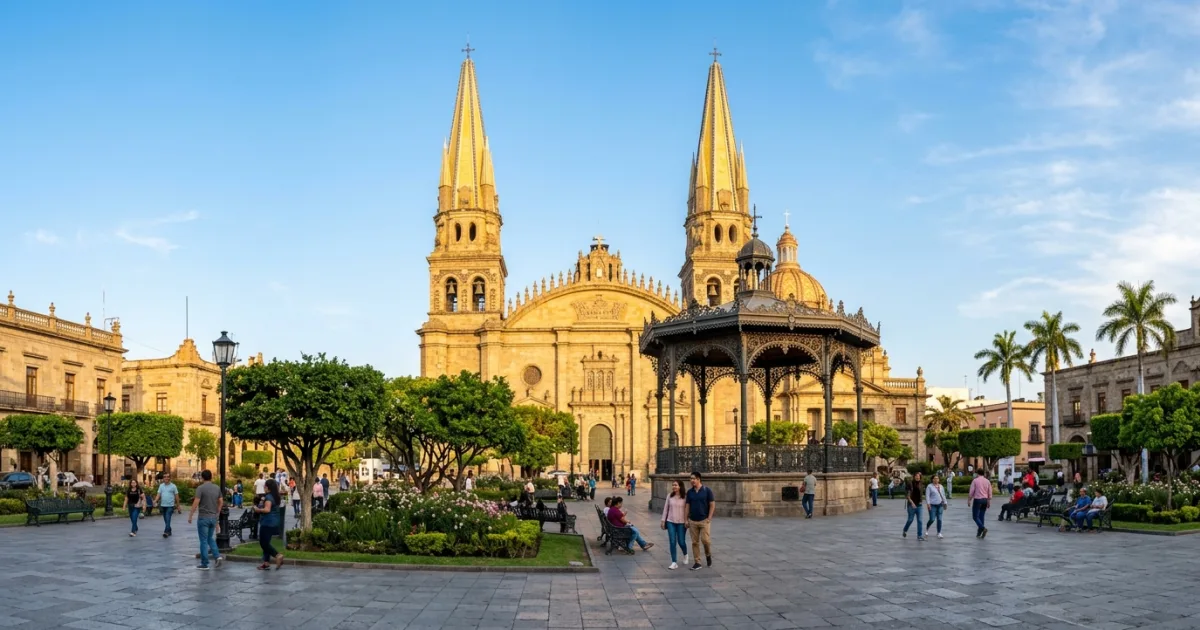
Centro Historico Guadalajara constitutes the historic soul of Jalisco, displaying four interconnected public squares arranged around the dramatic Metropolitan Cathedral to form the shape of a grand Latin cross. Established in the mid-16th century, the district houses iconic institutional landmarks including the Government Palace, adorned with monumental murals by José Clemente Orozco depicting Mexican revolutionary leader Miguel Hidalgo.
Extending eastward, the wide pedestrian esplanade of Plaza Tapatía connects the neoclassical grandeur of Teatro Degollado with the monumental Hospicio Cabañas complex, celebrated globally for the awe-inspiring fresco 'The Man of Fire'. Interspersed between solemn ecclesiastical structures and shaded civic arcades, lively plazas feature traditional serenades by mariachi musicians, making the area an indispensable center of regional culture and civic pride.
Reasons to Visit
- Marvel at the monumental murals of José Clemente Orozco inside Hospicio Cabañas, a UNESCO World Heritage site.
- Admire the iconic twin neo-Gothic spires of Guadalajara Cathedral dominating the city skyline.
- Explore Mercado San Juan de Dios, Latin America's largest enclosed traditional indoor market.
- Catch an operatic or orchestral performance inside the opulent neoclassical Teatro Degollado.
- Immerse yourself in authentic mariachi culture in its historic birthplace at Plaza de los Mariachis.
Things to Avoid
- Avoid walking through poorly lit streets east of Calzada Independencia or north of the cathedral late at night.
- Do not accept unsolicited services from unofficial curbside tour guides or street ticket touts.
- Avoid eating unpeeled raw produce or drinking unbottled beverages from unregulated street carts if you have a sensitive stomach.
- Do not flash large amounts of cash or expensive cameras in crowded corridors inside Mercado San Juan de Dios.
Local Transportation Tips
Centro Historico Guadalajara is well connected by public transit. Underground Metro Line 3 stops directly beneath the city center at Guadalajara Centro station, providing modern, air-conditioned access to Zapopan and Tlaquepaque. In addition, the Mi Tren electric light rail (Line 1 and 2) links adjacent urban corridors. Paseo Alcalde and Plaza Tapatía provide broad, vehicle-free walking avenues, while authorized taxis and rideshare platforms like Uber and Didi operate reliably across the perimeter.
Travel Etiquette
- Dress respectfully with covered shoulders and knees when stepping inside active religious sites like Guadalajara Cathedral and Templo Expiatorio.
- Greet store owners and restaurant servers warmly with a polite 'Buenos días' or 'Buenas tardes' upon entering.
- Tipping 10% to 15% is standard practice in sit-down restaurants and cafés; round up fares for friendly taxi drivers.
- Always ask for permission before taking close-up portraits of street artisans, performers, or indigenous vendors.
Recommended Age Group
Centro Historico Guadalajara welcomes travelers of all generations, though historic walking distances favor those comfortable with urban pedestrian routes.
- Babies (0-2 years): Neutral. Cobblestone pavers and uneven curbs can make stroller navigation challenging, though wide esplanades like Paseo Alcalde are accessible.
- Kids (3-12 years): Recommended. Children will enjoy the lively street entertainment, carriage rides, interactive fountains, and vibrant sweets shops around Plaza Tapatía.
- Teens (13-19 years): Recommended. Great photographic street art, dynamic market exploration, and fascinating historical narratives captivate older youths.
- Adults (20-64 years): Recommended. Perfect demographic for walking tours, architectural appreciation, cantina hopping, and museum immersion.
- Seniors (65+ years): Recommended. Plentiful park benches, flat pedestrian promenades, and easy metro access make it manageable, provided comfortable walking shoes are worn.
Accessibility Level: Medium
- Paseo Alcalde and Plaza Tapatía provide flat, step-free pedestrian walking routes across the core of the district.
- Modern underground metro stations, including Guadalajara Centro on Line 3, feature functional elevators and tactile paving.
- Hospicio Cabañas features ramped access, wide courtyard thresholds, and flat gallery viewing for wheelchair users.
- Older historic churches and traditional market aisles can present narrow doorways and uneven stone thresholds.
Did You Know?
Underneath Centro Historico Guadalajara lies an intricate network of centuries-old subterranean tunnels and crypts, originally built in the colonial era to connect convents, churches, and civic fortresses during civil conflicts.
Cool Statistics
- Hospicio Cabañas contains 57 stunning fresco murals painted by José Clemente Orozco between 1936 and 1939.
- Mercado San Juan de Dios houses over 2,800 vendors across three multi-tiered levels spanning 40,000 square meters.
- Guadalajara Cathedral has stood through over seven major earthquakes, resulting in multiple reconstructions of its iconic spires.






Buy a compatible power adapter for your trip