Lanin National Park is a crown jewel of Argentina's protected areas, offering a raw and unfiltered Patagonian experience. Unlike the heavily trafficked trails of Los Glaciares to the south, Lanin provides a sense of profound isolation and tranquility. The park is geographically diverse, transitioning from the arid Patagonian steppe in the east to dense, humid Valdivian temperate rainforests in the west near the Chilean border. This ecological gradient supports a wide array of wildlife, including the elusive puma, the pudu (the world's smallest deer), and the vibrant Magellanic woodpecker.
The cultural landscape of the park is equally compelling. The land is co-managed with local Mapuche communities, who have inhabited the region for centuries. Visitors have the unique opportunity to learn about Mapuche traditions, purchase authentic handicrafts, and even camp on community-managed lands near Lake Huechulafquen. Whether you are navigating the challenging scree slopes of the Lanin Volcano, fly-fishing in the Chimehuin River, or simply enjoying a mate (traditional herbal drink) by a glacial lake, Lanin National Park offers an unforgettable connection to nature.
Reasons to Visit
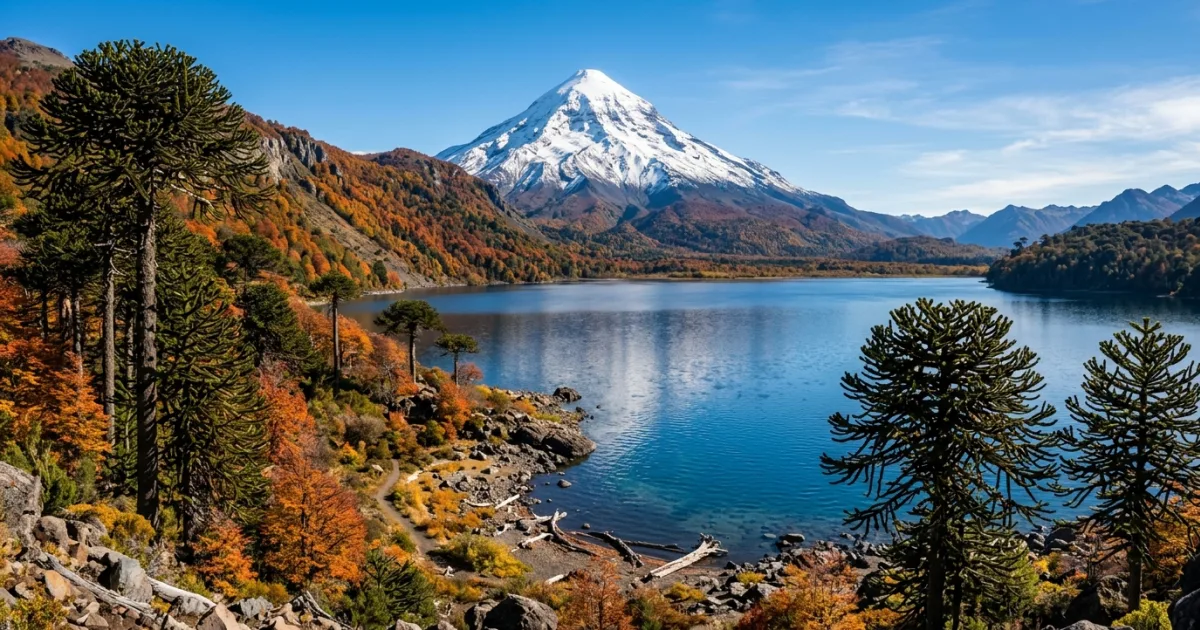
- The Lanin Volcano: A striking, symmetrical stratovolcano that dominates the skyline and offers a world-class, non-technical mountaineering challenge.
- Ancient Araucaria Forests: Walk among the prehistoric 'monkey puzzle' trees, some of which are over a thousand years old, creating a landscape that feels out of time.
- Pristine Glacial Lakes: Explore over two dozen crystal-clear lakes, perfect for kayaking, boat tours, and relaxing on volcanic sand beaches.
- World-Class Fly Fishing: The rivers and lakes within the park, particularly the Chimehuin River, are globally renowned for exceptional trout fishing.
- Mapuche Culture: Engage with indigenous communities, learn about their worldview, and support local economies through community-based tourism.
Things to Avoid
- Underestimating the Weather: Patagonian weather can change in minutes. Never hike without extra warm layers and rain gear, even on a sunny day.
- Driving Fast on Ripio: The gravel roads (ripios) within the park can be treacherous. Drive slowly to avoid skidding, flat tires, or cracking your windshield with flying stones.
- Bringing Pets: Dogs and cats are strictly forbidden to protect the delicate local ecosystem and native wildlife.
- Lighting Unauthorized Fires: Forest fires are a massive threat. Only light fires in designated, concrete fire pits at organized campsites, and ensure they are completely extinguished.
- Hiking Unregistered: Always register at the ranger station before undertaking long or high-altitude treks for your own safety.
Local Transportation Tips
Accessing and navigating Lanin National Park requires some planning. The most convenient way to explore the vast area is by renting a car in San Martín de los Andes or Bariloche, preferably a high-clearance vehicle or SUV to handle the rough gravel roads (ripio). For those without a vehicle, local bus companies (like Albus) operate seasonal routes from San Martín and Junín de los Andes to major park entrances, such as Lake Huechulafquen and Lake Lolog. Hitchhiking is also a common and generally safe practice among backpackers in Patagonia during the summer months. Guided tour vans are available for day trips, offering a hassle-free way to see the highlights without worrying about navigation.
Travel Etiquette
- Respect the Rangers: Park rangers (guardaparques) are the ultimate authority. Follow their instructions regarding trail closures and safety protocols.
- Leave No Trace: Pack out all your trash, including biodegradable items like fruit peels, which take a long time to decompose in the cold climate.
- Cultural Sensitivity: When visiting Mapuche community areas, ask for permission before taking photographs of people or their homes.
- Trail Right of Way: Yield to hikers going uphill, and step aside to let faster trekkers pass.
- Quiet Hours: Respect quiet hours in campsites, usually from 10 PM to 8 AM, to allow everyone to enjoy the sounds of nature.
Recommended Age Group
Lanin National Park offers diverse experiences, but its rugged nature requires consideration when planning for different age groups.
- Babies (0-2 years): Not Recommended. The lack of medical facilities, rough gravel roads, and unpredictable weather make it challenging for infants.
- Kids (3-12 years): Recommended. Children will love the short, flat lakeside trails, boat tours on Lake Huechulafquen, and spotting local wildlife.
- Teens (13-19 years): Recommended. An excellent destination for adventurous teens interested in kayaking, mountain biking, and intermediate trekking.
- Adults (20-64 years): Recommended. Perfect for adults seeking active adventures, from multi-day backpacking trips to summiting the Lanin Volcano.
- Seniors (65+ years): Recommended. Seniors can enjoy scenic drives, accessible viewpoints, boat excursions, and relaxing at comfortable lodges in the gateway towns.
Accessibility Level: Medium
- Visitor Centers: The main visitor centers in San Martín de los Andes and Junín de los Andes have ramp access and accessible information desks.
- Trails: Most trails are rugged and not suitable for wheelchairs. However, some short boardwalks near major lakes (like the Quila Quina area) offer limited accessibility.
- Boat Tours: Some catamaran tours on Lake Lacar and Huechulafquen can accommodate passengers with limited mobility, but it is essential to confirm with the operator in advance.
- Restrooms: Accessible restrooms are available at the main park entrances and larger organized campsites, but are non-existent in remote areas.
- Terrain: Expect uneven ground, gravel paths, and steep inclines in most natural areas of the park.
Did You Know?
Did you know that the Araucaria (monkey puzzle) tree, which is heavily protected within Lanin National Park, is considered a living fossil? These trees have existed for over 200 million years, meaning they once shared the earth with dinosaurs. Their thick, fire-resistant bark and sharp, scale-like leaves evolved as defense mechanisms against ancient herbivores. The seeds of the Araucaria, known as piñones, are highly nutritious and have been a staple food source for the indigenous Mapuche people for thousands of years.
Cool Statistics
- Total Area: 412,000 hectares (1,590 square miles).
- Volcano Height: Lanin Volcano stands at 3,776 meters (12,388 feet) above sea level.
- Establishment Year: Created in 1937 to protect the Araucaria forests.
- Lakes: Contains over 24 major glacial lakes.
- Border: Shares a long western border with Villarrica National Park in Chile.






Buy a compatible power adapter for your trip