Itapúa Department sits along the southwestern arc of Paraguay, separated from Argentina by the rolling waters of the Paraná River. Known as the agricultural breadbasket of the country, the region features fertile crimson soil, vast fields of soybeans and yerba mate, and a distinctly layered cultural heritage. The arrival of European settlers in the late 19th and early 20th centuries established bustling farming cooperatives in the Colonias Unidas, which harmonize with ancient Guaraní customs.
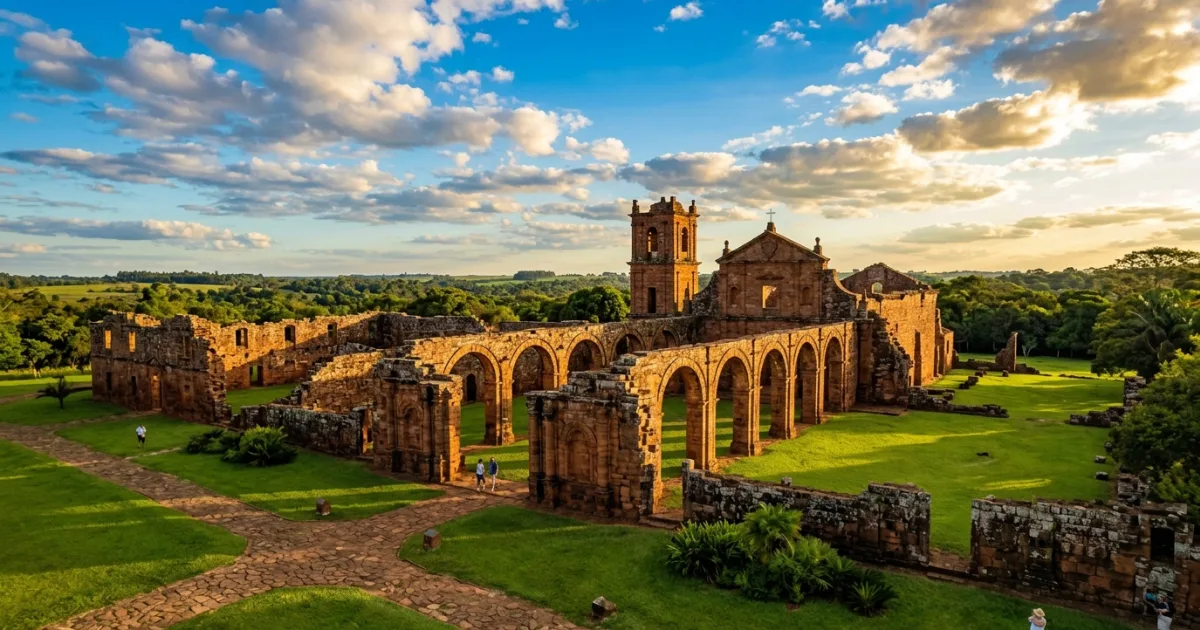
The department is anchored by Encarnación, known as the 'Pearl of the South,' celebrated for its modern riverside skyline, pedestrian promenade, and festive atmosphere. Heading inland along National Route PY06 reveals the historical core of the department: the magnificent 18th-century stone arcades of Trinidad, the monumental incomplete stone church of Jesús de Tavarangue, and the colonial observatory at San Cosme y Damián. Itapúa offers a captivating intersection of historical depth, tranquil agrarian landscapes, and welcoming community warmth.
Reasons to Visit
- Marvel at the UNESCO World Heritage Jesuit Missions of Trinidad and Jesús de Tavarangue, South America's most intact missionary ruins.
- Stroll along Encarnación's Costanera and enjoy golden-sand river beaches along the Paraná.
- Follow the Yerba Mate Route (Ka'a Rape) in Bella Vista to witness traditional harvesting and processing of national mate brands.
- Discover the European enclave of Colonias Unidas, sampling artisanal cheeses, beers, and pastries.
- Gaze at celestial objects through telescopes at the historic astronomical mission of San Cosme y Damián.
Things to Avoid
- Avoid walking across uncovered archaeological ruins during midday heat in the summer without sun protection and ample water.
- Do not exchange currency with unofficial street money changers near border crossings; use licensed casas de cambio.
- Avoid touching or climbing fragile stone sculptures and ancient walls at the Jesuit complexes.
- Do not drink hot mate on sweltering days if you struggle with heat; embrace refreshing, iced tereré instead.
Local Transportation Tips
Encarnación features an orderly bus terminal with frequent connections to Asunción, Ciudad del Este, and regional towns across Itapúa. Local buses (colectivos) run smoothly along paved arterial highways such as Route PY01 and Route PY06, stopping directly outside the access paths for Trinidad and Jesús. Taxis and app-based rides operate within Encarnación, though renting a vehicle in the city offers the most seamless way to discover secluded rural estates, colonial parks, and off-path mate plantations.
Travel Etiquette
- Always greet locals with a polite 'Buenos días' or 'Buenas tardes' before asking questions or starting transactions.
- Accept an offering of tereré with enthusiasm; drink the entire pour until the straw makes a bubbling sound, and say 'gracias' only when you do not want another round.
- Dress respectfully when entering functioning Catholic churches or quiet historical ruins, keeping shoulders and knees covered.
- Tipping 10% in sit-down restaurants is standard practice for attentive service.
Recommended Age Group
Itapúa Department accommodates a wide range of travel styles, offering an effortless blend of comfortable city amenities and engaging outdoor history.
- Babies (0-2 years): Neutral. Hot summer weather and uneven stone surfaces at the ruins require careful stroller selection and constant sun protection.
- Kids (3-12 years): Recommended. Expansive manicured lawns at the missions, interactive planetarium shows at San Cosme, and safe beach areas in Encarnación provide great family fun.
- Teens (13-19 years): Recommended. Water activities along the Paraná River, vibrant evening promenades, and stunning historic photography sites hold strong appeal.
- Adults (20-64 years): Recommended. The mix of world-class archaeological sites, agro-tourism routes, and serene boutique stays offers an enriching cultural escape.
- Seniors (65+ years): Recommended. Flat boardwalks along Encarnación's waterfront and accessible viewing paths at Trinidad allow for a relaxed, dignified journey.
Accessibility Level: Medium
- Encarnación's modern Costanera features continuous flat concrete ramps, wide sidewalks, and step-free access to beachside restaurants.
- The UNESCO Jesuit complex of Trinidad provides designated packed gravel and wooden boardwalk pathways accessible to wheelchairs in its primary plaza.
- Jesús de Tavarangue features relatively flat interior grass lawns, though some threshold steps exist at stone portals.
- Public buses are rarely wheelchair accessible; private drivers or adapted rental vehicles are strongly advised for mobility-impaired visitors.
Did You Know?
The Jesuit Mission of San Cosme y Damián operated one of South America's earliest astronomical observatories in the 18th century, guided by Father Buenaventura Suárez, who crafted his own telescopes using local stone and quartz lenses.
Cool Statistics
- Home to Paraguay's only two UNESCO World Heritage cultural sites.
- Host of Paraguay's largest carnival celebration, drawing over 100,000 visitors annually to Encarnación.
- Produces more than 70% of Paraguay's total commercial yerba mate output.






Buy a compatible power adapter for your trip