Disclosure: This site contains affiliate links. We may earn a commission if you make a purchase, at no extra cost to you.

>
>
Uruguay

Uruguay Overview & Key Highlights

Uruguay, officially the Oriental Republic of Uruguay, covers 176,215 square kilometers in South America and supports a population of approximately 3.4 million. The nation boasts a 98.8% literacy rate and consistently ranks first in Latin America for democracy, peace, and low corruption indices. Montevideo, the capital city, houses nearly 1.4 million residents and serves as the primary economic hub with its deep-water port on the Río de la Plata. The national economy relies heavily on agriculture, exporting over 400,000 tons of beef annually, alongside a rapidly expanding technology sector that contributes significantly to its GDP. Tourism in Uruguay centers around its 660 kilometers of coastline, featuring the internationally renowned resort city of Punta del Este and the UNESCO-listed colonial town of Colonia del Sacramento. The interior landscape consists predominantly of rolling plains (pampas), supporting a robust agritourism industry centered on traditional estancias (cattle ranches). Infrastructure is highly developed, with Route 1 and Route 9 providing seamless connectivity along the southern coast. Visitors benefit from a progressive legal framework, a 95% renewable energy grid, and a temperate climate that facilitates year-round travel, though the peak tourist season aligns with the austral summer from December to February.

Uruguay Travel Guide: Logistics & In-Depth Tips

Uruguay's geography is defined by its extensive river networks, including the Uruguay River to the west and the Río de la Plata to the south. The nation operates on a unitary presidential republic system, maintaining a strong welfare state and progressive social policies. Renewable energy sources, primarily hydroelectric and wind power, generate over 95% of the country's electricity. The cultural landscape is heavily influenced by its European heritage, predominantly Spanish and Italian, which is evident in its architecture, language, and culinary traditions. The annual Carnival in Montevideo spans 40 days, making it the longest in the world, and features unique Candombe drum performances recognized by UNESCO as Intangible Cultural Heritage.

Reasons to Visit

  • Colonia del Sacramento's Barrio Histórico, a UNESCO World Heritage site founded by the Portuguese in 1680, featuring preserved cobblestone streets and colonial architecture.
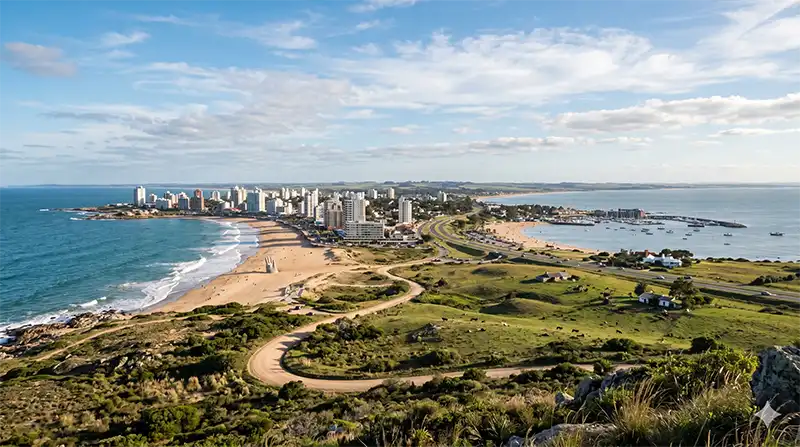
  • Punta del Este, a premier coastal resort city featuring the iconic 'La Mano' sculpture, upscale dining, and pristine Atlantic beaches.
  • Garzón and Carmelo wine regions, specializing in the robust Tannat grape variety, offering world-class vineyard tours and tastings.
  • Traditional estancias (cattle ranches) scattered across the interior, providing authentic gaucho (cowboy) experiences and horseback riding.
  • Cabo Polonio, an off-grid coastal village accessible only by 4x4 vehicles or hiking, known for its massive sea lion colony and lack of electricity.

Things to Avoid

  • Relying solely on credit cards in rural areas; cash is necessary for small purchases outside major cities and coastal resorts.
  • Underestimating the sun's intensity; Uruguay's location makes it susceptible to high UV indices, requiring constant sun protection.
  • Discussing regional politics aggressively; Uruguayans generally prefer diplomatic, calm discourse and value their peaceful societal norms.
  • Expecting fast-paced service; the local culture embraces a relaxed, unhurried approach to dining and daily activities.

Local Transportation Tips

The national transportation network relies almost entirely on roadways, with a well-maintained highway system connecting major urban centers. Intercity buses, operated by companies like COT and Rutas del Sol, provide the most efficient and comprehensive public transit, departing frequently from Montevideo's Tres Cruces terminal. Domestic flights are limited due to the country's small size, and passenger rail service is virtually nonexistent. Rental cars offer optimal flexibility for exploring rural estancias and the eastern coastline, though fuel prices are among the highest in Latin America. In Montevideo, a robust municipal bus system and ride-sharing applications like Uber facilitate urban mobility.

Travel Etiquette

  • Greeting with a single kiss on the right cheek is standard practice among acquaintances and friends of all genders.
  • Sharing mate (a traditional caffeinated herbal drink) is a common social bonding activity; accept it if offered, but do not stir the metal straw (bombilla).
  • Tipping 10% in restaurants is customary, often added as a 'cubierto' (table charge) or left in cash for the server.
  • Punctuality is flexible in social settings, with guests often arriving 15 to 30 minutes after the stated time for dinners or parties.

Recommended Age Group

Uruguay offers a safe, relaxed environment suitable for most travelers, though its focus on coastal relaxation, agritourism, and wine tasting caters heavily to older demographics.

  • Babies (0-2 years): Neutral. While the country is safe and has good healthcare, long bus rides and rural estancia visits may lack specific amenities for infants.
  • Kids (3-12 years): Recommended. The extensive beaches, safe coastal towns, and farm stay experiences provide excellent outdoor environments for children.
  • Teens (13-19 years): Recommended. Surfing in Punta del Diablo, horseback riding, and exploring historic forts offer engaging active pursuits for teenagers.
  • Adults (20-64 years): Recommended. The robust wine tourism, culinary scene, and vibrant nightlife in Montevideo and Punta del Este are ideal for adult travelers.
  • Seniors (65+ years): Recommended. The flat terrain, high-quality infrastructure, excellent medical facilities, and relaxed pace of life make it highly accessible and enjoyable for older visitors.

Accessibility Level: Medium

  • Montevideo features extensive paved sidewalks, particularly along the 22-kilometer Rambla, making it highly accessible for wheelchair users.
  • Modern shopping centers, major museums, and upscale hotels in Punta del Este and Montevideo are fully equipped with ramps and elevators.
  • Public transportation accessibility varies; while some newer city buses in Montevideo have low floors, intercity buses and rural transport often lack wheelchair access.
  • Historic areas like Colonia del Sacramento present challenges due to uneven, centuries-old cobblestone streets.

Did You Know?

Uruguay hosted and won the first-ever FIFA World Cup in 1930, defeating Argentina 4-2 in the final match held at the Estadio Centenario in Montevideo.

Cool Statistics

  • Cows outnumber people by a ratio of approximately 4 to 1, driving the nation's massive beef export industry.
  • Over 95% of Uruguay's electricity is generated from renewable sources, primarily wind and hydroelectric power.
  • The national literacy rate stands at 98.8%, ranking among the highest in the Americas.
  • Montevideo's Rambla is one of the longest continuous sidewalks in the world, stretching over 22 kilometers along the coastline.


Address:

Montevideo, Uruguay

Find Nearby Accommodations

Basic Info

address icon

COUNTRY & Region

Uruguay,
South America

ACCESSIBILITY LEVEL​

Medium
Currency icon

LOCAL CURRENCY​

Uruguayan Peso (UYU)
Price level icon
High
Safety Level icon

SAFETY LEVEL

Duration icon

Recommended Duration

• 1-7 days
• More than a week

Electricity

electricity icon

Electricity

220-240V, 
50Hz
Plug Socket icon

Plug Type

• Type C (Round pin)
• Type F (Two round pins with earth clips)
• Type I (Two flat pins in V-shape, grounding pin)
• Type L (Three round pins in line)
Plug types
Click To View Plug Types

Activities To Do In Uruguay

Best Time To Visit Uruguay

The optimal time to visit Uruguay is during the Southern Hemisphere summer, from December to February, when coastal cities experience peak temperatures averaging 28°C (82°F). Shoulder seasons offer distinct advantages for different travel styles.

  • December to February: Peak tourist season. Coastal resorts like Punta del Este operate at full capacity, and beach weather is ideal.
  • October to November: Spring season. Temperatures range from 15°C to 22°C (59°F to 72°F), offering pleasant conditions for exploring Montevideo and rural estancias with fewer crowds.
  • March to April: Autumn season. The grape harvest (Vendimia) occurs in March, making it the best time for wine tourism in regions like Carmelo and Garzón.

Average Temperatures Per Month

Remember to check the weather forecast a few days before the trip and before heading to the airport.

Safety Level icon

Safety Level

Safe. Uruguay is widely considered one of the safest countries in South America, boasting low rates of violent crime. Petty theft, such as pickpocketing and bag snatching, remains the primary concern in crowded areas of Montevideo (like Ciudad Vieja) and tourist-heavy zones in Punta del Este. Exercise standard precautions, avoid displaying expensive items, and remain vigilant when using ATMs.

The rating is based on multi-year peace, crime, and security indices. Before you go, always verify current conditions through official government travel advisories.

Emergency Numbers

Police: 911
Ambulance: 105

No internet needed • Includes local translations • Free for TravelingWiz readers

Spoken Languages

Spanish is the official and universally spoken language. English is commonly understood in major tourist areas, upscale hotels, and among younger generations, while Portuñol (a mix of Spanish and Portuguese) is frequently spoken near the Brazilian border.

Learn The Language

  • Hola (Hello)
  • Por favor (Please)
  • Gracias (Thank you)
  • ¿Cuánto cuesta? (How much does it cost?)
  • La cuenta, por favor (The bill, please)
  • ¿Dónde está el baño? (Where is the bathroom?)
  • No hablo español (I don’t speak Spanish)
  • Ayuda (Help)
Travel Booking Partner - TravelingWiz

Trip Cost & Budgeting for Uruguay, 2026

Everything you need to know about money while traveling
Is Uruguay expensive for tourists in 2026? Yes, Uruguay is among the most expensive countries in South America. Expect to pay around 175 UYU for a cappuccino, 180 UYU for a domestic beer, and 1,000 UYU for a standard mid-range restaurant meal. Based on Human Verified prices, budgeting smartly makes a big difference. Use the data table below to calculate your specific daily budget based on your travel style. With TravelingWiz's Human Verified data, a typical traveler should expect to spend around $121 USD per day for a mid-range trip in Uruguay. Click the Trip Cost Calculator button below the table to work out your personal budget for this trip.
Currency icon

LOCAL CURRENCY​:

Uruguayan Peso (UYU)
Price level icon
High
Credit cards are accepted nearly everywhere in cities, but carry a little cash for small vendors or rural areas.

Per person, per day – pocket cash for small purchases.

Local: 490
Uruguayan Peso (UYU)
≈ 12 USD

Full daily spend estimation (accommodation, food, transportation, attractions).

Travel Style
Uruguayan Peso (UYU)
≈ USD ($)
Budget
2650
66
Mid-range
4850
121
Comfort
10650
265

The Prices, Daily costs, and calculator results are estimates for planning purposes only. Actual costs may vary based on season, booking timing, personal spending habits, and currency fluctuations. TravelingWiz cannot be held responsible for discrepancies between these estimates and your final trip expenses.

  • • Pay at restaurants with a foreign debit or credit card to automatically receive Uruguay's tourist VAT refund tax discount.
  • • Look for midday 'menu ejecutivo' lunch specials at local eateries for a full meal at a fraction of dinner prices.
  • • Travel during shoulder months like November or March to avoid the extreme high-season price spikes in coastal resorts.
  • • Take advantage of Montevideo's comprehensive bus network and affordable intercity buses rather than expensive private transfers.

Pre-Order Tickets

Avoid disappointment when tickets sell out — and skip the long lines by booking online in advance. You’ll often save up to 20% too.
Save up to 20%

Travel Discounts & Coupons

Save on hotels, attractions, transport, and gear — find verified discounts for smarter travel spending.
Verified Coupons

What To Pack

  • Lightweight, breathable clothing for the summer months (December to February) when temperatures average 28°C (82°F).
  • A windbreaker or light jacket for coastal areas, as evening breezes off the Atlantic Ocean can drop temperatures significantly.
  • High SPF sunscreen and sunglasses, as Uruguay's geographic location exposes it to high UV indices due to ozone layer depletion.
  • A universal power adapter compatible with Type C, F, I, or L outlets to charge electronic devices.
  • Comfortable walking shoes for navigating the cobblestone streets of Colonia del Sacramento and hiking in rural estancias.
We couldn't find tips for Uruguay.
If you got any, please share

Recommended Itineraries for Traveling to Uruguay

We couldn't find itineraries for Uruguay.
you can contact us for custom trip plan

Food & Drink Highlights

Local Food Overview

Uruguayan cuisine is heavily influenced by its European heritage, predominantly Spanish and Italian, combined with a strong reliance on high-quality local agriculture. Beef is the cornerstone of the national diet, typically prepared on a traditional wood-fired grill known as a parrilla. Dairy products, particularly dulce de leche, and the ubiquitous caffeinated herbal infusion called mate, are daily staples for locals.
Uruguayan Chivito sandwich with beef, cheese, egg, and fries

Must Try Dish

Chivito - This iconic Uruguayan sandwich features a thin slice of tender churrasco beef topped with mozzarella, tomatoes, mayonnaise, black olives, bacon, and a fried or hard-boiled egg. It is typically served in a soft bun alongside a generous portion of French fries, representing a staple of the nation's hearty culinary tradition.
Food Experiences Title Icon

Food
Experiences

Discover cooking classes, tastings and local food tours

No food experience found
Maya, the human travel expert at TravelingWiz, offering curated, non-AI expertise

Maya’s Final Checklist for Uruguay

Logistics shouldn’t be the focus of your trip—the experience should. I’ve hand-vetted these essential partners to ensure your arrival, stay, and exploration are as smooth as an Athenian breeze.

Where to Stay

From boutique hotels to local apartments—compare thousands of options and find the perfect stay in the best neighborhood.

Air Travel

Getting there should be seamless. Compare the best routes and prices across top airlines to start your journey on the right note.

Local Guides

Connect with experts who know the destination best. Get personalized advice and insider tips to help you plan your perfect trip.

Travel Protection

The “Engineer’s” rule: always have a backup. Secure your trip with a plan that covers every “what if” and unexpected change.

Car Rentals

Explore at your own pace with total freedom. Compare reliable rental options and find the right vehicle for your adventure.

Visa Services

Don’t let paperwork slow you down. Get expert assistance with your application to ensure all your entry documents are in order.

FAQs

Citizens of the United States, the European Union, Canada, and Australia can enter Uruguay visa-free for up to 90 days for tourism purposes. A valid passport with at least six months of validity remaining is required.
Yes, tap water is safe to drink throughout Uruguay. The country maintains high water treatment standards, particularly in major cities like Montevideo and Punta del Este.
The intercity bus network is highly efficient, affordable, and covers the entire country, with most routes originating from the Tres Cruces terminal in Montevideo. Renting a car is also popular for exploring the coastline and rural estancias, though fuel is expensive.

Your Insights Matter

TravelingWiz grows through the stories of our community. If you’ve recently explored ,Uruguay share your tips and stories to help us perfect our guides for the next traveler.

Related Articles

Check out our related articles and blog posts to learn even more about the destination.

No related articles found

Don’t Travel Alone

Share with your friends and family

Where should we send your offline card?

We hate spam just as much as you do

newsletter_consent *