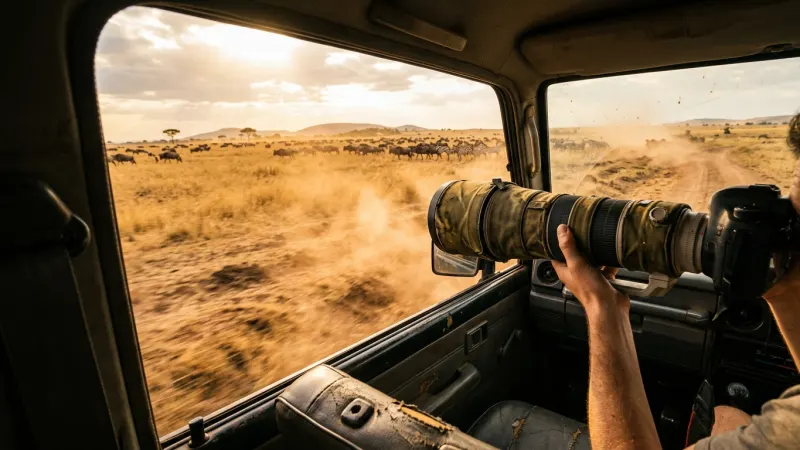
The fine volcanic soil and pulverized dust of Serengeti National Park are legendary for wreaking havoc on sensitive optics and camera mechanics. While speeding along gravel paths to catch a lion sighting, vehicle slipstreams suck clouds of abrasive, powdery grit directly into open passenger cabins, easily penetrating zipper seams, zoom lens rings, and camera dials.
Never leave your cameras sitting exposed on vehicle seats between sightings. Store your bodies and lenses inside roll-top waterproof dry bags or specialized neoprene camera sleeves when the vehicle is in motion. Avoid swapping camera lenses out in the field; instead, bring two camera bodies fitted with separate focal ranges (such as a 24-70mm and a 100-400mm) or perform swaps inside a sealed zip bag under the dashboard to protect your sensor from dust spots.






Buy a compatible power adapter for your trip